How the newest Group 1 breadmaking wheat stacks up
 © GNP
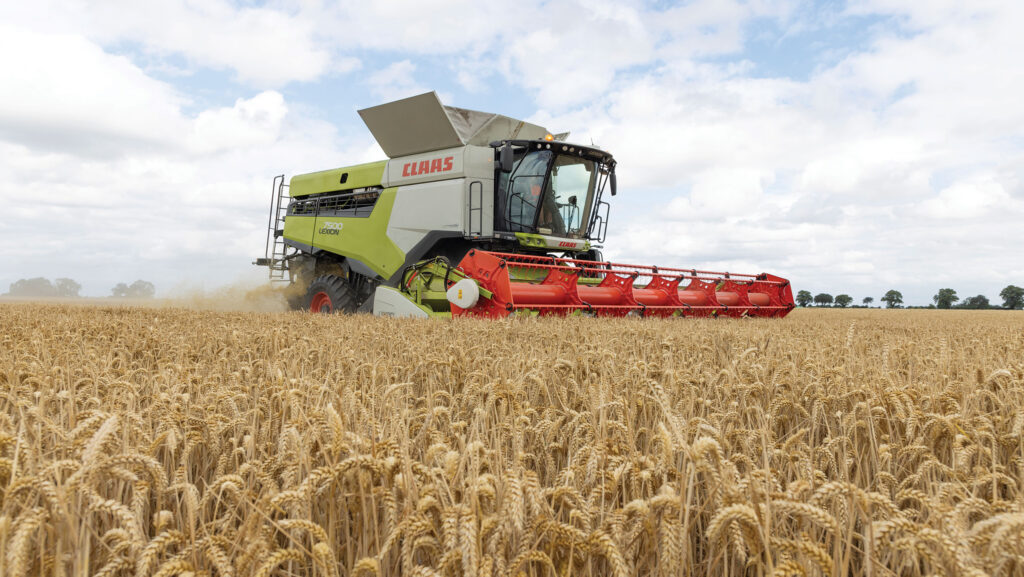
© GNP Three new varieties in three consecutive years has seen a much-needed yield lift and better disease ratings for the Group 1 sector, with the latest addition having the second highest untreated yield on the whole Recommended List.
After a gap of seven years, Cheer joined the AHDB Recommended List in 2024 followed by Vibe a year later, signalling a new chapter for Group 1 milling wheats.
See also: Wheat variety Arlington gains full Group 1 milling approval
And the newest addition – Arlington, from breeder DSV – gained full approval in May.
“Over the past couple of seasons, we’ve seen some good varieties added to the Group 1 list,” says Dr Kirsty Richards, national technical manager for seed at Frontier Agriculture.
“From a breeding perspective, it’s quite difficult to be a Group 1; you have to satisfy everything that the end user wants. And agronomically, we have been looking to move away from varieties that have become a bit more challenging to grow in terms of disease resistance and yield potential,” she adds.
“Since the release of stalwarts Skyfall and Zyatt, the yield gap has grown between the Group 1s and the Group 4 hard wheats. There is still room to improve this, but it is starting to close, and it is nice to see Arlington added as a Group 1.”
Disease resistance
A short, stiff variety, Arlington promises good disease resistance.
“In trials, it had the best septoria resistance of the Group 1s and 2s; it also has midge and eyespot tolerance,” explains Dr Matt Kerton, breeder at DSV.
“It does yield well in the second wheat slot, opening up management for growers. Although it seemed to prefer slightly heavier soils, it had the highest untreated yield of the bread-makers, and there was no lodging to be seen because it is a short variety,” he adds.
Considering it has been a tough year for most varieties in terms of disease, Arlington seems to have done reasonably well, says Kirsty.
“We have treated and untreated plots, and rust-wise it seems to have come through the season well so far. Although Arlington has good yellow rust resistance, growers still have to prioritise treatment. But maybe just having the edge in terms of resistance gives them a few more available spray days around T0.”
Fans of Skyfall might find themselves favouring Arlington.
“It has Skyfall in its parentage, which means it has a wide sowing window, and a low vernalisation requirement, meaning farmers can sow it later into winter,” says Matt.
“For Skyfall growers, it would be an easy switch.”
In terms of yield, it is promising, sitting just behind Zyatt. As a cross between Skyfall and Marston, it has good grain quality, too.
“Marston was a hard feed with excellent grain quality, so it has the yield and grain quality from that, and the baking quality from Skyfall,” adds Matt.
Having been through lots of small-scale trials and a commercial trial where the crop was milled and baked, this supported its Group 1 approval.
“It’s acceptable to any UK Flour Millers (UKFM) Group 1 home, so that’s really positive,” says Kirsty.
According to the AHDB, Arlington has achieved high Hagbergs, specific weights and proteins, with UKFM commenting that the variety showed good gluten quality and water absorption, with good baking performance.
Agronomics
Agronomically, it has similar benefits to Skyfall.
“A lot of people have grown Skyfall not just because it’s a Group 1, but because it’s good after roots and has very stiff straw, so maybe Arlington will take on that mantle and position,” explains Kirsty.
“If you know how to grow Skyfall, you know how to grow Arlington,” she adds.
“Back in the day, when Skyfall and Zyatt were released, the Group 1 yields were really comparable to some of the hard feeds, so people decided later in the season whether to try for a premium or stick to feed, but I think those days are probably gone.
“If you’re growing milling wheat, you really have to be growing it for that 13% protein, and not thinking about it as a feed,” she says.
“In terms of getting the protein into it, you need to feed it the same way as Skyfall.”
And it may be signalling a change in the varieties grown in the Group 1 sector.
“It has been Zyatt, Skyfall, and Crusoe; maybe we’re going into an Arlington, Vibe, and Cheer phase,” says Kirsty.
“We have better varieties now, and farmers need to be thinking about their local market and requirements.”
Performance in practice
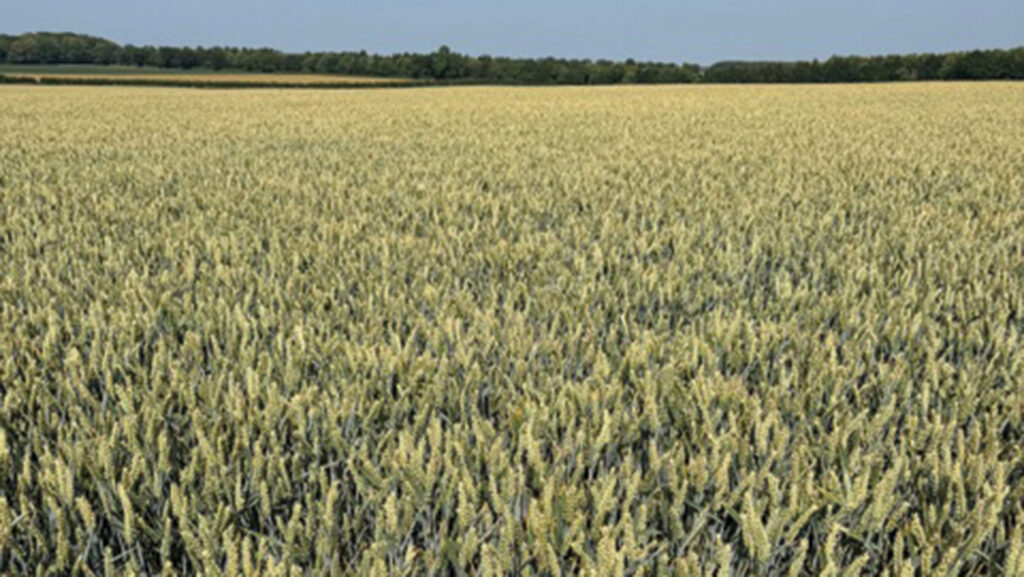
Toby Hogsbjerg’s crop of Arlington wheat © Toby Hogsbjerg
Toby Hogsbjerg, farm manager at Wicken Farms, manages a 900ha ring-fenced estate in North Norfolk. On light soils, he grows wheat, barley, spring and winter wheat and barley seed, potatoes, onions, sugar beet and oilseed rape.
He has been growing seed for DSV for seven years, with 28ha of Arlington this year and 55ha booked for 2027.
“This is our first year growing Arlington for seed, and it looks pretty good,” says Toby.
“We drilled it early, after beans and onions, and it got away well. We had a nice early spring, but then it turned cold and dry, which hasn’t helped many of the wheat crops, but Arlington seems to have stood up.
“It’s not as thick as I would like, but our land tends to slump after heavy rain, and it went in after onions, so it’s had a lot of irrigation and traffic on it,” he adds.
“All things considered, it looks well. We will see how it comes out of the combine.”
It hasn’t suffered from disease pressure either. “We’re not in a real disease hot spot; we can get yellow rust, but it’s easily controllable,” says Toby.
“We put a bit of spray on at T0, just to hold it back, particularly as we’re growing it for seed – just belt and braces.”
The crop was drilled earlier than usual, on 22 September. “In the field after beans, it has a better stand than after onions, which is understandable as it’s stronger land and hasn’t had the traffic, and the beans have put a lot of nitrogen back in the ground.”
Toby won’t have too long to find out how it performs. “We’re early here, with the light land, and last year we had finished harvest by the second week of August.”
Oxfordshire
Further south, Toby Page, near Banbury in Oxfordshire, grew two 4ha plots at Barn Farm, and found Arlington very comparable to Skyfall.
“We grew it in the same field as Skyfall; it’s as easy to grow, it’s a bit cleaner for septoria, and you don’t have the worry of yellow rust,” says Toby, who is also an agronomist at Hutchinsons.
“You don’t have to worry about doing a T1.5, so you’re less pressured on a T0 when you’re getting the early yellow rust come in. We’ve seen a massive change in the prevalence of YR15 strains of yellow rust, so to have a variety with a lot less pressure is great.”
As a milling variety, ensuring it meets the protein level is important, so Toby uses the Hill Court Farm Research protein prediction test to ensure the crop gets enough nitrogen.
“You test it around T3, so you have time to implement changes – you can either save money or spend to get the protein.”
Trial results
- Over five years of the AHDB yield trials, Arlington yielded an average of 10.95t/ha, 99% of controls
- At a trial site in Scotland, it yielded 12.88t/ha in 2025
- At a Norfolk site, it yielded up to 13t/ha in 2025
- At a trial site in the West of England, it yielded more than 12t/ha in 2025
- In the untreated trials, Arlington averaged 10.42t/ha over five years, currently the second highest untreated yield of all available Recommended List varieties and the best within the milling segment
The three new additions at a glance |
|||
| Arlington | Vibe | Cheer | |
| Treated yield (%) | 99 | 97 | 96 |
| Untreated yield (%) | 94 | 88 | 81 |
| Spec weight (kg/hl) | 78.9 | 78.6 | 79.7 |
| Protein (%) | 12.5 | 13.4 | 12.8 |
| Septoria | 7.0 | 6.5 | 6.1 |
| Yellow rust | 7 | 8 | 6 |
| Brown rust | 6 | 6 | 6 |
| *Disease ratings on a 1-9 scale, with 9 being most resistant | |||