Why straw length and brightness matters to Lincs grower
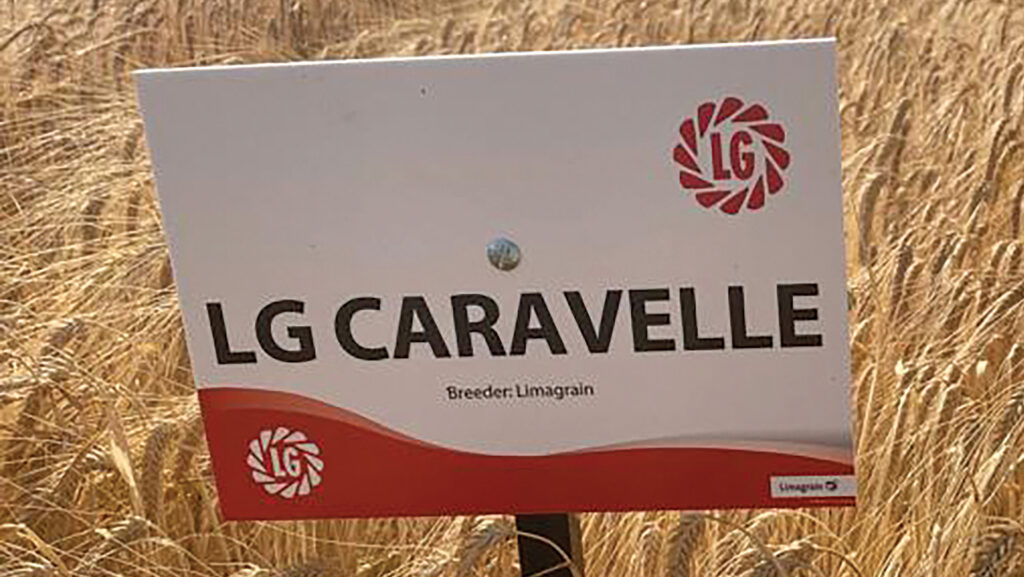 © Limagrain
 For Lincolnshire farmer George Thompson, straw length and brightness is just as important as grain yield and agronomy when it comes to variety selection.
He established a straw trade deal with a large-scale duck producer over 40 years ago, which has become central to his business. This year, £247/ha in extra income from straw sales was generated on top of selling grain to the premium seed market.
Potatoes, sugar beet, winter barley and spring barley are grown in rotation at Grasby House Farm, in the Lincolnshire Wolds. All barley straw is baled and supplied for use as duck bedding to Cherry Valley duck producers, which is now under Chinese ownership.
See also: Farmer Focus: I’m in the mood for analysing
On-target straw yields
This year, straw yields came in at 15 bales/ha – within the farm’s usual target range of 12-20 bales, despite the hot, dry summer conditions.
George says selling straw for duck bedding pays well, but quality must be consistent. It’s why the farm is not purely focused on grain yields, but straw quality too.
“Variety choice matters as much for straw length and brightness as it does for grain performance and yield,” he explains.
The farm grows 30ha of Caravelle winter barley and 28ha of Laureate and Planet spring malting barley.
Trials are frequently carried out, with a 4ha trial comparing a six-row hybrid with Caravelle this harvest.
“Caravelle produced significantly more straw than the hybrid, and the quality gap was just as noticeable. The hybrid’s straw simply didn’t match what came off the Caravelle.
“Straw is my year-round bread and butter,” says George. “It means it has to be stored well, but the extra value to the crop from the straw is well worth the effort.”
He keeps the bales on pallets, ensures sheds are rodent-free and, with growing concern over avian influenza, the bales are now sheeted and covered in transit before delivery.
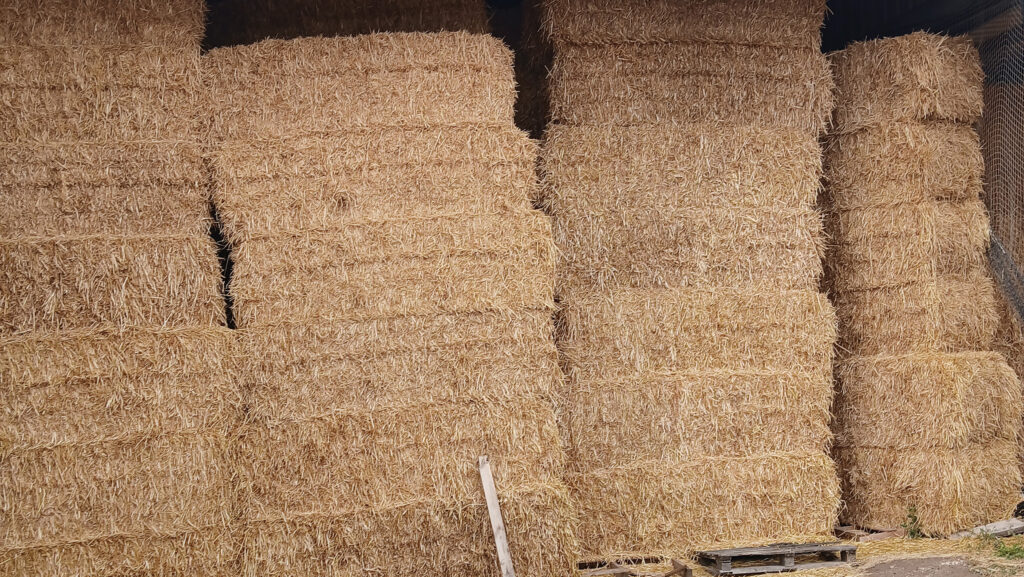
© George Thompson
This year’s crop
George drilled 22ha of Caravelle in the latter half of September. Agronomy is built around flexibility rather than a fixed calendar. Last year, drilling ran as late as the third week of October.
Winter barley gets an insecticide for aphids, two standard fungicide sprays (T0/T1) and an ear wash.
A total of 150kg/ha of nitrogen is applied in two splits, with applications of manganese and sulphur. For crops following either sugar beet or potatoes, nitrogen rates are cut back.
Cultivations alternate between plough and press, or a one-pass stubble cultivation with a DTX, depending on conditions. A combination drill does the sowing and nutrition is applied according to soil testing.
Suffolk farmer sells straw in row to save on costs
With straw prices at about £42/t in row during mid-August, farm manager Ryan MacCormack, of Dennington Estates in Suffolk, decided to sell most of the farm’s straw rowed up rather than baling the crop.
“Leaving straw in the row rather than baling can save on additional costs. Chopping it, meanwhile, brings its own trade-offs: it can push up cultivation costs for the following crop and increase slug pressure. In some situations, removing straw can be more cost-effective.”

Ryan McCormack © Ryan McCormack
That is why variety choice is weighed across all those outputs together.
“It is all about the full output of each hectare. Every part of the crop has a value,” Ryan says.
“I look at where in the rotation the crop fits, what it is following, cultivation and whether it’s going to be chopped or baled – all of which have associated costs.”