What to consider when planning a new pesticide store
 © GNP
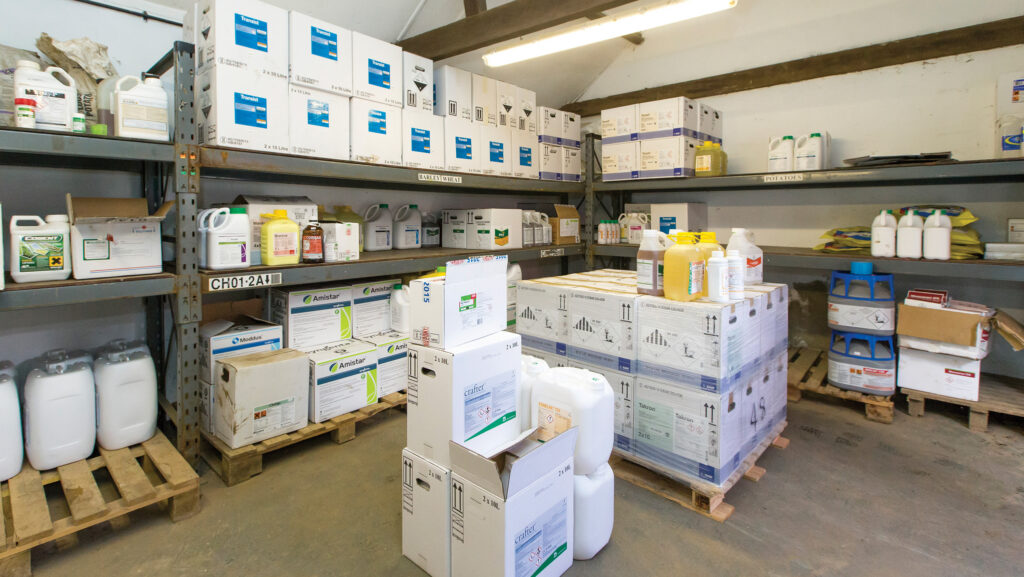
© GNP Farmers planning a new pesticide store or upgrading an existing structure have much to consider. Location, containment, fire resistance and security are all factors that can help protect people, the environment and the valuable inputs they store.
“A chemical store isn’t just about having somewhere to put the chemicals; it’s about preventing contamination and controlling the environmental risk,” says Mike Graham, auditor at Basis.
See also: The rules for legal storage of pesticides on farm
A useful starting point is the Health and Safety Executive’s (HSE) guidance on pesticide storage. This states a store should be dry, frost-free, adequately ventilated, secure against unauthorised access, resistant to fire and capable of containing leakage or spillage.
Some farm assurance standards also require pesticides to be stored in a way that minimises the risk of contamination and pollution.
Location, location, location
To work practically, a pesticide store should be positioned where deliveries can be made safely, and the sprayer can be loaded without unnecessary movement of chemicals.
Avoid locations where a fire, leak or flood could put people, livestock or infrastructure at risk; consider proximity to homes, offices, livestock housing, fuel stores and electrical installations.
The Farm Advisory Service (FAS) says chemical stores must be at least 10m from open drains, streams, ditches and other watercourses, and 50m from any spring, well or borehole supplying water for human consumption.
The store should not be incorporated into a domestic dwelling, feed storage area, office or staffroom. Access through occupied parts of a larger building should also be avoided.
HSE guidance recommends avoiding a water supply passing through the bunded area.
Environmental constraints may also affect the choice of site. Groundwater protection zones and other environmentally sensitive areas can impose additional considerations, so it is worth checking the proposed site with the relevant Environment Agency before starting.
Planning is another early consideration. Agricultural buildings can benefit from permitted development rights, but conditions and limitations vary, so check requirements rather than assuming a new pesticide store will qualify.
Want to know more?
For further guidance, farmers should consult current Health and Safety Executive, Red Tractor and Basis requirements and seek specialist advice where necessary.
Consider maximum storage needs
Before beginning the build or renovation, consider the maximum quantity of chemical that could be stored.
“Storage should allow for peak seasonal requirements, delivery access, shelving, stock rotation and room to move containers safely. There should also be a secure area for empty, rinsed containers before disposal,” says Mike.
The storage capacity must be calculated against the site sensitivity rating that is set by the Environment Agency.
HSE guidance states the store should be capable of retaining 110% of the total quantity of products likely to be stored, increasing to 185% in an environmentally sensitive area.
“Once you know the maximum quantity, you can work backwards to design the store and the containment around it,” says Mike.
How stock will be handled should not be forgotten. “Good chemical storage is also about how you organise the products inside the store, not just the building itself,” he adds.
© GNP
Bunding is fundamental
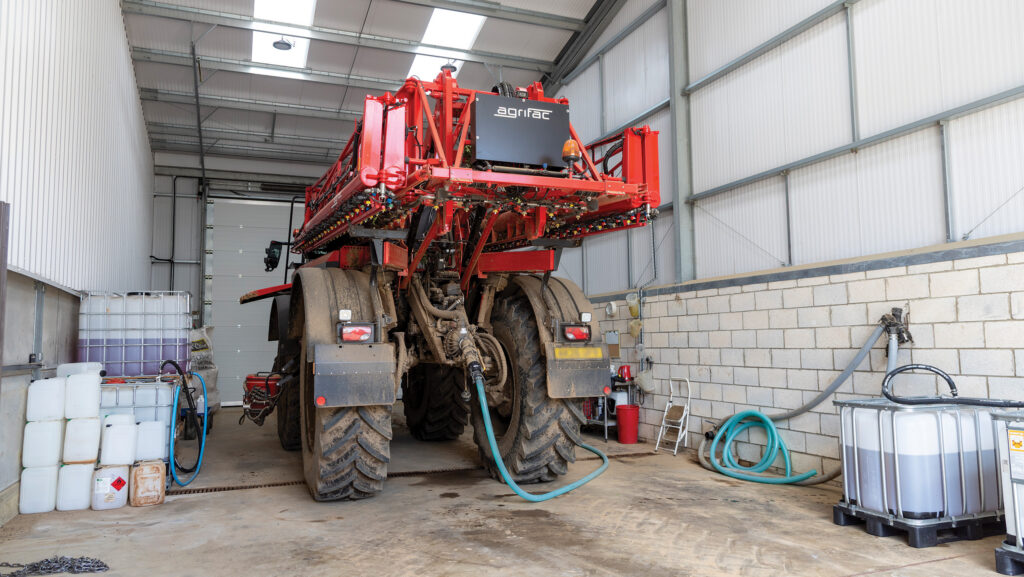
Bunding is a key feature of a pesticide store. It should be continuous, not compromised by doorways, drains or service entrances. In a new building, the best solution is generally to incorporate the bund into the foundations, floor and walls.
Floors and walls need to resist pesticide penetration and be capable of being cleaned. “This can be a common mistake of those using temporary storage, where flooring may not be sufficient,” warns Mike. HSE guidance states that timber is unlikely to be suitable for floors.
Drainage needs particular attention. An ordinary yard drain inside the bund can turn a relatively small spill into a pollution incident. Internal drains should be sealed off, while any drainage should be designed so contaminated liquid cannot escape to a watercourse or surface-water system.
“The cost of getting drainage wrong can be far greater than the cost of installing suitable containment correctly in the first place, so seeking professional advice from a qualified structural engineer could be worthwhile,” Mike adds.
© Blackthorn Arable
Fire resistance matters
Fire is a key reason pesticide stores have specific construction requirements. HSE guidance states that the store – including doors, but excluding the roof – should be constructed from materials capable of resisting fire for at least 30 minutes.
If the store is to be part of a larger building but with a suspended ceiling, fire-resistant materials must be used all the way up to the structural ceiling.
When converting an existing structure, consider combustible wall linings, timber elements, roof construction and how any potential fire could spread.
“Remember to add the appropriate warning signs, emergency information and firefighting arrangements,” advises Mike. “Basis standards require the provision of warning signage and the availability of emergency facilities for dealing with spillages and fire.”
Additional features
Security needs to be considered. The building should be capable of being secured when unattended.
And ventilation is also important, particularly where volatile products are stored. Lighting should allow labels and stock records to be read clearly and the store to be inspected safely.
Design around the job, not just the rules
When considering the best option for a new pesticide store, start with the site and containment, then design the building around them. Meeting HSE requirements is the minimum, but creating a store that is safe, practical and capable of meeting the farm’s future requirements is the main objective.
“It is important to remember the provision of an adequate storage facility is only part of the story,” adds Mike.
“It is essential that adequate and correct training is in place for the storage and handling of plant protection products.
“The correct signage, emergency procedures and PPE are equally important to ensure regulations are adhered to in preparation for a visit from a pesticide enforcement officer.”
What is the best option for your farm?
There are several ways to provide pesticide storage, and the best option will depend on the farm’s size, existing buildings, available space and budget.
Pesticide storage options |
||
|
Option |
Advantages |
Disadvantages |
|
New build |
Designed specifically for the farm, it can be easier to integrate bunding, drainage, fire resistance and access to a new build. Offers scope for future expansion. |
This will often involve the highest capital cost, requires planning and construction work. It will also likely take longer to construct. |
|
Conversion |
Makes use of existing buildings, meaning potentially lower costs. It can often be quicker than a new build. |
Existing floors, walls, drainage and fire precautions may need upgrading, with potential for hidden issues. |
|
Shipping/proprietary container |
A container is a compact, secure option that is relatively quick to install. Useful where space is limited or extra capacity is needed. |
Containers only offer limited space and flexibility. Bunding, ventilation, temperature and fire considerations still apply. This option should not be viewed as a shortcut to storage needs. |