Young farmers bold move to take on council tenancy pays off
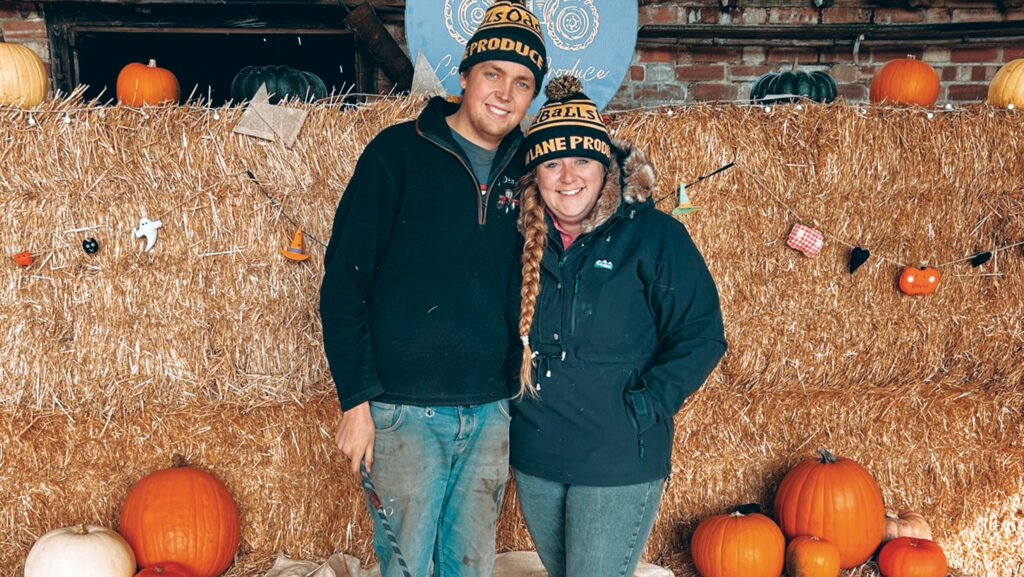 Joshua and Kate © Joshua Dennis
 Joshua Dennis, a 26-year-old arable farmer from Cambridgeshire, made the bold move to take on a county council tenancy at just 22 years old.
Three successful yet challenging harvests later, he has secured a larger 190ha tenancy – an impressive achievement in a sector where access to land is one of the biggest barriers for new entrants.
Joshua and his partner Kate Hodgson grow winter wheat, spring oats, spring beans and spring barley, as well as potatoes which are delivered locally, and have a pick-your-own pumpkin patch.
See also: Crumpets made from 100% British regen wheat launched
Starting out
Joshua grew up on his family’s arable farm and was determined to carve out his own farming career.
His first application for a county council tenancy was unsuccessful, but rather than giving up, he reapplied and secured a 75ha holding at Fenbridge Farm in 2022.
The launch coincided with one of the most expensive farming years on record, when fertiliser peaked at about £870/t.
“With no previous crops in store to sell, starting out in an extremely high-cost season was really difficult,” he admits.
Cashflow can be a huge challenge when starting up a new business, but the risks for the young farming couple were compounded by such extreme spikes in input costs.
This gave each decision more risk and financial weight. When to drill? When to buy? When to apply? When to make machinery investments?
The pair kept their off-farm jobs to secure additional income. They also delved into different diversification enterprises, growing potatoes which they delivered locally, and established a pumpkin patch for extra cash.
Machinery investments
© Joshua Dennis
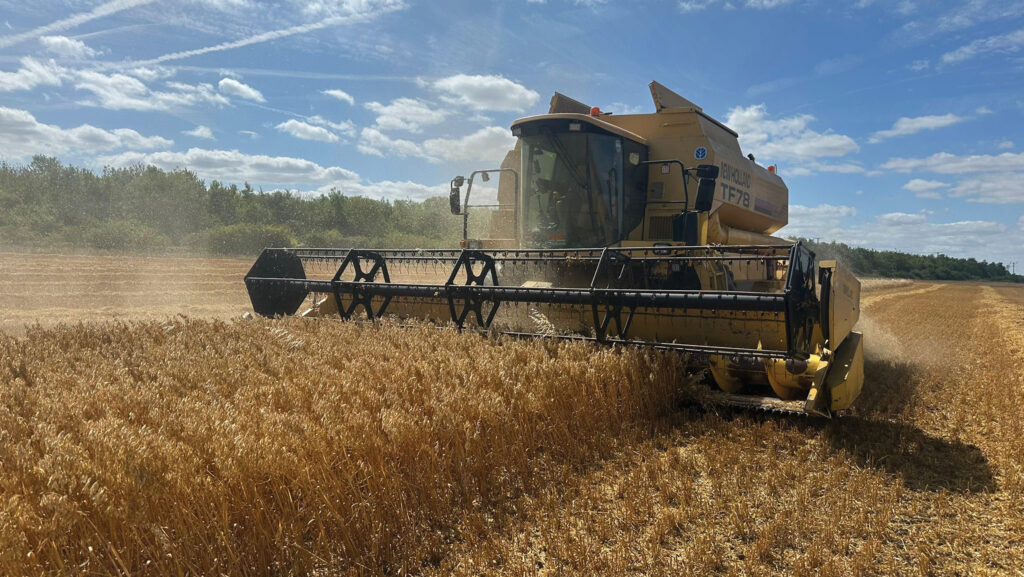
Buying their own combine was one of the biggest early decisions.
While getting a contractor in might have been simpler in the short term, investing in the farm’s own machine left the pair open to expansion, a move that paid off when the larger tenancy was secured.
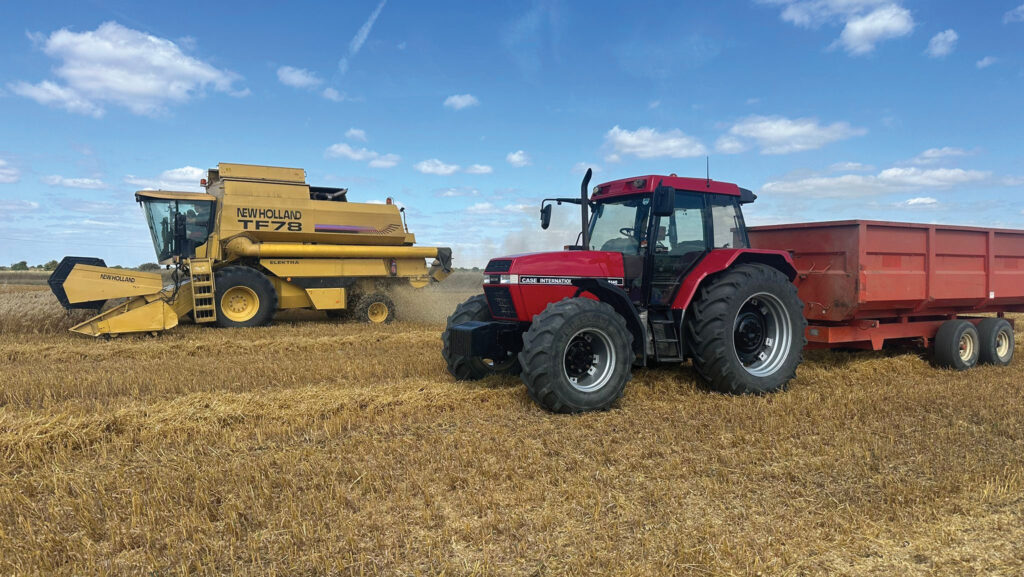
Joshua and Kate run a Case IH 5140 and Case IH 956, and a Massey Ferguson 6490 recently joined the fleet. “Both Cases have clocked over 8,000 hours each and the Massey about 4,000 hours,” says Joshua.
Scaling up the new farm
Having started building a track record with good management and strong harvest performance, when the opportunity arose to take on a larger tenancy, Joshua applied to the council internally.
The process was just as demanding, if not more so. He had to submit a detailed three-year business plan, with full costings.
The larger acreage brought with it greater risk, but Joshua’s business structure won over the council panel, and he was granted the second 190ha tenancy earlier this year.
The plan initially included an array of Sustainable Farming Incentive (SFI) options, involving cover crops and environmental margins.
However, shortly after the successful interview, SFI support was pulled, leaving a major gap in projected cashflow.
“It was devastating,” Joshua reflects. “We’d made plans, tailored the business around the scheme, and then suddenly it disappeared.
I had just bought an old Vaderstad Rapid drill specifically for establishing cover crops,” he says.
The loss of SFI left a significant income gap and the couple faced yet another huge hurdle to overcome in their first year on the new farm.
Room to grow
The new tenancy, taken on in October, represented a major expansion and upgrade, with more grain storage facilities and more farming opportunities.
“The farm is ring-fenced, and the new facilities will allow us to store grain longer-term, keep varieties separate and, importantly, store our beans which we previously had to sell off the combine due to lack of space,” explains Joshua.
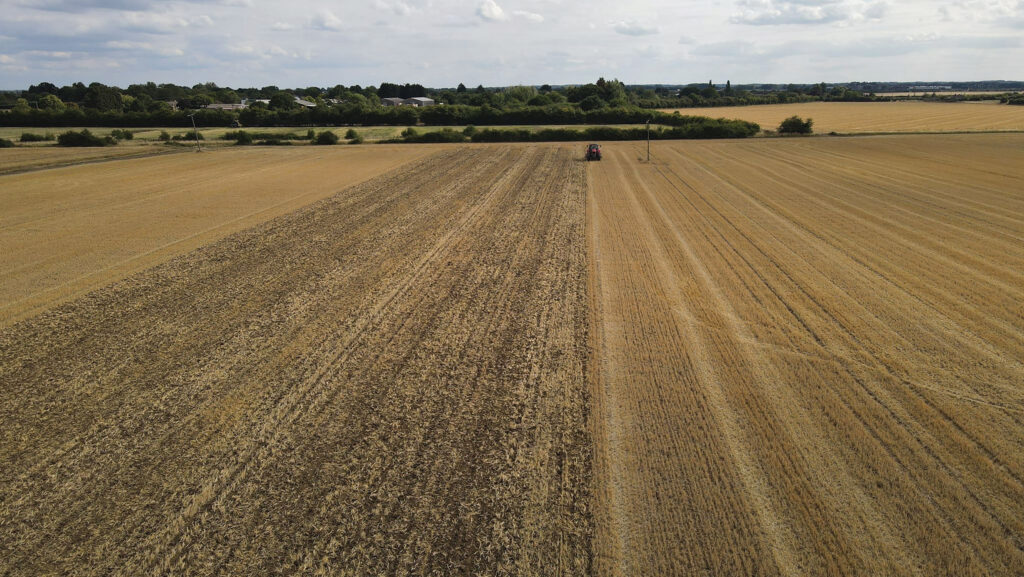
The couple have drilled about 80ha of winter wheat and plan to establish a further 60ha of spring crops.
© Joshua Dennis
Joshua says: “We are going quite heavy with spring cropping as the farm’s previous rotation was winter crop heavy, so this will be a good opportunity to mix up the rotation and get on top of any wild oats and grassweed issues.”
The remaining area is grassland, which will be baled as small hay bales and sold on to equine and smallholder markets.
There is also a small orchard, which has the potential for future diversifications such as a pick-your-own fruit enterprise, which is already in the planning stages.
The nearest town is Rampton, offering a useful local market for future farmgate ventures.
Team effort
Josh notes that Kate plays an important role on the farm, helping with tractor work, the pumpkin patch, and making cakes and treat bags for events on the farm.
Both Josh and Kate are continuing with their off-farm jobs to help stabilise income during the early years of the tenancy, a particularly important buffer given the loss of SFI funding.
With Kate’s background in livestock, the couple have their eyes on potential livestock enterprises in the future.
“This will fit particularly well with the new farm, where we have an area of grassland and the orchard,” says Joshua.
© Joshua Dennis
Dropping sugar beet
Sugar beet is one crop that has been dropped from the rotation. “Low prices, high cultivation costs and soil damage made it uneconomical, especially after using contractors for drilling and lifting.”
The couple are open to revisiting it in future, but only if the figures justify it.
The soils on the new farm are heavy clay – even black in places.
Cultivations are kept light; less than 10% of the farm will be ploughed. Instead, Joshua uses a low disturbance subsoiler or a shallow stubble cultivator working at about 4in.
The Vaderstad Rapid is now the main drill. A modified tine drill, created by merging a KRM Suffolk cultivator with a Juko drill, is used in wetter conditions.
In the challenging conditions of 2023, this lightweight setup proved invaluable for getting spring crops into the ground when heavier kit simply couldn’t run.
Potatoes and pumpkins direct sales
The plan is to continue growing a few acres of potatoes, which are sold direct to the public in 25kg and 12.5kg bags.
“We do a delivery truck round every fortnight. We harvested in October, with sales continuing from November to February because long-term storage isn’t possible,” says Joshua.
“Marketing is driven heavily by social media and word of mouth, meaning some weeks are extremely busy, while others can be quieter.”
The pumpkin patch has been running for four successful years, and Joshua and Kate are looking forward to next year’s pumpkin picking on the new farm.
Advice for new entrants
Joshua encourages aspiring farmers to start small. His journey began with a modest field rented from a local village charity – just enough to get a foot on the ladder.
Joshua speaks highly of Cambridgeshire County Council, praising their support and regular communication. Annual meetings and farm visits help maintain a strong working partnership.
“They’ve been brilliant,” he says. “Taking on 186 acres at 22 was a big responsibility, but they’ve backed me all the way.”
He urges others to apply for as many council farms as possible, reminding new entrants that these holdings exist specifically to help people like him get into the industry.
Persistence and determination, he says, are essential.