

BNG market set to gather pace as big projects come into play
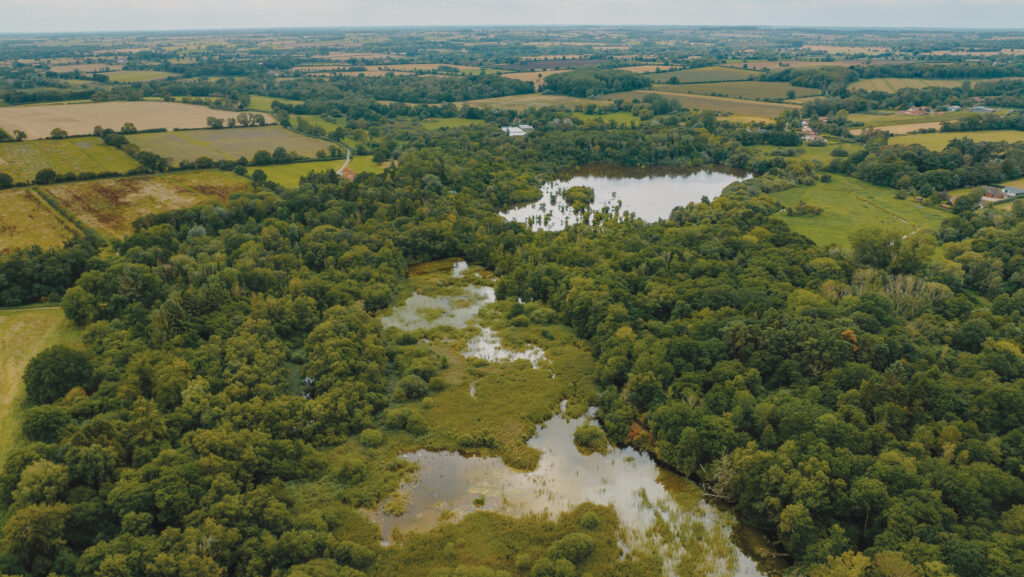 © Dan Casson
 Biodiversity net gain became a requirement of the planning system early in 2024 and the market should see significant growth when large projects are included from next month.
The market for biodiversity net gain (BNG) units is growing but remains fragmented. There are wide regional variations in price for certain unit types and some Local Planning Authorities (LPAs) still do not have a BNG policy in place.
For example, “Other neutral grassland” is one of the most common unit types and is worth between £17,000 and £25,000 a unit, depending on location.
See also: Opportunities develop in nature markets
Developers of housing sites are obliged to undertake on-site mitigation as a first step, but this is looking increasingly challenging, say advisers.
“There’s a big debate about how on-site mitigation will work – people and biodiversity don’t mix,” says Hugh Townsend, of broker Townsend Chartered Surveyors.
The firm has advised on more than 90 BNG sites and placed £7m worth of sales in the second half of last year.
What is biodiversity net gain?
Biodiversity net gain (BNG) requires developers in England to deliver a measurable 10% positive impact on the biodiversity associated with their sites.
It became a legal requirement on almost all developments in February 2024, with small sites included from April that year. NSIPs will subject to BNG requirements from May this year.
Some local planning authorities ask for more than 10% BNG, but they have to be able to justify this. The gain can be implemented on the development site or on other land.
The latter route provides a potential income for farmers through long-term agreements (30 years) using land on which biodiversity units are created to replace the habitat lost on the development site. This can be achieved by the landowner themselves or through long-term lease agreements with habitat bank operators.
More inquiries
“Inquiries so far in 2026 are up 233% on year earlier levels,” says Hugh. “In 2025 our average running lot size was 16 units, and the current running lot size is 11.77 units.”
Hugh believes, however, that values for off-site units will have to fall in order to make this more attractive to developers than carrying out on-site measures.
He says there are also too many parties trying to make something out of the market and some are over-promising of what price is achievable.
The market faces several challenges including lack of fluidity, LPAs being slow, and the extra expense of the alternative option of using responsible bodies – which is a quicker route compared with using a Section 106 agreement with the LPA as a legal framework for biodiversity unit habitat creation.
Also, landowners remain cautious in this evolving market where some advice is regulated – for example given by members of the Royal Institution of Chartered Surveyors (RICS), who are obliged to give best advice – while other sources are not.
Broking activity is picking up, says Vicki Mordue, managing director of broker and adviser Biodiverse Consulting, and while prices for some of the most common unit types have softened a little, some of the rarer unit types, such as watercourses, are holding firm.
Approval for larger sites
“Some larger planning approvals are starting to come through and they are requiring units,” says Vicki, who believes that plans for on-site measures in future won’t be as ambitious as some have been in the past, especially as the availability of off-site units has improved greatly over the past year or so.
“The thinking has evolved somewhat on the achievability of on-site mitigation, to a more realistic habitat creation approach in terms of what can be achieved on site,” she says.
Ian Hambleton founded London-based broker Biodiversity Units UK in 2023 and says it facilitated 11% of BNG unit market transactions in 2025, making up 18% of allocations of units to sites on the Natural England register.
The firm was the first to deliver a compliant BNG solution: for the Brentwood Special Needs School project in Manchester, using 8.48 units from the Iford Estate in Sussex.
There is some softening in prices for more readily available unit types, says Ian. This includes hedgerows and certain woodland categories, as well as other neutral grassland.
There have been some pronounced price reductions in previously scarce units, such as ditches, open mosaic habitat and traditional orchard, as these have increased in supply, he says.
At the same time, a growing number of habitat banks seeking cashflow are offering tiered pricing, with discounted prices for early tranches of units before increases kicking in as projects become established and availability tightens.
Not all unit types are available in every location, and there is significant discounting of prices for some units which have to be sourced out of area – an aspect which is increasingly being scrutinised by planning authorities, as local mitigation is preferred in most cases.
Lease-based system
Environment Bank is the country’s largest habitat creator, operating on a lease-based system on an average site size of 27ha. It has generated well over 9,000 units so far of which about 1,000 have so far been allocated to development sites, says senior communications manager Ell Powell.
The firm recently sold units to the developer of a transport system for Everton Football Club’s new stadium. A conservation grazing agreement for beef cattle is being put in place with the farmer on whose land the habitat is being created.
“NSIPs (Nationally Significant Infrastructure Projects) will be an enormous opportunity, although there is still a lot of guidance needed from the government,” says Ell.
“BNG for NSIPs will be a different approach and will have to be considered far earlier in the process [than for other site types].”
It is estimated that once BNG for NSIPs comes on stream, an additional 3,000-5,000 biodiversity units a year will be needed over the next five years.
“We’re talking about habitat banks across the country completely selling out,” she says. “[NSIPs] will have complex needs over many years and might need years-long forward purchasing agreements or the creation of bespoke habitat banks in a certain area.”
What are NSIPs?
Nationally Significant Infrastructure Projects (NSIPs) have compulsory purchase powers and cover energy projects such as large power stations, solar installations and major electricity lines. These go through a separate planning process whereby the Secretary of State decides, after advice, whether a development consent order should be issued for the project.
Local planning authorities are not the decision-makers but are statutory consultees in the process.
Certain major new roads, railway lines, ports, and airports are NSIPs, as are large reservoirs and water transfer projects, large sewage or water treatment plants, and hazardous waste facilities.
The Secretary of State can also decide that, if they are considered nationally important, major commercial or business projects such as data centres or large solar installations are treated as NSIPs.
Valuation challenge
The valuation of land in BNG habitat development is particularly challenging and the RICS is forming an expert working group to give guidance on the subject.
Frustration at government delays
The government has still not produced its own responses following consultations issued last summer which proposed exempting small sites (less than 0.2ha or up to nine houses) from the requirement to provide BNG, alongside relaxing the system for medium-size developments of up to 49 houses.
It also consulted on how Nationally Significant Infrastructure Projects (NSIPs) gaining consent from next month are to be brought into the BNG net, after being delayed from a November 2025 start. NSIPs will significantly increase demand for units, although this sector of the market is likely to see a slow start, as was the experience in the housing mitigation market.
While it is known that, unlike the regime for housing sites, NSIPs will not be under an obligation to first provide on-site mitigation, detailed government guidance on BNG for NSIPs has still not been issued.
These will be complex projects, often running across several planning authority areas. However, it is expected that because of the large number of units likely to be needed by these projects, the spatial weighting requirement will not be applied to NSIPs.
While there is a general expectation that small sites will indeed be exempted, any change to this will require legislation and advisers expect the obligation to provide BNG on small sites will remain in place until some time in 2027 at the earliest.

Explore more / Transition
During the series we follow our group of 16 Transition Farmers through the challenges and opportunities as they seek to improve their farm businesses.
Transition is an independent editorial initiative supported by our UK-wide network of partners, who have made it possible to bring you this series.
Visit the Transition content hub to find out more.
