

Transition Farmer: Drought and downpours add to workload
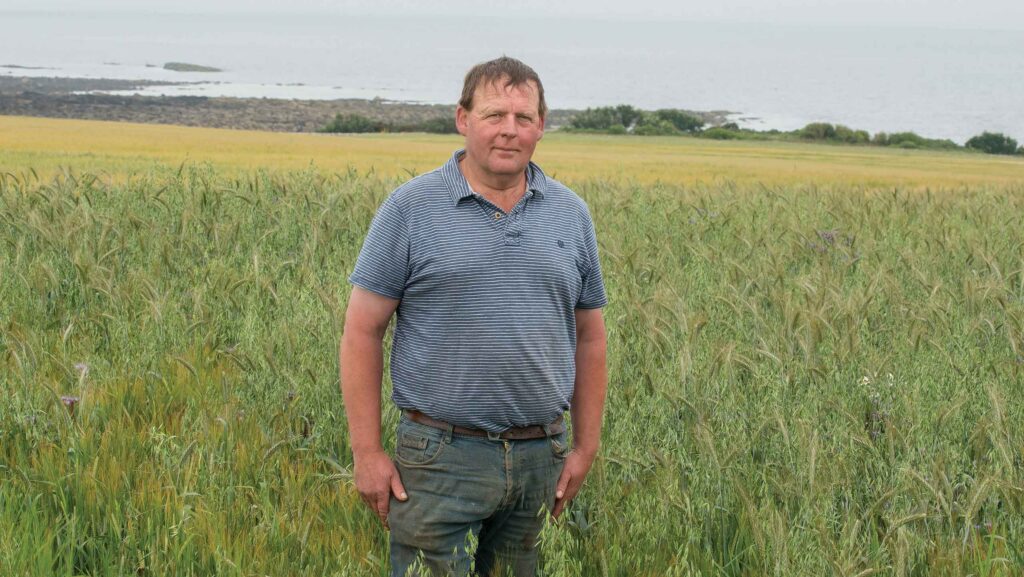 Alan Steven © Angus Findlay
Farmers Weekly Transition Farmer Alan Steven is undecided whether reducing cultivations has been beneficial after the dry and hot summer.
We catch up with him in Fife to find out how the farm’s Transition goals are progressing.
See also: All updates from Alan Steven
Farm facts
Hillhead Farm, Kingsbarns, St Andrews, Fife
- Farm size 138ha
- Rainfall 710mm
- Soil type loam
- Crops Potatoes, sprouts, parsnips, malting barley and wheat
If there was a year for Alan Steven to establish whether scaling back field cultivations could improve the moisture-retaining capacity of his farm soils, it was 2026.
Two years ago, Alan replaced a Sumo one-pass stubble cultivator with an Agriweld Multi Till 5T low-disturbance machine, opting to reduce cultivations instead of pursuing his original Transition goal of direct-drilling crops.
He has since fitted a seed box to the top of that cultivator to facilitate the sowing of cover crops in one pass, the seed now blown onto the soil and rolled in.
After a summer of severe drought, the benefits or otherwise of reducing cultivations are a grey area, he admits.
“Some fields that were stubble and ploughed perhaps retained moisture lower down in the profile better than others than were winter grazed by sheep and had puddled.” His highest-yielding spring barley crop was in a field that followed sprouts, one that was nearly too wet to cultivate after weeks of rain.
“We shallow-cultivated to let the soil dry out for a week and followed that with a proper cultivation,” Alan explains.
“I think we almost need to go back to early winter ploughing to slowly get down into the soil profile to where the roots need to grow.
“If there is good soil structure and stubble has been left, and you let the moisture get down into that stubble, you only need to cultivate the top couple of inches to get a good-enough seed-bed for sowing.”
It has been a challenging growing year, but two days of showers in June, delivering 50mm of rain, were sufficient to rescue the grain harvest.
All but one field of barley hit malting specification, with screenings of 1-2% compared to 15-20% in 2025.
“The rain stopped crops from going into shutdown mode and we had more showers in July to help them along,” says Alan.
“Malting barley yielded an average of 7.5-8t/ha and wheat 10t/ha.
“We are growing all seed potatoes again this year and will probably burn them down earlier so we don’t have a surplus, but perhaps this year could be the year for having a surplus.”
Transition goals
- Reduce cultivations
- Overcome long distance to markets
- Improve resilience to coastal climate
Explore more / Transition
Follow the experiences of our 16 Transition Farmers and access in-depth supplements, expert webinars, live events and practical content covering the challenges and opportunities facing farm businesses.
Transition is an independent editorial initiative supported by our UK-wide network of partners.
Explore the Transition hub for the latest insights, resources and events.
