

Advertiser content
How to turn farm roofs into solar-powered income
With farm input costs remaining volatile, many UK growers and livestock producers are looking over their boundary fences for ways to cut overheads.
Yet, the most powerful tool for slashing your monthly bills might not be in the fields or the feedstock – it is likely sitting right above your head.
Farm outbuildings, grain stores, and cold store sheds are ideal platforms for solar energy generation.
While modern commercial businesses pay high premiums to lease land or reinforce weak metropolitan roofs, farmers sit on vast, open, unobstructed roof spaces perfectly angled to capture free energy.
By turning unused roof space into a power station, UK farmers are taking back control of their energy security, insulating their businesses from grid price spikes, and establishing a secondary income stream.
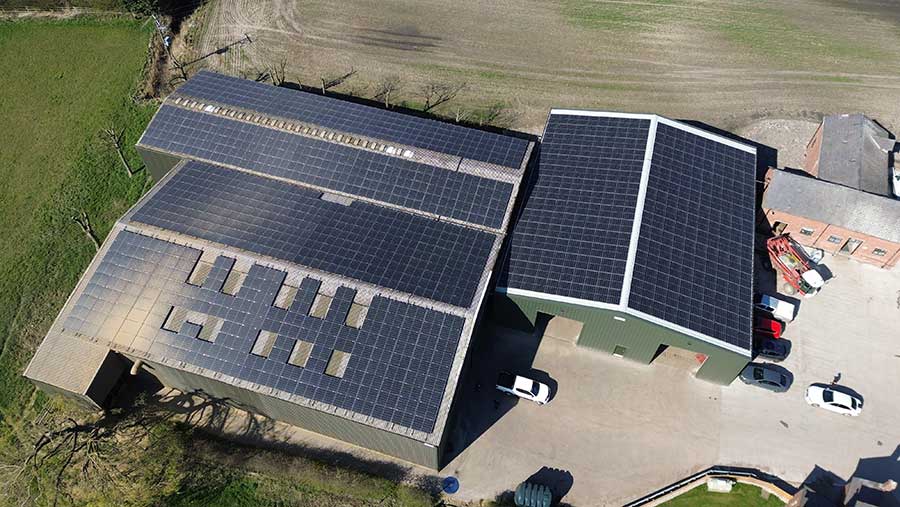
© Geo Green Power
Why farm roofs are perfect for solar
Unlike ground-mounted systems, which can eat into valuable productive acreage or require complex planning permission, roof-mounted solar utilises existing footprint.
- High on-site consumption: For dairy farms with heavy morning and afternoon milking cycles, or produce units with power-intensive cold storage, energy usage matches peak solar generation. Using your own power (self-consumption) saves you the full retail price of importing electricity from the grid.
- Minimal planning hurdles: In most parts of the UK, roof-mounted solar arrays up to 1 MW fall under Permitted Development Rights (PDR). This dramatically cuts down on the paperwork and delay compared to ground-mounted installations.
- Diversified revenue: Any surplus power you generate but don’t use can be exported back to the grid via the Smart Export Guarantee (SEG) or through private Power Purchase Agreements (PPAs), turning a static asset into a cash-flow generator.
The four golden questions: Is your roof solar-ready?
Before you sign a contract with an installer, every farm business owner needs to address four vital structural and environmental areas to ensure their investment yields a strong return:
1. Can the frame take the weight?
A standard solar system adds roughly 10-15 kg/m2 of weight to a roof. Modern steel portal buildings (post-1990) are typically over-engineered and can handle this extra load easily.
However, older timber-framed structures or concrete truss designs require careful assessment. A structural engineer must also factor in “wind uplift” and “snow drift” loads, as a strong rural gale can exert massive lifting force on a large array.
2. What is the roof cladding made of?
If you have older asbestos cement (AC) sheets – common on buildings constructed before 2000 – installing solar is more complex.
Because drilling into asbestos is strictly regulated, you will need to consider “over-cladding” (laying a new metal skin over the old roof) or replacing the roof entirely.
For modern composite metal sheets, solar brackets can be fixed easily, quickly lowering installation costs.
3. What is happening under the roof?
Livestock sheds (pigs, poultry, and dairy cows) generate high levels of humidity and ammonia.
Ammonia is highly corrosive to standard aluminium brackets and electrical copper wiring.
If you plan to install solar on a livestock shed, you must ensure the mounting system and electrical cabling are strictly rated for agricultural use with anti-corrosive coatings.
4. How’s your grid connection?
If you intend to install a system larger than 3.68 kW per phase, you must secure permission from your local Distribution Network Operator (DNO).
Securing a “G99 grid connection” early is vital. If the local grid is congested, it could limit how much energy you can export, altering your payback calculations.
Real farm success stories
Case study 1: The arable farm saving £3.3 million
- Farm profile: A 200-acre farm in Lancashire.
- The problem: Surging electricity prices were eating into margins, throughout the farm.
- The solution: The farm installed a 450kWp solar PV system on several farm buildings.
- The results: By adding solar to several roofs on the working farm, they now produce 297,000kWh of electricity every year. This slashed their annual electricity bills, projecting a saving of £3.3 million in the lifespan of the system.
Case study 2: Sheep farm diversifies with camping
© Geo Green Power
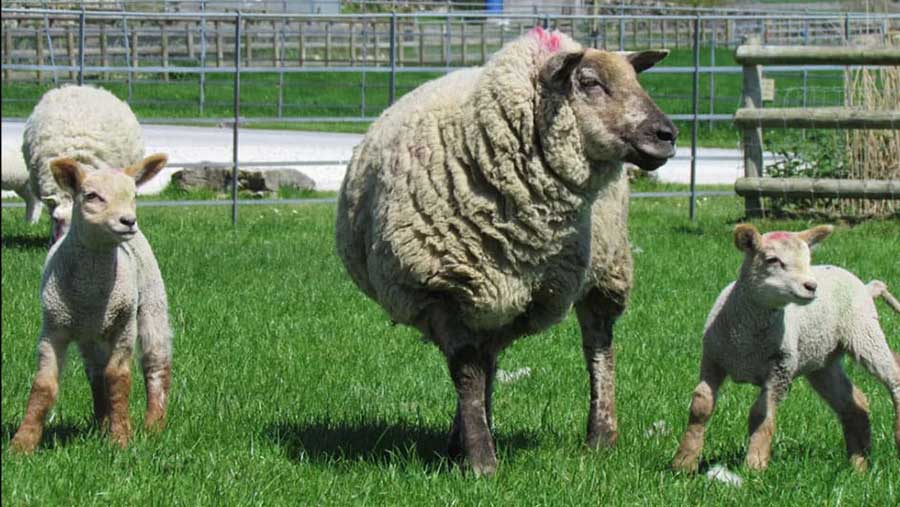
- Farm profile: A 110-acre sheep farm in Derbyshire.
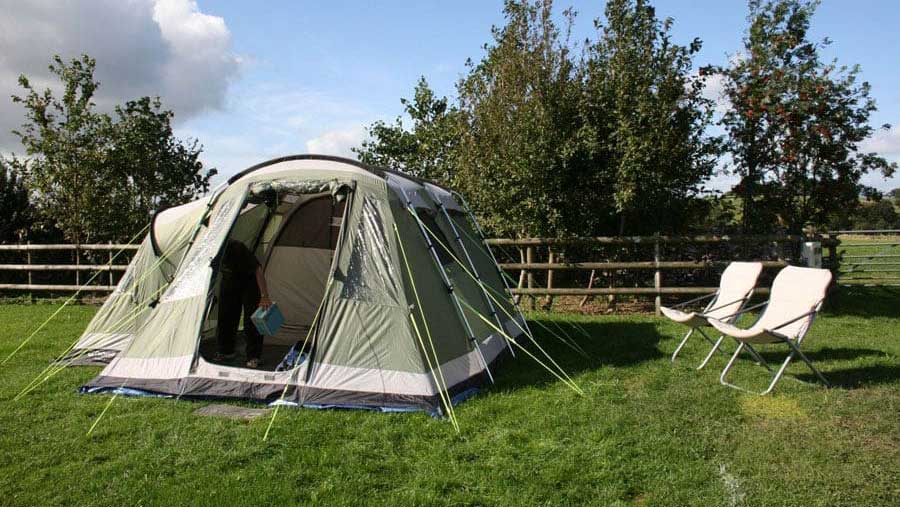
- The problem: Farm owner Edward wanted to diversify the site with the introduction of a campsite, powered by green energy for the heaters, hot water and EV chargers.
- The solution: A 50kWp array was mounted onto the roofs of the existing buildings on the campsite grounds.
- The results: A sustainable camping experience for anyone who visits. The 4 acres dedicated to this part of the business now boasts an impressive 19 tonne CO2 annual saving from before.
© Geo Green Power
Ready to test your barn roof?
Before committing to an installation, use the four golden questions above as a practical starting point for assessing whether your barn roof could be suitable for solar.
Checking the building’s structure, cladding, internal environment and grid connection will help you understand the key issues to raise with an installer.
The next step is to arrange a professional survey so your buildings can be properly assessed and you can identify the best route to turning unused roof space into a valuable asset.
Provided by
Geo Green Power is one of the UK’s leading renewable energy installers.
As experts in renewable energy, our focus is helping businesses and homeowners across the UK to take control of their energy, save money and reduce emissions.