

How Transition Farm businesses are adapting to change
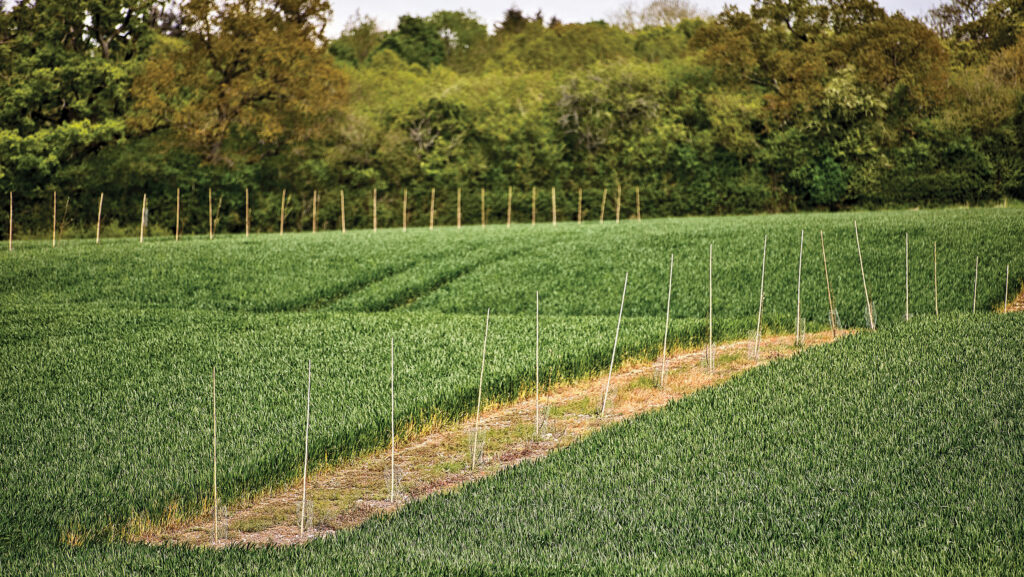 Newhouse Farm in Hampshire © Andy Bason
Whether it’s a different direction, a new business arrangement or a shift in focus, farms across the country are making changes to the way that they are structured and run.
In this article, Farmers Weekly caught up with two of our original Transition Farmers, to find out how they are preparing for the roller coaster ride ahead and what the current industry uncertainty means for them.
See also: What could the future of crop protection look like?
Andy Bason, Oxdrove Farming
A restructuring of the business means it’s all change at Newhouse Farm in Hampshire, although Transition Farmer Andy Bason will be remaining at the helm and is looking forward to the future.
Oxdrove Farming is now the trading name of the business, as Andy moves from being the manager to becoming the contractor, having reached a new agreement with the owner.
As such, he will be continuing with the regenerative farming approach that is established across 610ha – the combined area of Newhouse Farm and nearby Chilton Manor Farm.
He is being joined by his son and his stepson in the new venture and says that he is going into it with his eyes wide open.
“I know the farm and I know the figures,” he says. “I have worked here for 37 years and a great deal has been achieved, so it was an easy decision to make – albeit a fairly nerve-wracking and expensive one. ”Making money for both parties really concentrates the mind, he adds.
“We negotiated terms that we are both happy with but have enough flexibility within the agreement and will review it where necessary. It has to work for everyone.”
Since deciding to become the contractor, he has been busy buying machinery and getting ready for the new cropping year.
Oilseed rape is already in the ground, having been drilled on 7 September – once there was some soil moisture.
“It’s gone in with buckwheat as the companion crop and is growing well,” he reports. “It was drilled about a month later than last year, due to the conditions, but that’s the same for most growers in the South.
“It’s a crop that needs to get a good start. Luckily, it’s been making the most of the warm soils and the sunshine.”
Combinable crops will continue to be the focus at Oxdrove Farming, but Andy recognises that some change is inevitable.
Winter barley has been dropped from the rotation, as it didn’t pay, but spring cropping is remaining for now.
“We may have had two bad years with our spring crops but I’m taking a longer-term view before making sweeping changes.
“They help with the rotation and with the workload spread, while local markets for regenerative spring barley are available.”
He is also committed to growing a small area of winter beans, despite the crop struggling in the 2026 heatwave.
“I’m reluctant to farm entirely based on last year. Let’s see how they do this year before consigning them to history.”
Otherwise, he will be putting 260ha of winter wheat in this autumn, as well as some oats.
“It’s all change in some respects with the restructure but business as usual in others.”
Andy admits that he is deliberately keeping things simple in the first year but intends to try out different crops and techniques as time passes and market requirements change.
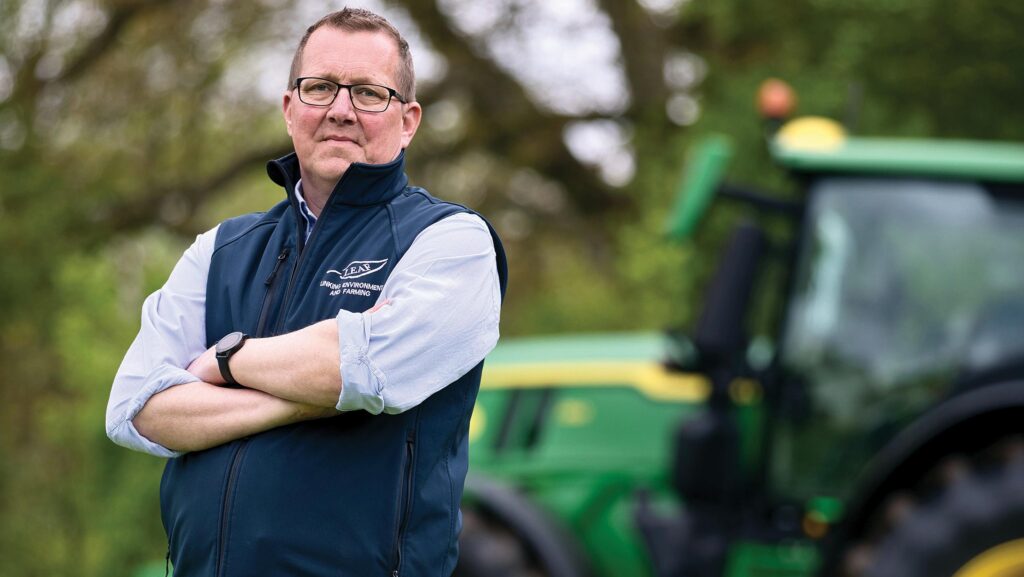
Andy Bason © Richard Stanton
Resilience measures
“We are operating in a changing climate and we know that resilience measures are going to be more important.
“Despite the past two years being dry, our agroforestry enterprise has survived and should really come into its own in the next two years.
“Pruning needs to take place this year for the first time, so they should really start to produce fruit.”
Agri-environment schemes, both Mid Tier Countryside Stewardship and the Sustainable Farming Incentive, are in place on both farms and still have some time to run, giving him some breathing space.
“They bring in useful money but are also good from a farming point of view,” he continues.
“We have used the relevant actions to complement our farming activities, rather than replace them, so we have been able to commit to farming with nature and delivering for wider society.”
Being a finalist in both the Silver Lapwing Award and the Rase Natural Capital Award this year was welcome recognition and proves that this approach – where nature recovery works alongside commercial farming – is working, believes Andy.
“I was runner-up in both of these awards and it shows what can be achieved when we put our minds to something.
“I’m a firm believer that farmers should be shouting about what they’re doing, especially given recent funding turmoil and policy changes.”
Turning nature into income streams is more difficult, he acknowledges, despite having established an agroforestry venture and planted 10ha of new woodland in the past five years.
Sustainability
“The agroforestry is coming with me as the business evolves.
“It doesn’t bring in any additional revenue yet, but it could do in terms of carbon and fruit sales.
“It was the right thing to do and part of a long-term plan.”
Supply chain sustainability contracts are another area of interest, as Andy is aware that the regenerative practices used on the farm are in demand from food manufacturers and consumers.
“These are things that we are doing anyway so it makes sense to be rewarded for them.”
He is also a member of a local cluster group, so is keen to understand more about any collaboration opportunities for landscape change and ecosystem delivery.
For now, uncertainty in the Middle East means that the biggest challenge is the fuel price, he notes.
“Fuel and fertiliser are the two biggest expenses on this farm and we’ve done what we can to reduce our reliance on both of them.”
Reduced tillage has helped bring fuel use down by 40% while a focus on soil health has got nutrient cycling working well, with a resulting 18% reduction in fertiliser use.
“We will keep chipping away at these as there are compelling business reasons, as well as environmental benefits, for doing so,” says Andy.
He also hopes to remain as a Leaf Demonstration Farm, having enjoyed the interaction it involves and the opportunity to inform and educate, as well as to address public concerns about farming.
“My role is changing but my commitment to the farm remains,” concludes Andy.
Raby Estate’s change of direction
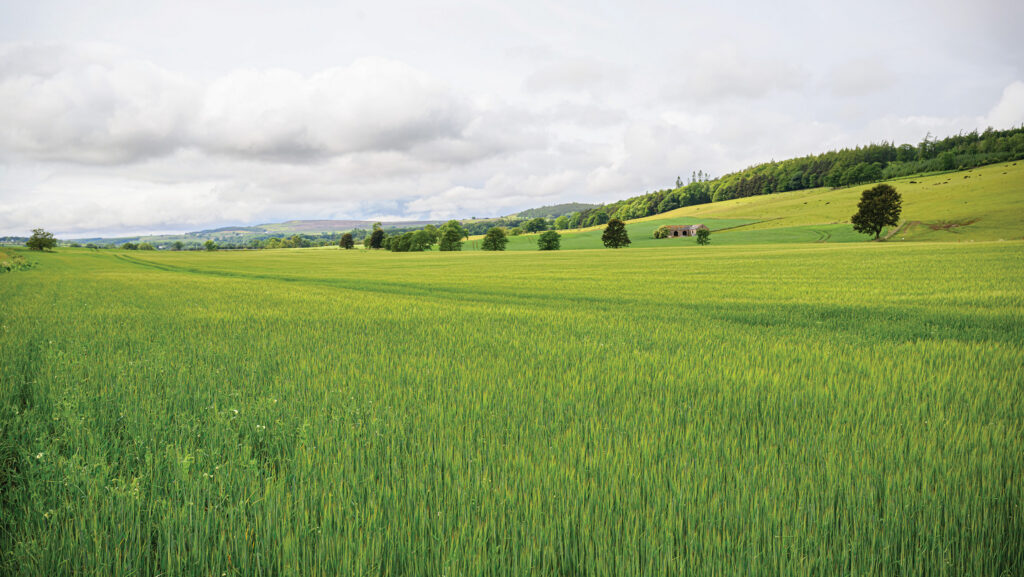
Raby Estate © Richard Lee
With leisure and tourism providing a better return than farming, Raby Estate is capping its farmed area to suit existing infrastructure and expanding its visitor offer with wider activities and experiences.
This involves putting more land down to grass – much of which is marginal for arable production – and altering the existing livestock enterprises, so that they can add value to the estate’s hospitality offer and become part of the tourism experience.
“It’s about playing to our strengths,” explains Robert Sullivan of GSC Grays, who has been overseeing operations since farm manager Phillip Vickers moved on.
“We are changing direction slightly as we want to share and explain how we farm, how our business is relevant to people’s lives and how we care for the land.
“We believe this will interest our visitors and enrich the offer at Raby Castle.
“Even with this slight change of direction, farming will still be a key operation here.”
A regenerative approach remains in place across 810ha of combinable cropping, with 2026 harvest results reflecting the efforts that have gone into building soil health and creating a more sustainable farming system.
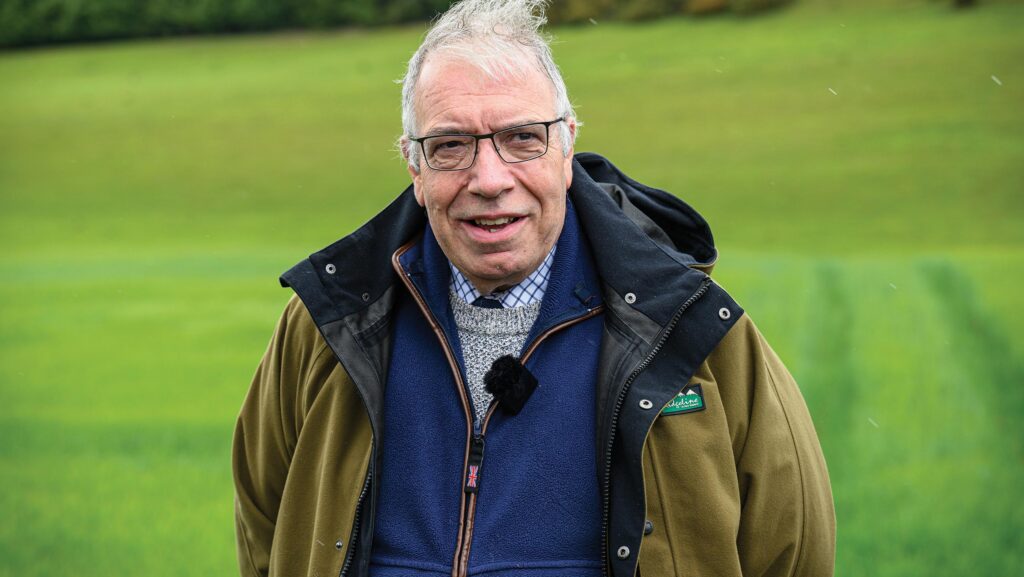
Robert Sullivan © Richard Lee
“We had a decent harvest,” confirms Robert. “Soil type had a bearing but our wheat, oilseed rape and barley crops fared well. It was only the spring cropping that struggled.”
That area of cropping fits in with the current infrastructure, labour and machinery, with the remainder of the land currently in various stewardship schemes to deliver nature recovery – some of which have another two years to run.
“Given recent events, we don’t know what’s going to happen to that funding,” Robert stresses.
“A decision will be made nearer the time as to what we do with the land. Some of it may be let.”
Key decision
The location of the farm’s grain store and dryer has been a key consideration in the new direction, as both facilities are based at the home farm, which also happens to be in the main tourist area.
“When you appreciate there were 300,000 visitors to Raby Castle and the Rising tourism project last year, we are looking to reduce the impact of farm traffic around this area,” he explains.
“We don’t have sufficient infrastructure elsewhere on the estate for storing and drying grain we historically produced. So we need to manage how we operate.”
As with most farms, cropping is weather dependent and flexibility is key, adds Robert.
“We will always aim to get winter crops in, but if conditions suddenly change and we can’t continue drilling through the autumn, we have the ability to switch to spring crops.”
Both Longhorn cattle and sheep numbers are increasing, with the intention that meat from both enterprises can be supplied to the restaurants and hotel on the estate.
At the same time, agri-tourism type ventures are being developed, giving an opportunity to showcase what’s being done on the farm and provide farm-to-fork hospitality to visitors.
“These tweaks are about getting the most from our investment,” summarises Robert.
“The returns from tourism are far greater than those from farming at the moment, so we are cutting our cloth accordingly.
“Of course, that may change in the future, which is why we have retained flexibility and remain open-minded.”
Explore more / Transition
Follow the experiences of our 16 Transition Farmers and access in-depth supplements, expert webinars, live events and practical content covering the challenges and opportunities facing farm businesses.
Transition is an independent editorial initiative supported by our UK-wide network of partners.
Explore the Transition hub for the latest insights, resources and events.
