

Advertiser content
Innovation in ag: How to know what will deliver on farm
There is no shortage of innovation in agriculture.
New crop varieties, precision technologies, AI-powered decision support, biological products and regenerative approaches are arriving at an ever-increasing pace.
Yet for many farmers, the biggest challenge isn’t access to innovation – it’s knowing what will genuinely deliver on farm.
At a time when businesses are balancing tighter margins, changing policy, labour shortages and increasingly unpredictable weather, every investment carries greater risk.
Growers need independent evidence that new technologies, new genetics and new management approaches will improve productivity without compromising profitability.
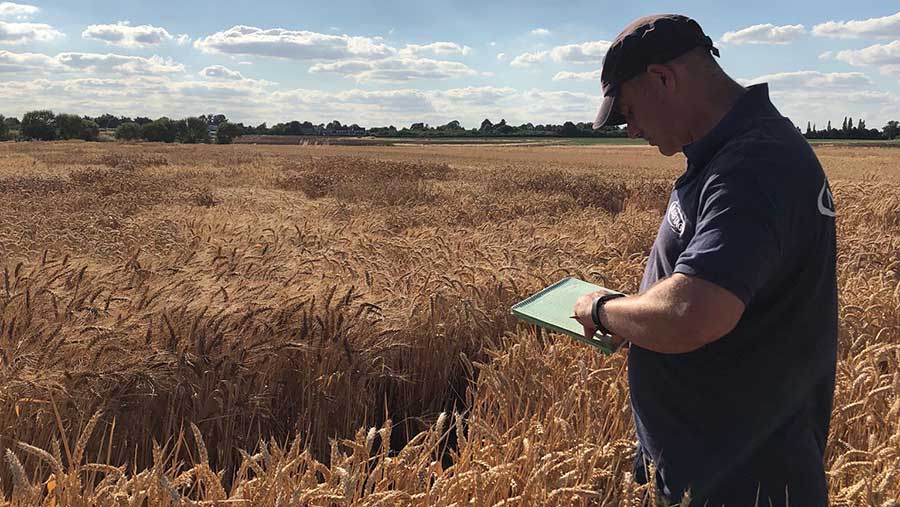
At Niab, as part of the ‘Designing Future Wheat’ inter-institute research project, genetic resources have been created and characterised that capture diversity from wheat’s parent species and wild relatives. This diversity is now in elite wheat backgrounds and has been made available for exploration by the wheat research and breeding communities. © Niab
Closing that gap between scientific discovery and practical farming has become one of the biggest challenges facing UK agriculture.
Too often, promising research never reaches commercial farming, or reaches it without enough independent testing under real farming conditions.
Equally, farmers’ priorities can be missing from the earliest stages of research, meaning innovations are developed without fully reflecting the realities of modern crop production.
That is the challenge Niab has set out to address through a new framework of Strategic Programmes, bringing together expertise from across crop genetics, agronomy, crop protection, soils, data science and systems modelling around the issues that matter most to farming businesses.
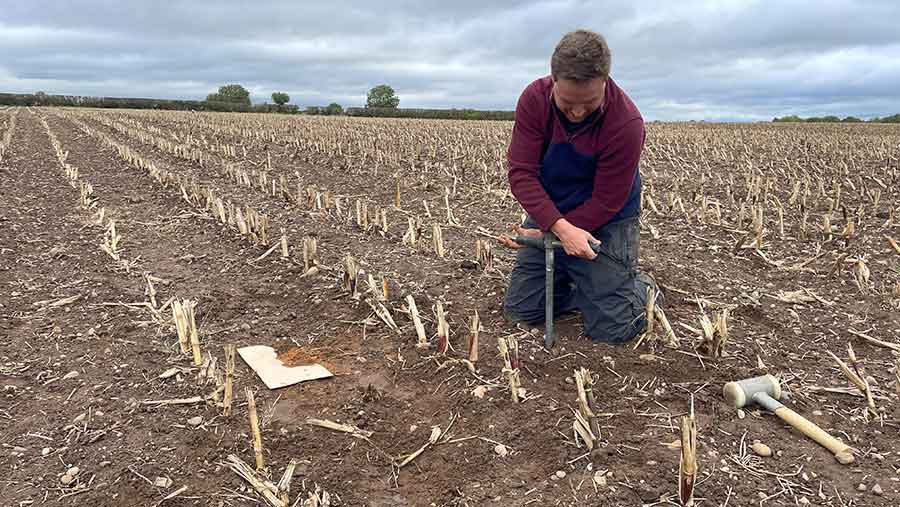
Niab led the ‘Soil Biology and Soil Health Partnership’, funded by AHDB and BBRO, which developed and tested a scorecard to measure and manage soil health on farms. The project explored the key drivers of biological functioning and gave UK growers their first access to clear benchmarks for soil carbon. © Niab
The approach is deliberately practical
Improving crop productivity remains fundamental, but today’s profitable businesses also need crops that are resilient, reliable and capable of performing under increasingly variable conditions.
Niab’s work on genetics, independent variety evaluation and agronomy aims to give growers greater confidence when adopting new varieties and technologies, helping reduce risk while protecting margins.
Climate resilience is another priority moving rapidly from future ambition to present-day necessity.
Research is helping identify cropping systems and varieties better suited to changing weather patterns, while improving understanding of soil health, carbon management and practical measures that both strengthen resilience and reduce emissions.
At the same time, making every input count has become essential. Whether fertiliser, water, energy or labour, improving resource efficiency offers benefits that are both environmental and economic.
Precision technologies, better decision-support tools and improved crop management all have a role in helping businesses produce more from every hectare while reducing unnecessary costs.
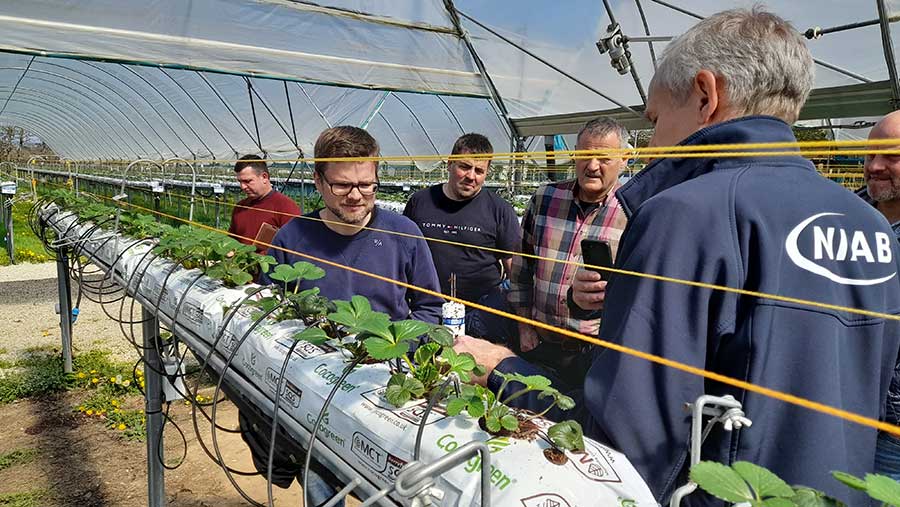
Niab worked with a consortium of industry partners to develop the Water Efficient Technologies (WET) Centre, which provided a semi-commercial scale centre of excellence in protected cropping systems. It allowed evaluation and demonstration of the latest growing systems, including irrigation equipment, substrates, sensors, nutrient formulations, biostimulants and agrochemicals. © Niab
Looking further ahead, diversification will also play an increasingly important role for some businesses.
Developing alternative crops with stronger nutritional characteristics, greater climate resilience or access to emerging markets could help farmers build more resilient rotations and create new income opportunities as demand evolves.
What links all of these priorities is the need for trusted, independent evidence.
Farmers are being asked to make increasingly complex decisions in a rapidly changing environment.
The value of research is no longer measured simply by scientific publications or technical breakthroughs, but by whether it helps businesses make better decisions, reduce uncertainty and improve long-term resilience.
For more than a century, Niab has worked at the point where crop science meets commercial agriculture.
Its Strategic Programmes build on that heritage, but with an even sharper focus on ensuring research reflects the needs of farmers from the outset and delivers practical outcomes that can be adopted more quickly.
Because the future of UK farming won’t be shaped by innovation alone.
It will be shaped by innovation that works where it matters most — in farmers’ fields and on their balance sheets.
To find out more
- Call: 01223 342200
- Email: info@niab.com
- Visit: www.niab.com
Provided by
Niab is a leading UK crop science organisation delivering research, innovation and practical solutions to support productive, sustainable agriculture and horticulture.