

Advertiser content
Nature‑friendly floodplain plan brings added farm income
At Norton Court Farm in Gloucestershire, a nature-based approach along the River Severn is delivering financial returns.
For mixed farmer Debbie Wilkins, flooding is a fact of life. Her farm in Gloucestershire lies on the floodplain of the River Severn, with large areas typically underwater during the winter months, making arable cropping increasingly high-risk and unpredictable.
As a member of the Nature Friendly Farming Network (NFFN), Debbie decided that integrating this land into a whole-farm approach was the best way to maintain financial viability and profitability in the face of these challenges.
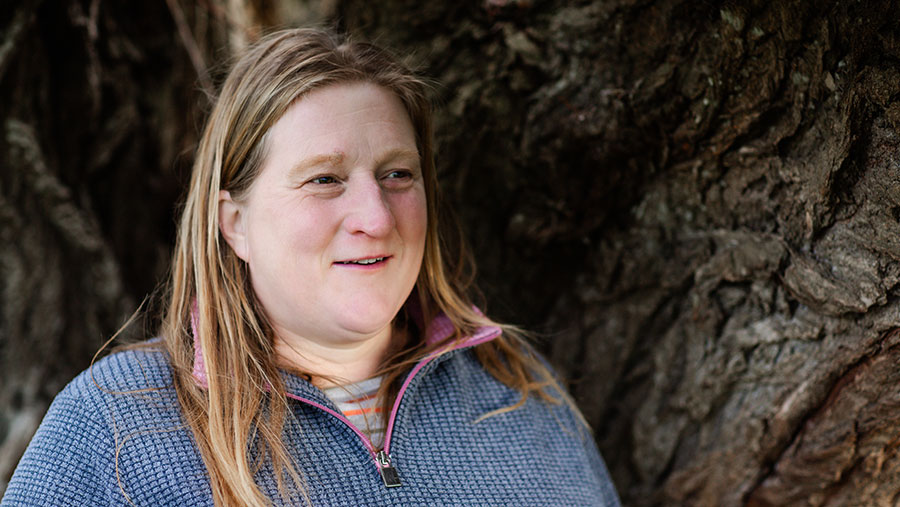
Debbie Wilkins © Nature Friendly Farming Network
What was the initial problem for Debbie?
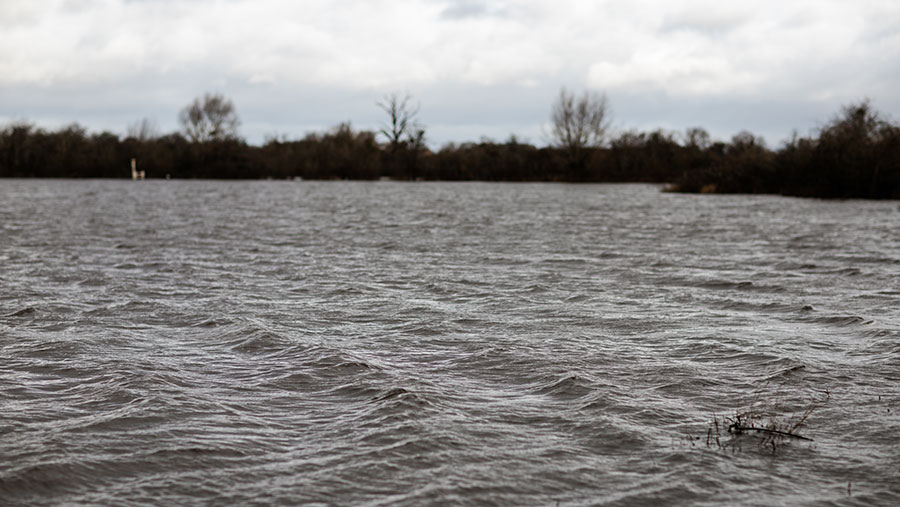
In the wettest winters, around 300 acres of Norton Court Farm (roughly one-third of its total size) can be flooded.
The farm includes around 120 acres located in a low-lying basin on the Severn’s floodplain, adjacent to a Site of Special Scientific Interest (SSSI) nature reserve.
In addition, there is a second 60-acre block of land on her farm that regularly floods, but is not protected by the river’s flood bank.
This means water moves on and off the land more quickly than in the lower-lying basin.
This left Debbie with a dilemma: how to integrate land that is regularly underwater for part of the year into a successful mixed farming business producing arable crops and dairy.
© Nature Friendly Farming Network
Could the land be cropped?
Debbie says some of her neighbours along the Severn floodplain still try to grow arable crops, chiefly maize or spring barley, on land that floods annually.
With maize costing farmers in the area at least £290 per hectare, even in relatively low-input systems, this strikes her as extremely risky.
“I’ve seen horrible pictures of local farmers trying to harvest maize from fields with two or three feet of water in them,” Debbie says.
“I also know there have been years where nothing has been harvested at all. Maize is an expensive crop, and losing an entire harvest leaves farmers seriously out of pocket.
“I use limited herbicide and no artificial fertiliser on my arable crops, but many farmers would use fertiliser and spray a lot more than I do,” Debbie adds.
“Going from stubble to stubble, I spent around £22,000 to grow 76 acres of maize last year, but I’ve seen figures of £1,000 or even more per acre from establishment to harvest.”
© Nature Friendly Farming Network
What was Debbie’s solution?
Debbie chose to act decisively in 2019. She took back the 60 unprotected acres, which had previously been used for spring cropping, and reintegrated them into the pasture grassland system for the livestock side of Norton Court Farm’s operation.
This meant initial costs for seedbed preparation and sowing, but Debbie felt this was worth the investment.
“For me, it was all about the risk of not getting a crop off those fields that led to me turning them back into grassland,” she says.
“I was also extremely concerned about what leaving bare soil exposed over the winter would do to my soil health, especially on fields that flood.”
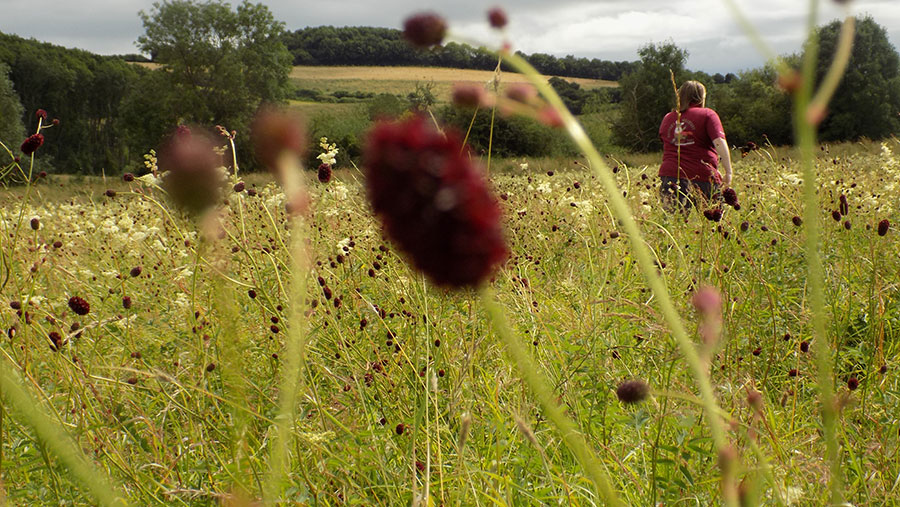
Debbie has made the change work financially by producing hay from her floodplain meadows.
Not only does this save her the cost of bought-in winter feed, but it also opens up the possibility of further income streams.
This winter, with hay costing between £60 and £70 a bale due to shortages, Debbie had a surplus which she was able to sell.
“This isn’t something I normally do; I would usually store my surplus for next winter as an insurance policy, but high prices have given me that extra option this year,” she says.
Instead of the costs associated with arable cropping, Debbie now only needs to reseed parts of the land when they are damaged by winter floodwaters.
The wetland seed mix she uses has remained relatively stable in price, rising from £64 per acre in 2021 to £67 per acre last year.
As her system becomes more established, the need for reseeding has reduced, from the whole 60-acre block in the first year to around 25 acres most recently.
Her aim, over time, is to create a more resilient permanent pasture on this piece of land that requires no reseeding.
© Nature Friendly Farming Network
Further financial opportunities
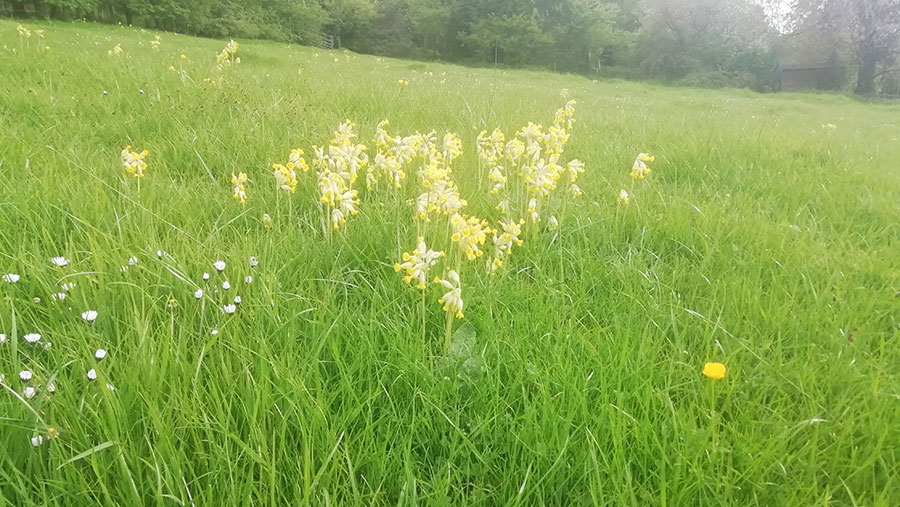
Focusing on species-rich floodplain meadows, a threatened habitat that relies on farming practices for its survival, allows Debbie to access funding from agri-environment schemes.
She is currently in the old Higher Level Stewardship (HLS) scheme and has also taken up herbal ley options under the Sustainable Farming Incentive (SFI).
She is hopeful that the further roll-out of Environmental Land Management schemes (ELMs) will bring greater recognition of the work she is doing for nature.
“The new Countryside Stewardship (CS) Higher Tier has a floodplain meadows option offering around £1,070 per hectare, but I haven’t been able to access it,” she says.
“The old HLS doesn’t offer anything like that, and I feel the CS Higher Tier payment more accurately reflects the public good of protecting downstream communities from flooding.”
Debbie is also interested in exploring private sector investment in nature-based flood management solutions on her farm, but admits she is still unsure how to approach this.
She also looks to maximise the value of all the natural assets on her farm.
When a new track was built, she persuaded a contractor not to burn a pile of brash, instead having the wood chipped for use in her bokashi composting system.
“A box of matches is cheap, it’s true, and hiring a chipper is not, but at least I get something I can put back into my farming system that will continue boosting soil health and reducing my reliance on expensive inputs,” Debbie says.
Conclusions
Debbie is clear that climate change is just one of the reasons she would not want to alter her approach to farming.
“We’re getting more flooding, with major events now happening almost annually rather than every five to 10 years, so for me it makes sense to keep these floodplain areas as grassland and specialise in more resilient sustems.”
Debbie admits she is in a fortunate position, with a farm large enough to design a viable system around extensive floodplains.
However, she encourages other farmers to consider the natural assets on their own farms and how these could support new income streams.
“Not every farm will experience flooding or have the opportunity to create floodplain meadows, but it is about understanding what natural assets you have and what problems you face on your farm,” she suggests.
“Once you’ve found what these issues are, there are often nature-friendly solutions that will keep your farm financially viable. It’s not about choosing between nature or farming, it’s about bringing the two together.”
Provided by
The Nature Friendly Farming Network (NFFN) is a farmer-led organisation helping farmers restore the balance between farming and nature. Membership is free and open to all (farmers, the public, & organisations): nffn.org.uk/register