

Advertiser content
Smart irrigation: How soil moisture sensors cut water use
Every irrigation decision comes down to the same question: “is today the day to turn the pump on, or is that water better held back for a dry spell in three weeks’ time?”
It’s a call growers have always made on experience, and that experience is worth a great deal. The difficulty isn’t the judgement; it’s that the conditions it was built on aren’t the conditions anyone is farming in right now.
Dry spells are arriving faster and lasting longer. The summers where an irrigation schedule set in April held good all season are getting rarer. This isn’t one bad year, it’s the shape of things to come.

© Abaco Group UK
The real problem is information
Ask most growers what’s holding back sharper irrigation decisions, and the answer is usually “we don’t have the right information quickly enough.”
The nearest weather station can be miles away and tells you little about your own fields. Soil moisture is often read from a walk across the ground or a hole dug by hand. And the hard-won sense of what “normally” happens is exactly the thing climate change is now unsettling.
That gap between what you need to know and what you can actually see is where value leaks away (excuse the pun), in water, inputs, in yield that didn’t need to be lost.
The scale of it is hard to ignore agriculture accounts for roughly 70% of global freshwater use, yet irrigation efficiency in many systems still sits below 50%, largely because watering is driven by the calendar or the clock rather than by what the crop actually needs.
For anyone further up the chain, retailers and supply-chain businesses with sustainability commitments and water-risk exposure across a supplier base, that same information gap is a reporting and resilience problem, not just a field-level one.
What field-level monitoring actually gives you
Abaco Group UK, part of Diagram Group, works with farms, retailers (GDO) and supply-chain organisations to close that gap, using soil sensors, on-site weather stations and decision-support software that provide a live, field-by-field picture rather than a general forecast.
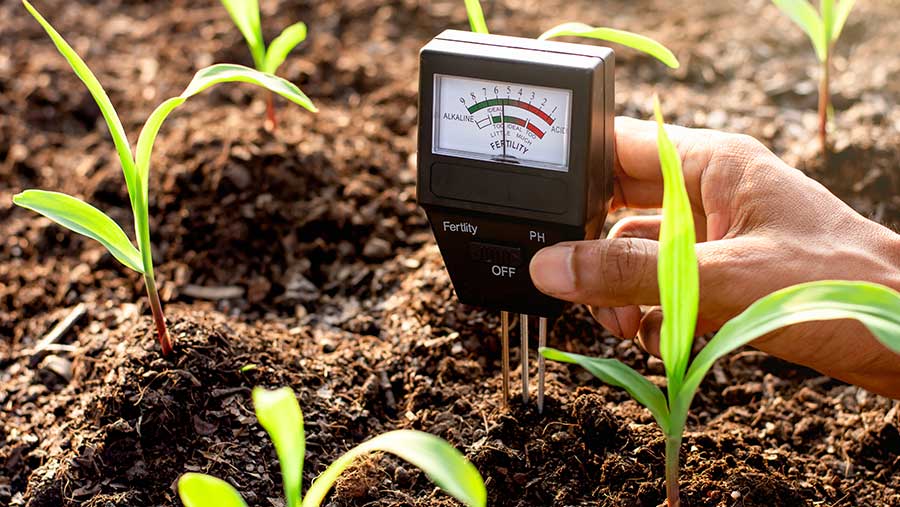
In practice, that means soil moisture and temperature measured at root depth, in real time, reflecting your own fields, not the regional average or the last time someone walked the ground.
Local weather data is captured on your ground by dedicated stations, so rainfall and conditions are yours rather than an approximation from miles away.
Clear, decision-support-driven recommendations, by crop and by zone, on whether to irrigate, hold or adjust, backed by prescription maps that turn the data into an action are recommendations you can put to work.
© Abaco Group UK
None of this works in isolation. The value comes from bringing it together: a data-rich platform is what turns scattered sensor readings and weather feeds into a single, trustworthy picture and a decision-support system (DSS) is what turns that picture into a recommendation you can act on.
Sensors tell you what’s happening, on-site weather stations tell you what’s coming, the platform and DSS tell you what to do about it.
Does it actually save water?
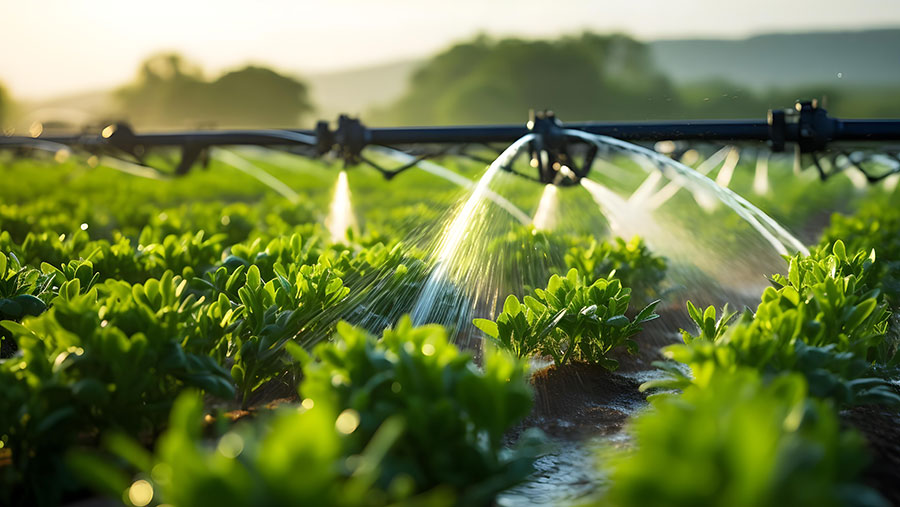
Soil-moisture-based irrigation control has been shown to cut water use by at least 20% compared with traditional scheduling.
A soil-moisture-sensor-supported decision-support system saves in the region of 10–17% of water, without sacrificing the crop.
The gains are largest precisely where sensors, weather data and a DSS work together rather than as standalone tools.
The exact figure depends on soil, crop and system, but the direction of travel is consistent: watering on evidence outperforms watering on habit and does so while protecting yield rather than trading it away.
For business’s facing tighter licenses and less predictable rainfall, that’s not only an environmental gain. It’s lower input cost.
© Abaco Group UK
Consistency across the whole operation
Once monitoring is automated, the busiest weeks of the season no longer hinge on manual checks across every field. Alerts flag what needs attention, so time goes where it counts.
And for anyone running multiple sites, crops or tenancies, or coordinating a supplier base, that consistency is the real prize: everyone is working from the same live picture rather than a patchwork of separate readings.

© Abaco Group UK
Where to start
Every operation’s water position is different; crop, soil, geography and license all shape what “smart” actually looks like in each case. There’s no one-size-fits-all answer.
To see how field-level monitoring and decision-support work in practice, take a look at the Diagram Solutions and Netsens platforms, or get in touch with Abaco Group UK for a straight conversation about where it could make the biggest difference to your operation.

© Abaco Group UK
Provided by
ABACO Group UK builds resilience into land resource management - integrating 30 years of expertise with AI-driven delivery across satellite imagery, IoT sensors, lab data, and spatial intelligence. From precision agriculture to environmental sustainability, we help governments, supply chains, agri-food partners, and farmers make informed decisions from farm to market.