

Transition Farmer: Coccidiosis presents enormous challenge
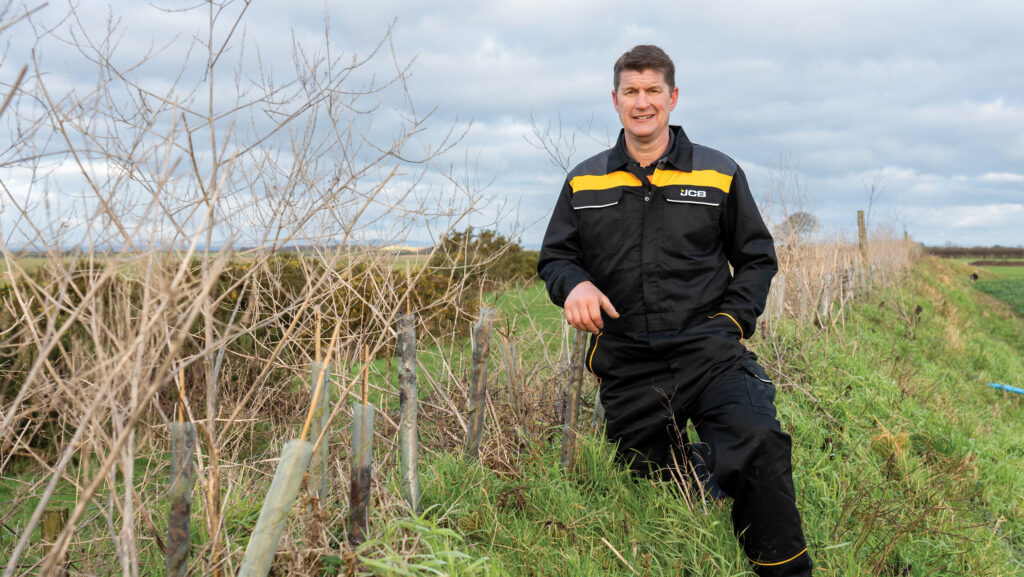 Vaughan Hodgson © Angus Findlay
 Farmers Weekly Transition Farmer Vaughan Hodgson has been managing the fallout of a coccidiosis breakout at the end of last year.
We catch up with him in Cumbria to find out whether he has got on top of this perennial health issue, and how his Transition goals have progressed in 2026.
See also: All updates from Vaughan Hodgson
Vaughan Hodgson
Farm facts
JG & DE Hodgson, Kirkbride, Wigton, Cumbria
- Farm size: 244ha
- Annual rainfall: 1,250mm
- Soil: Heavy red clay, silty sand, black peat
Coccidiosis is the biggest challenge in the Hodgson family’s 116,000-bird broiler enterprise, commonly causing the feed conversion ratio (FCR) to increase from the 1:55 achieved when birds aren’t infected to at least 1:6.
Authorised medication has at times been successful, other times not, but lessons learned along the way are helping to inform decision making on future controls.
After a significant outbreak in December 2025, disinfection at turnaround has been stepped up and a new additive is being trialled in drinking water.
It is a work in progress and, as Vaughan Hodgson emphasises: “The results have yet to be determined.”
He intends to trial the additive for three crops, to test its performance in a winter, spring and summer crop.
“That gives us a fair range of weather conditions and different flocks and should give an idea if it is going to work or not.”
Coccidiosis is a perennial health issue he is determined to get on top of, to improve bird welfare and financial performance. The challenges it presents are enormous.
Frequency of “top up” litter in the sheds has had to be stepped up to protect bird welfare, an unpleasant and costly job.
Infection mostly occurs shortly after thinning at 32 days, after a proportion of the flock has been removed to lower stocking density, which creates an element of stress in the birds.
Mortalities don’t increase but birds never regain pre-infection performance and fail to reach predicted slaughter weights.
“An FCR in the 1:6s instead of the 1:5s might not seem much but in broilers it is a tremendous difference and financially it is really damaging because feed is our number one cost. If the birds aren’t converting feed into meat we are simply spending money but not getting a return,” Vaughan points out.
“We lose margin and potential income, not a few hundred pounds but umpteen thousand when it is a bad challenge.”
Transition goals
- Support the next generation
- Mitigating loss of Basic Payment Scheme
- Dealing with increasingly uncertain weather
Explore more / Transition
During the series we follow our group of 16 Transition Farmers through the challenges and opportunities as they seek to improve their farm businesses.
Transition is an independent editorial initiative supported by our UK-wide network of partners, who have made it possible to bring you this series.
Visit the Transition content hub to find out more.
