

Transition Farmer: IHT poses threat to succession plans
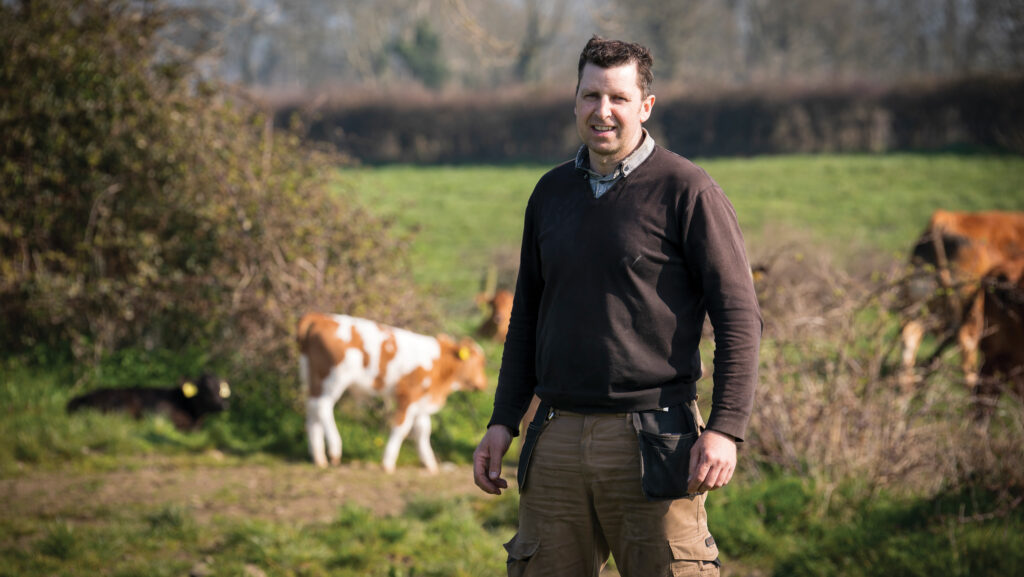 Fergal Watson © Steffan Hill
 The watering down of the initial tax proposal to inherited farmland has done little to protect family farms such as Farmers Weekly Transition Farmer Fergal Watson’s.
We catch up with him in County Down to find out more on the situation, and discover how it is impacting his Transition goals.
See also: All updates from Fergal Watson
Fergal Watson
Farm facts
Watson Farms, Ards Peninsula, County Down
- Farm size: 285ha split across three units
- Annual rainfall: 810mm
- Soil type: Sandy to medium loam
For beef farmer Fergal, raising the initial planned IHT threshold from £1m to £2.5m only limits the damage it will inflict on the farming business he runs with his wife, Lucy, on the Ards Peninsula in County Down.
His mother, who is 81 and has dementia, owns the farm and when it passes to Fergal upon her death he will have to hand over £1m to the Treasury.
One of Fergal’s Transition goals is to improve business resilience but, unless the IHT policy is scrapped, he will need to sell land to pay that sum which means scaling down the enterprise.
That Transition aim is being further tested because investment in the farm is being stifled as Fergal has no power of attorney over his mother’s affairs.
“Everything is on hold right now, there are things I would like to do but I can’t at this point in time, I have to make decisions day by day.”
Strengthening cattle numbers is the one change to increase business resilience within his control and a trouble-free calving period this spring is aiding that ambition.
Seventy-five cows and heifers from the 200-head herd delivered calves in the first three weeks and only three were caesarian births. It can mean very long working days but when calving isn’t keeping Fergal awake, IHT is.
“We are a family farm, all we want to do is produce good food, but this looming IHT would be the biggest thing to hit me in my farming career.
“I have been to Westminster to talk to politicians, written emails to MPs about how IHT is going to affect our family and how unfair it is.”
His daughter, Éabha-Marie, who is 17, has her heart set on farming and Fergal worries about the impact of IHT on that next generation of farmers.
His only glimmer of hope is that the existing government or a new government will change its mind on IHT in his mother’s lifetime. Until then, he can’t progress the business.
“I am not in a position where I feel comfortable changing direction, I just have to do as best as I can, try to keep cattle numbers as high as I can to get as much out of the farm as I can for now, without stretching myself too far financially or taking too many chances.”
Transition goals
- Recruiting and retaining farm staff
- Restructuring suckler herd
- Improving business resilience
Explore more / Transition
During the series we follow our group of 16 Transition Farmers through the challenges and opportunities as they seek to improve their farm businesses.
Transition is an independent editorial initiative supported by our UK-wide network of partners, who have made it possible to bring you this series.
Visit the Transition content hub to find out more.
