

Transition Farmer: OSR reset after 2025 crop losses
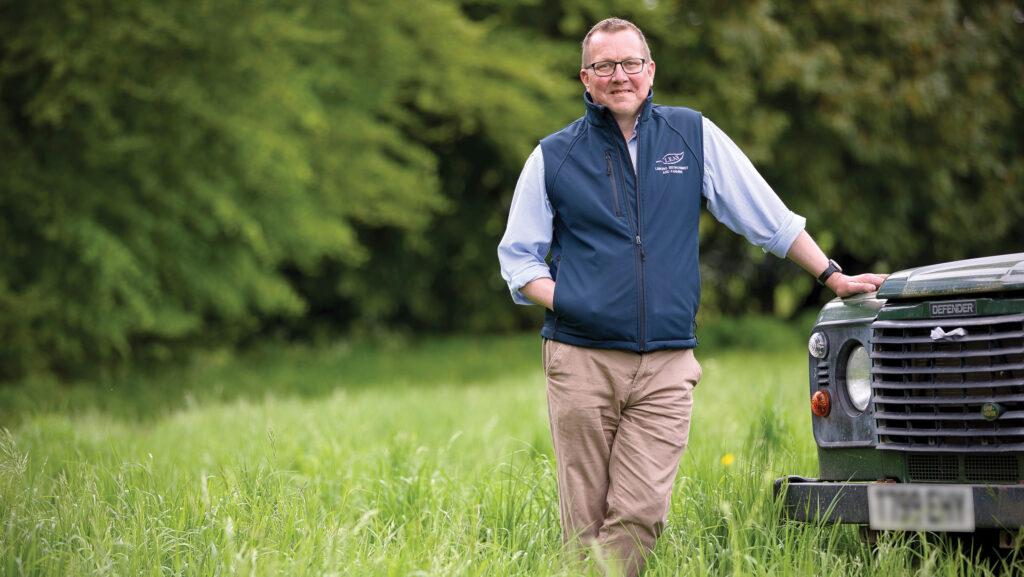 Andy Bason © Richard Stanton
 Farmers Weekly Transition Farmer Andy Bason has been improving OSR performance through major agronomy changes, and testing lower nitrogen inputs to cut costs and environmental impact.
We catch up with him in Hampshire to find out how the farm’s Transition goals have progressed so far in 2026.
See also: All updates from Andy Bason
Andy Bason
Farm facts
Newhouse Farm, Northington Down, Alresford, Hampshire
- Farm size: 800ha (main farm)
- Annual rainfall: 770mm
- Soil type: Loam
A “hard reset” of oilseed rape (OSR) agronomy at Newhouse Farm is yielding good results.
After the crop suffered big losses in 2025, a rethink was needed, admits farm manager Andy Bason.
Among the changes introduced were a switch from planting home-saved seed to purchasing seed and bringing drilling forward to early August.
Conventional varieties were historically grown but hybrids have now been introduced.
“We also baled the straw straight after harvest to try to alleviate some of the slug pressure,” says Andy.
“The hard reset seems to have worked but that said OSR crops are doing well everywhere.
“But we had to do things differently and I am sure everything has played a part,” says Andy.
What is also not clear-cut at this stage is how land has responded to lower nitrogen (N) application rates, a trial supported by Southern Water.
“The plot where we applied no N surprised me in that it only yielded 3t/ha less than the field average of 7.8 t/ha but we can’t read too much into it yet because of residual N in the soil and other factors, it is a bit of an eye opener though,” says Andy.
“We hope to reduce fertiliser use overall and that is a particular priority in this current climate with prices at such a high level.”
Reducing inputs is not just about improving business resilience but is being done with one eye on future generations – reflected also in Newhouse Farm’s policy of hosting school visits.
Schools have been welcomed onto the farm for the past five years but demand has increased year on year to an average of one a month.Andy regards these visits as “massively important”.
“We have got some really good connections with local schools, some are coming back for their second and third year, one that visited last week immediately booked up again for next year.
“Schools want to fit a visit around their curriculum and these are quite varied, we can cater for most elements whether that’s geography or a little bit of history, we can make it work depending on what they are learning.”
Transition goals
- 30% cut in carbon emissions
- Establish 10ha of agroforestry
- Establish 10ha of woodland
Explore more / Transition
Follow the experiences of our 16 Transition Farmers and access in-depth supplements, expert webinars, live events and practical content covering the challenges and opportunities facing farm businesses.
Transition is an independent editorial initiative supported by our UK-wide network of partners.
Explore the Transition hub for the latest insights, resources and events.
