

Transition Farmer: Tree planting brings SFS frustration
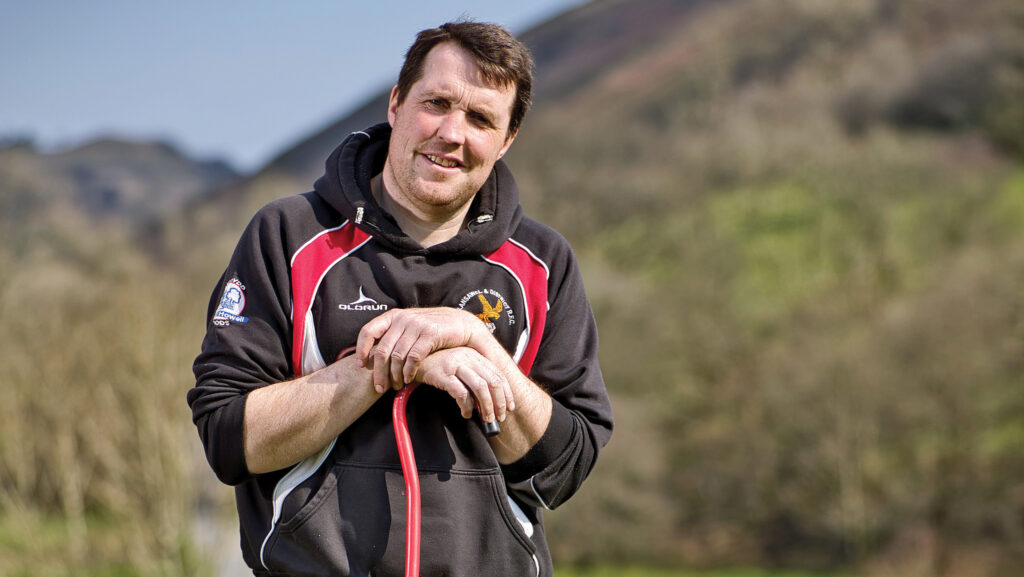 Irwel Jones © Richard Stanton
 Farmers Weekly Transition Farmer Irwel Jones has been preparing for additional tree planting while managing existing woodland habitats.
We catch up with him in Carmarthenshire to find out how the farm’s Transition goals have progressed so far in 2026.
See also: All updates from Irwel Jones
Irwel Jones
Farm facts
Aberbranddu Farm, Llanwrda, Carmarthenshire
- Farm size: 375ha acres (255ha owned and 120ha rented)
- Annual rainfall: 2,000mm
- Soil: Clay and peaty on marshy areas
More than half of the acreage Irwel Jones farms is classified as habitat and includes 65ha of mature woodland.
But the upland sheep and beef farmer will be required to plant 250 trees as a proviso for entering Wales’ new post-Brexit subsidy scheme.
Irwel applied to join the Sustainable Farming Scheme (SFS) ahead of the 15 May 2026 deadline.
As the process of phasing out the Basic Payment Scheme begins in Wales, the SFS offers the business financial security, which Irwel says has been helped by the Welsh government confirming payments for the entry tier of the SFS, the ‘universal’ layer.
“We have a figure now for what we will receive and it seems very reasonable compared to the payments first proposed so it is one less financial worry for us, although there is still little clarity on the optional tier and the payments for that.”
But aspects of the scheme are too prescriptive, Irwel suggests.
“When I totalled up how much habitat land we had to include on the SFS application, 51% of the farm was classified as habitat, including 160 acres of oak woodland, but we must still find somewhere to plant another 250 trees because it is a condition of entry.
“It highlights just how prescriptive the scheme is, it doesn’t allow for variations according to individual farms.
“I can easily find somewhere to plant 250 trees but it is frustrating that we seem to be ruled by bureaucracy rather than common sense.”
Entering the SFS won’t affect his farming system as he has already reduced fertiliser and fuel inputs and scaled back sheep numbers to match that, from a peak of 1,500 breeding ewes to lambing 1,300 in 2026.
“It was a policy that we were already well on the road to but we were pushed in that direction by fertiliser and fuel prices not the SFS,” says Irwel.
After a period of increasing stock numbers in an attempt to maximise income and benefit from economies of scale, the focus of the family business has now shifted to a lower input system – feeding no concentrates to ewes for example – with goal of creating long term resilience.
The smaller flock reduced pressure at lambing and this paid dividends for ewe and lamb health and with fewer interventions needed.
Transition goals
- Carefully extend and manage natural woodland
- Plant hedgerows to improve biodiversity and aid pasture management
- Rely less on volatile inputs
Explore more / Transition
Follow the experiences of our 16 Transition Farmers and access in-depth supplements, expert webinars, live events and practical content covering the challenges and opportunities facing farm businesses.
Transition is an independent editorial initiative supported by our UK-wide network of partners.
Explore the Transition hub for the latest insights, resources and events.
