

Advertiser content
Why collaboration is key to a resilient future for dairy
Oxfordshire-based dairy farmer David Christensen says fair pricing and farmer-led collaboration are central to delivering sustainable milk production.
UK dairy farmers are operating in an increasingly complex environment, with volatile markets, geo-political instability, rising input costs and climate pressures all reshaping how businesses are run.
Together, these factors are also sharpening the focus on the role of domestic food production and delivering on environmental aims.
Dairy farmer David Christensen believes that collaboration across the supply chain is essential to tackling these challenges, providing greater stability and a platform for progress.
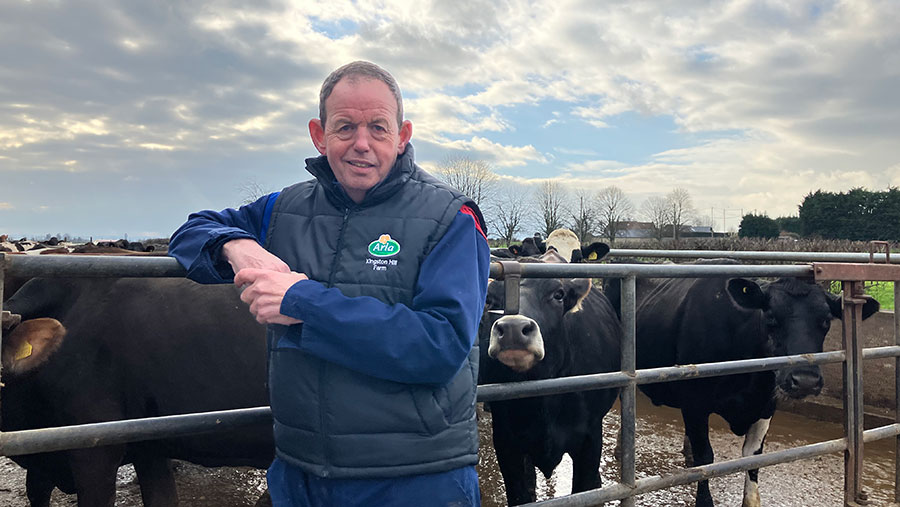
David Christensen © Tesco
Transparency in supply chains
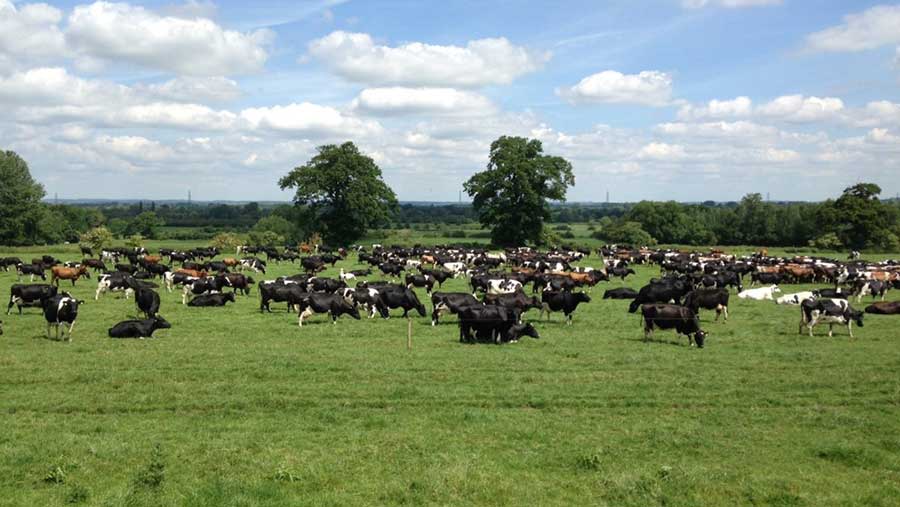
The Christensen family has farmed as tenants since 1968 and today runs two dairy herds, milking more than 950 spring and autumn-calving cows.
The family also runs a small ice cream business, while David has recently become joint Chairman of the Tesco Sustainable Dairy Group (TSDG).
The group’s focus is on fostering closer, more transparent relationships between farmers, processors and retailers, something which David believes is of mutual benefit and hugely important to building a sustainable future for the sector.
“The first rung of sustainability is a fair price,” he says. “Profit is not a dirty word, it enables reinvestment and resilience.”
The TSDG enables regular discussions on cost of production involving farmers, processors and retailers, helping ensure pricing reflects changing conditions.
“What we don’t want is farmers being starved of cash when costs are rising,” he says.
Farmer-led knowledge sharing
Alongside pricing, farmer groups such as the TSDG are playing a growing role in sharing knowledge and improving standards.
Workshops and meetings bring producers together to exchange ideas, compare performance and discuss practical solutions.
“I always say: if there’s a problem, the answer is usually in a room of farmers,” says David.
He adds that having a structure to facilitate those conversations helps turn discussion into action, particularly when it comes to adopting best practice across areas such as antibiotic use, biodiversity and water management.
© Tesco
Testing ideas before scaling up
Groups like the TSDG can also act as a testing ground for new approaches and technologies.
Proposals can be trialled by a smaller number of farmers before being rolled out more widely, provided there is strong scientific backing.
“The key is making sure the science is robust before making recommendations,” he says.
For example, on his own farm, established technologies are already delivering benefits. Wearable sensors on cows monitor behaviour, helping detect fertility cycles and identify illness earlier, allowing faster intervention and reduced reliance on antibiotics.
© Tesco
Balancing production and the environment
Environmental practices are also top of mind for David and other farmers in the group.
Measures David has introduced on his own farm include nectar and pollen strips, wild bird seed mixes, nesting boxes and hedgerow planting, with 400 meters added this winter.
“We try to soften our farming around the edges,” says David, acknowledging that intensive production in field centres can limit biodiversity.
The aim, he adds, is to leave the farm in better condition for whoever manages it in the future.
Looking ahead
Looking ahead, David believes the priority is balancing the needs of farmers, consumers and the wider supply chain.
“It’s about getting the balance right across the whole chain,” he says.
This balance is particularly important given the wider geo-political context, with David reflecting that “increasingly, I think food production will rise up the agenda again.”
“We’ve got to leave this land in really good order because the country will need it for one purpose or another, regardless of who farms it in the future.”
While the challenges are significant, he remains confident in the industry’s ability to respond.
“If you get farmers talking, they will find solutions.”
Find out more about Tesco Sustainable Dairy Group.
Read Tesco’s Greenprint for UK Farming Report.
Provided by
Tesco plc is a British multinational groceries and general merchandise retailer headquartered in the United Kingdom at its head offices in Welwyn Garden City, England. The company was founded by Jack Cohen in Hackney, London, in 1919.