Business Clinic: Advice on selling own units on BNG market
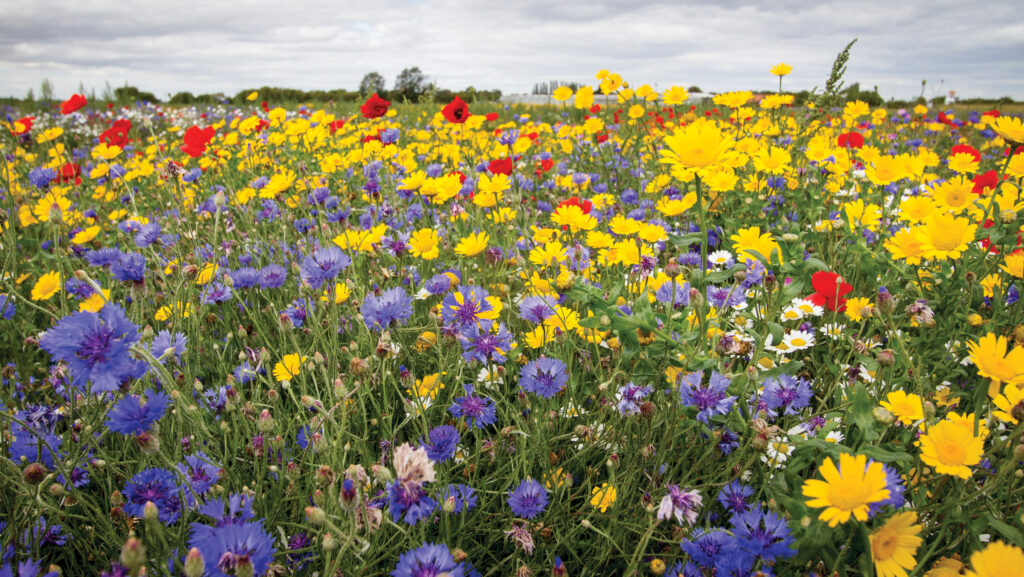 © GNP
© GNP Whether it’s a legal, tax, finance or management question, Farmers Weekly’s expert panel can help.
Below, Lucy George, head of sustainability at Carter Jonas, advises on the considerations of undertaking the creation of biodiversity units to sell on the biodiversity net gain market.
See also: Business Clinic: Advice on managing probate sale of farm
About the author
 Lucy George is head of sustainability at Carter Jonas.
She is part of the natural capital team providing advice to clients to assist them in maximising opportunities in the fast-developing market for environmental services.
Q: We are considering creating and selling biodiversity net gain (BNG) units ourselves, rather than leasing the land out for this.
We’re unsure of how the process compares with other sales of farm outputs.
How should we prepare, what due diligence do buyers expect, and what are the common pitfalls to avoid when entering this market?
A: Creating and selling biodiversity units is not a quick or simple option for land use.
It can be a good opportunity, but it is a long-term commitment – typically 30 years, and often longer once setup and the phasing of sales is taken into account.
BNG is back in the headlines following confirmation that nationally significant infrastructure projects will require biodiversity offsetting from this November.
That is likely to increase demand, but before going too far, I would look carefully at whether this is the right land to commit.
That means considering not only ecological suitability, but also alternative uses. If land might be suitable for development in future, I would be cautious about locking it into BNG.
Due diligence
Property due diligence comes first. Review the title, check for restrictive covenants and reservations, and assess whether the land is used as security for lending, as this can create complications.
You also need to understand any existing agreements or designations.
Land within a site of special scientific interest, or tied into older stewardship schemes, may be more complex to use.
Shorter-term Sustainable Farming Incentive (SFI) agreements are generally easier to manage.
The best sites are typically those with low existing ecological value, because BNG relies on additionality – you need to demonstrate that what you are enhancing or creating is a meaningful uplift.
As a guide for viability, ideally look at committing sites which are 20ha or larger.
Local nature recovery strategies are increasingly important.
These set out local priorities through spatial mapping, such as targeting specific habitats and improving connectivity.
If your land aligns with those priorities, you may benefit from a strategic multiplier within the statutory metric, allowing you to generate more units from the same area.
Once you are confident in the site, you will need an ecologist to carry out a baseline survey, complete the statutory metric, assess habitat options, and produce a habitat management and monitoring plan.
This sets out the current condition of the land, what you intend to create, and how it will be managed and monitored over time.
It is important that habitat design is optimised.
A successful scheme balances ecological suitability with demand, while also factoring in establishment costs, ongoing management practicalities and risk.
Legal agreements
You will also need to enter either a Section 106 agreement with the local authority or a conservation covenant with a responsible body.
Both are legal agreements committing you and your successors, or future owners of the land, to create and maintain the proposed habitats for the period in question.
The covenant route can be quicker and more flexible, although sometimes more expensive.
Only once the legal agreement is in place can the site be registered on Natural England’s national gain site register.
Suppliers can only allocate units to development sites from registered habitat banks.
Common pitfalls include underestimating the time involved, failing to model costs properly, designing habitats that do not match market demand, and assuming income will be immediate.
There are upfront costs for ecology, legal work and advice, and it would not be unusual for these to run into tens of thousands of pounds before any return is seen.
Wider business considerations
My advice is to approach BNG as an intergenerational decision that integrates into your wider business strategy.
Realistically, you should allow six to 12 months to reach a point where units are ready to trade.
Involve the family, consider succession, understand the commitment, and take proper advice. It can work well, but only where the land, structure and market all align.
Do you have a question for the panel?
Outline your legal, tax, finance, insurance or farm management question in no more than 350 words and Farmers Weekly will put it to a member of the panel. Please give as much information as possible.
Email your question to FW-Businessclinic@markallengroup.com using the subject line “Business Clinic”.