Business Clinic: Can you advise on farm’s business structure?
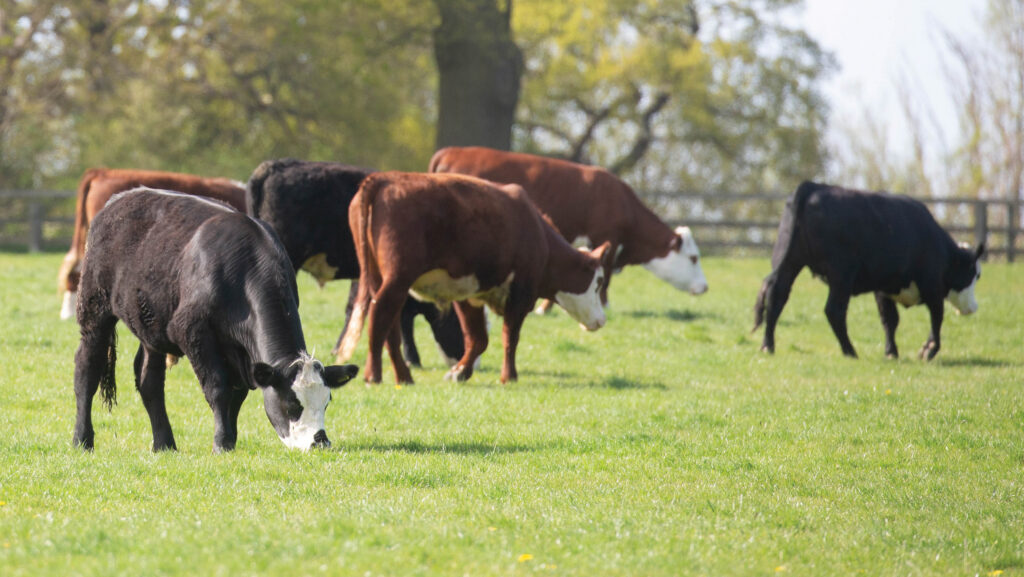 © Tim Scrivener
 Whether it’s a legal, tax, finance or management question, Farmers Weekly’s expert panel can help. Here, Kate Bell, a partner in Albert Goodman’s farms and estates team, advises on the options for business structure in the event of the death of one of two elderly farming partners.
See also: Business Clinic: can farming business have a company as a partner?
About the author
 Kate Bell is a partner in accountant Albert Goodman’s farms and estates team.
She has a family farming background in agriculture and is a chartered accountant with over 16 years’ experience, delivering significant tax savings for farming families through her specialist knowledge of agricultural income tax, capital gains tax, and inheritance tax reliefs.
Kate works closely with farming families of all sizes and sectors, helping them plan for the long term, including guiding families through succession.
Q: Our elderly parents are the only partners in a partnership of the small family farm. What are the pros and cons of leaving this to revert to a sole trade on the death of one of our parents, or bringing their son and daughter into the partnership now? Our parents’ wills state that their qualifying agricultural property relief assets pass to their son and daughter.
A: A partnership must have at least two partners. Therefore, where one partner dies in a two-person farming partnership, the existing partnership ceases.
With regard to the assets, the first step should always be to check the partnership agreement. This sets out what happens to the partnership and its assets on the death or retirement of a partner and can be crucial in determining who is entitled to partnership property, as a partnership agreement takes priority over a will.
Therefore, it is important to establish which assets are owned personally and which belong to the partnership.
If the surviving partner continues farming as a sole trader, there are several accounting and tax points to consider, as well as the practicalities.
Income tax
A final partnership tax return will be required up to the date the partnership ceases. From then on, the farming profits or losses will be reported as a sole trade on the surviving farmer’s personal tax return.
It is also worth noting that, from an income tax perspective, there can be no averaging in the final year of trade, which may result in higher income tax liabilities than expected.
Herd basis
Any changes in the partners or business structure can provide an opportunity to review the herd basis election. The herd basis can apply to qualifying production animals, including cows, horses, sheep and pigs.
Rather than being treated as trading stock, the production herd is treated as a capital asset. Herd basis elections can provide a tax-free disposal when a substantial part of the herd, or the whole herd, is sold.
Value added tax
The VAT registration will need to be dealt with. Depending on the circumstances, you may be able to transfer the existing VAT registration to the continuing business rather than applying for a new number.
Employees and payroll
If the business has employees, the PAYE scheme will need to be reviewed and transferred. Consideration should be given to the employees’ status, and they may need to transfer under TUPE to protect their rights.
Banking
Banking can be one of the biggest practical issues. When a partnership ceases, either because a two-person partnership loses a partner or because a partner leaves and the partnership agreement does not state that the partnership continues, the bank may restrict or freeze partnership accounts while matters are resolved. Existing loans and security arrangements may also need to be reviewed or refinanced.
Should the next generation join the partnership?
If a brother and sister ultimately intend to farm together, bringing them into partnership may provide greater continuity and avoid some of the practical problems of moving temporarily to a sole trade.
However, becoming a partner should never be treated lightly, and legal advice should be sought because partners are jointly and severally liable for the partnership, its obligations and its debts.
Partners would also receive a share of the partnership profits, which would affect their personal tax position, and they would need to register for self-assessment and complete tax returns if they are not already doing so.
A new partnership agreement should therefore be drawn up with appropriate legal advice, including a clear understanding of the profit-sharing, capital-sharing and income-sharing ratios, as well as provisions for retirement and death.
Overall, moving to a sole trade may be necessary following the death of a partner, but if the long-term intention is for the next generation to farm together, establishing a new partnership may be the more practical solution.
However, two people going into partnership together without any long-term intention of farming together can create a worse position, which may become costly to resolve if disputes arise.
Tax, legal, banking and succession consequences should therefore all be considered before deciding on the structure.
Do you have a question for the panel?
Outline your legal, tax, finance, insurance or farm management question in no more than 350 words and Farmers Weekly will put it to a member of the panel. Please give as much information as possible.
Email your question to FW-Businessclinic@markallengroup.com using the subject line “Business Clinic”.