

Business Clinic: How do we convert buildings to residential?
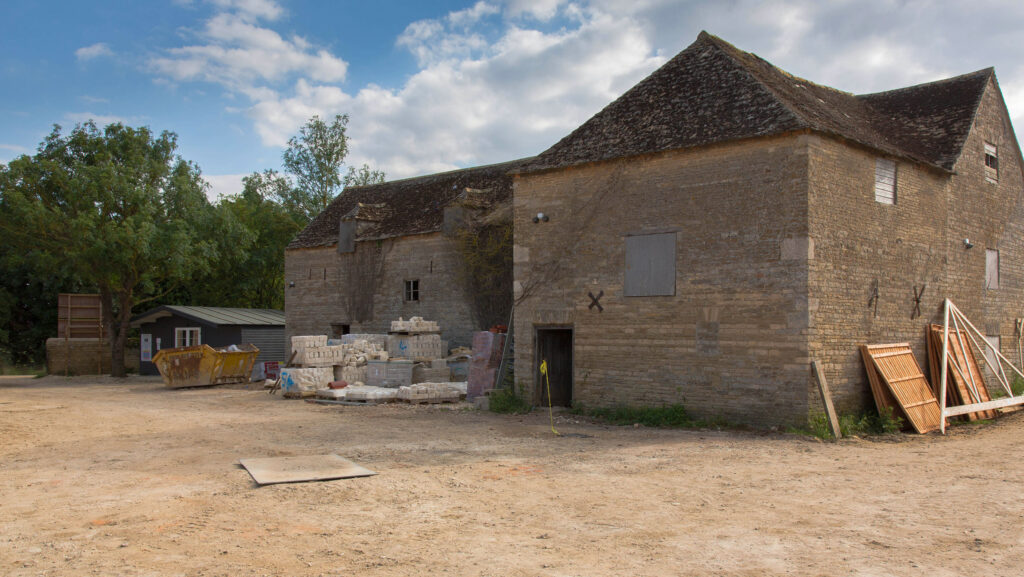 © Tim Scrivener
 Whether it’s a legal, tax, financial or management question, Farmers Weekly’s Business Clinic experts can help.
Here, Fred Quartermain, a partner in Thrings’ planning and environment team, sets out the benefit of and requirements for permitted development rights to convert farm buildings to housing.
See also: Business Clinic: advice on first registration of land parcels
Q: I have a number of dormant buildings on my farm that I would like to put to better use and was considering converting them into homes.
What are my options and how easy would it be to get it approved?
A: When it comes to development in rural areas, permitted development rights are a powerful tool, allowing you to change the use of buildings to suit your need.
This has been more true since they were extended by the government in 2024.
The Town and Country (General Permitted Development) (England) Order 2015 (as amended) (“the GPDO”) provides a general grant of planning permission for various forms of development which would otherwise require the express grant of planning permission.
Of particular use to farmers are Part 6 rights (allowing agricultural permitted development) and change of use rights (such as Class Q for new accommodation and Class R rights for flexibility on commercial use).
Subject to meeting relevant criteria in the GPDO to be considered under permitted development, these enable development to avoid requiring express planning permission, which can save a lot of time and money.
Class Q
While Class Q has been around for some time, there have been a number of changes in recent years. These include an extension in the types of buildings that can benefit from the right.
Originally, Class Q applied only to buildings in agricultural use as part of an existing agricultural unit, but since 21 May 2024 the rights can be used for agricultural buildings that are no longer part of an agricultural unit.
In addition, a single-storey rear extension up to 4m deep is allowed, provided the land was a hard surface (for example a concrete yard) on or before 24 July 2023.
Class Q development now includes the change of use of buildings on an established agricultural unit or a former agricultural building (now no longer part of an agricultural unit), and any land within that building’s curtilage.
This covers up to 10 homes and up to 1,000sq m across those 10 homes.
While ostensibly this is an extension of the rights, it still does not apply to all buildings on a farm.
For a former agricultural building to benefit from Class Q, it must not have been used for any non-agricultural purpose since it ceased to be part of an agricultural unit.
A non-agricultural use could be anything from stabling horses through to storage.
We have seen cases where a local planning authority has refused to allow Class Q to be used because non-farm vehicles have been stored in a former agricultural building, or where it has been argued that the presence of a chest freezer is an indication of a partially domestic use.
In order to preserve the right to rely on Class Q, care should be taken to ensure that there is no accidental non-agricultural use of a building.
Including careful documentation evidencing the use of a building as part of a Class Q prior approval application should be encouraged.
This is particularly important in light of recently announced changes to the planning appeal system in England.
Changes to the appeal system
Effective for most applications submitted on or after 1 April 2026, in the event of a refusal, most appeals will be determined on the basis of the information submitted, with no ability to provide further clarification in the way you are able to now.
These changes emphasise a “submit once, submit right” principle and mean that the consideration of any application, but particularly ones where evidence of fact may be important (such as Class Q), should be prepared with the potential appeal in mind.
Do you have a question for the panel?
Outline your legal, tax, finance, insurance or farm management question in no more than 350 words and Farmers Weekly will put it to a member of the panel. Please give as much information as possible.
Email your question to FW-Businessclinic@markallengroup.com using the subject line “Business Clinic”.