Business Clinic: Is permission needed to reinstate field access?
 © Alex Rodrigo Brondani/iStockphoto
 Whether it’s a legal, tax, finance or management question, Farmers Weekly’s expert panel can help.
Here, Kiran Maher an associate in Thrings’ planning and environment team, advises on what is involved in restoring a long disused farm gateway access to fields from the road.
See also: Business Clinic: Best route to market for large farm sale?
About the author

Kiran Maher is an associate solicitor for the planning and environment team at Thrings. She has experience across a wide range of contentious and non-contentious matters and a strong track record in helping clients achieve their planning goals.
Q. We own a 16ha farm, all permanent grass. Two of our seven fields (about 6.5ha) are only accessible by crossing a brook via a permanent narrow bridge.
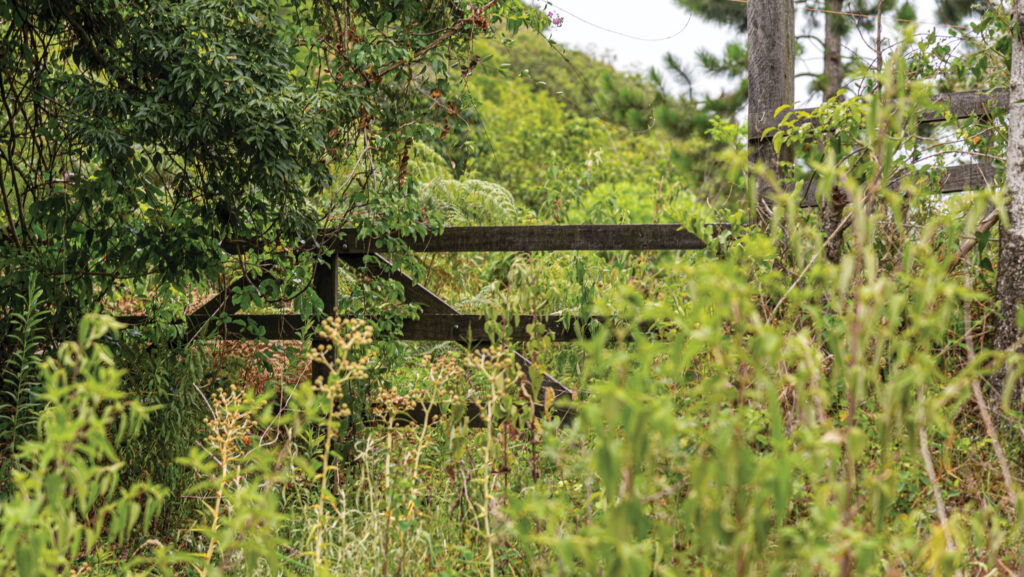
There is a B-road on one boundary of the two fields, and the boundary hedge, which is 175m long, has an old gateway giving access from the road into the field.
This gateway is within the 30mph speed limit for the village, it has not been used for years and is now mostly grown over with hedge. The old gate is still visible within the hedge.
We would like to open up this gateway as it is becoming increasing difficult to get modern machinery over the bridge. What consents would we need to do this work?
A. The starting point for addressing this issue is to look at the Town and Country Planning Act 1990, which states that planning permission is required for all “development” on land.
Under Section 55 of the Act, development is defined as the carrying out of building, engineering, mining or other operations in, on, over or under land, or the making of any material change in the use of any buildings or other land.
See also: Business Clinic: can property with an agricultural tie be split?
While you haven’t said what condition the gateway is in, other than being overgrown, one can assume that reopening a long‑disused gateway will involve:
- Removing vegetation and cutting back the hedge
- Reinstating or installing a new gate and fence posts.
In addition, depending on the land either side of the proposed gate, it may also include regrading the land or works to the verge to form a usable access.
Planning likely needed
While cutting a hedgerow back will not be “development”, the remainder of these works are likely to be caught in that definition and would therefore require planning consent.
Consent can be acquired in a number of ways. It’s usually obtained through the express grant (issued in relation to a planning application) or by development order. The general permitted development order (GPDO) contains the general consent for certain types of specified development.
This is where there is a bit of jargon – these are referred to as permitted development rights and the GPDO is a national grant of planning permission, which operates by giving deemed planning permission for certain developments without the need to make a formal application to a local planning authority for planning permission.
Article 3 (1) of the GPDO grants planning permission for classes of development described as “permitted development”. These classes of development are then set out in part 2 of schedule 2.
This part concerns ‘minor operations’, including part 2 class B, which is the right to maintain, improve or alter a gate, fence, wall or other means of enclosure that would allow the works to the fence and gate – provided that it is no more than 1m in height or does not exceed its existing height.
This permitted development right would not allow any regrading works that might be required.
Within part 2, class B there is a separate right allowing “the formation, laying out and construction of a means of access to a highway that is not a trunk road or a classified road, where that access is required in connection with development permitted by any class in this schedule (other than by class A of this part)’.
Unfortunately, a B-road is a classified road, so this would not help in your case.
As a consequence, if there is an amount of work required to turn the existing gate into a useable access to the road, it is likely that planning permission is required.
However, if it’s simply the cutting back of the hedge and the replacement of the gate and fence posts, then it is possible that no formal consent will be required.
Every case turns on its facts
A recent court decision does give some pause here, though. Jones & Anor v Secretary of State for Housing Communities and Local Government & Anor confirmed that the presence of a historic gate does not remove the need for permission if the access is effectively being created anew.
It will be a question of fact and degree in any particular case whether planning permission is required and advice should be sought on the specifics before works are commenced.
Beyond planning, if the proposed access required works to be done within the adopted highway, then it is likely that the works will require an agreement or authorisation from the Highways Authority before they are carried out.
Do you have a question for the panel?
Outline your legal, tax, finance, insurance or farm management question in no more than 350 words and Farmers Weekly will put it to a member of the panel. Please give as much information as possible.
Email your question to FW-Businessclinic@markallengroup.com using the subject line “Business Clinic”.