Business Clinic: Should natural capital overage clause be included?
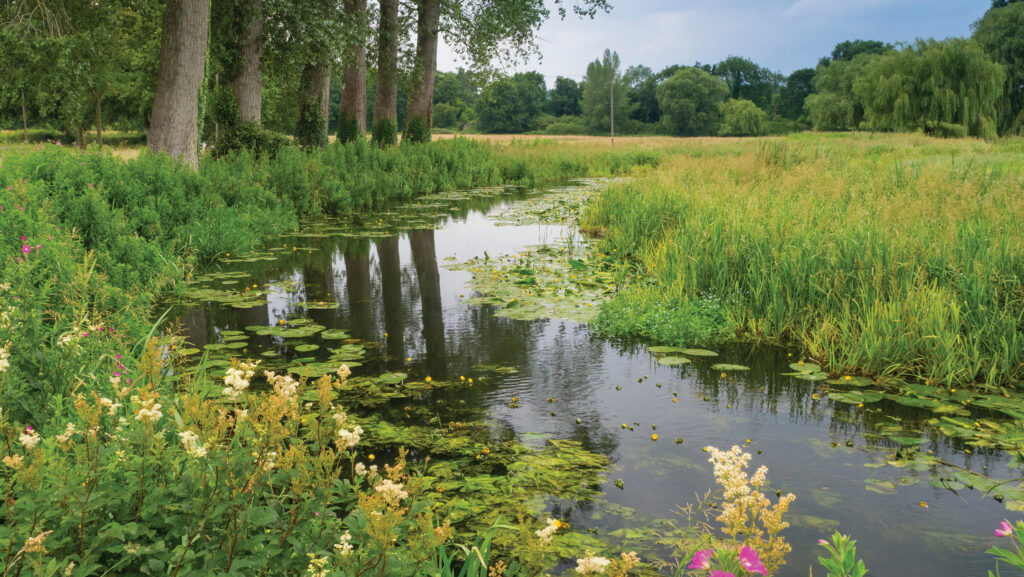 River Winsum © Universal Images Group/Alamy Stock Photo
Whether it’s a legal, tax, finance or management question, Farmers Weekly’s expert panel can help. Here, Harvey Davies, head of natural capital at law firm Thrings, gives advice on the potential for an overage clause on the sale of farmland which would capture value for the seller from that land being used for a natural capital project in future.
See also: Business Clinic: can we bring in partners but retain control?
About the author
 Harvey Davies is an experienced lawyer in Thrings’ planning and environment team, heading up the firm’s natural capital practice.
He offers commercially practical advice on the emerging markets for natural capital and supports farmers and landowners in the delivery of innovative and profitable solutions for improving the environment.
This includes advice on purchasing land, strategic aspects of natural capital markets, negotiating and drafting s106 agreements to secure land as biodiversity net gain sites, reviewing habitat management and monitoring plans, and other related reports, and advising on the requirement for any consents, licences or permissions.
Harvey also manages the family farm in Herefordshire.
Q: We’re a farming couple planning to sell part of our farm to fund our retirement.
It has been suggested that we include an overage clause in the contract linked to natural capital, so we share in any future income from things like biodiversity units or nutrient credits.
It sounds sensible, but we don’t understand how it works in practice. Can you explain the opportunities and any issues to watch out for?
A: Overage is a familiar idea for most landowners – where you receive an additional payment to the original price if you sell land and it later gains planning permission.
With the long-term income generation that can come from natural capital schemes, it is understandable that you’d want the same protection if you’re looking to sell.
The difference – and where the difficulties start – is that these opportunities don’t fit neatly into the existing overage frameworks designed for development.
How it works in practice
With development land, the trigger for payment is usually clear. Value is crystallised when planning permission is implemented or the land is sold on with consent.
Natural capital works differently as the buyer often must invest in establishing a scheme – for example, habitat creation for biodiversity net gain (BNG) or a nutrient neutrality scheme – and then commit to its long-term management (which can be a period of more than 100 years).
The buyer then earns income from selling units or credits without necessarily selling the land.
This presents a challenge for the original seller as a restriction on the land title doesn’t guarantee you will find out about, or be paid, income from new natural capital schemes.
Compliance can be hard to monitor, particularly when ownership never changes hands.
Choosing the trigger
For BNG, the overage trigger could be registering the land on the biodiversity gain site register.
Some other schemes, such as nutrient neutrality, require a different trigger, however, as they are unlikely to be recorded on a public register.
Options include the completion of the legal agreement securing the land for the scheme or the start or completion of establishment works – but negotiations may become protracted if income generation is anticipated at a later date, and monitoring compliance can be significantly harder than it would be for a development overage.
The tension at the heart of it
If the overage takes too large a share of future income, the buyer has less incentive to invest in the scheme at all, especially given the long-term management costs associated with the delivery of environmental schemes (BNG, for example, requires a 30-year commitment to habitat establishment and maintenance), which could result in the sterilisation of natural capital opportunities for that land.
Similarly, the income stream generated may take a variety of forms and the relevant valuation mechanism in the overage deed will require some thought.
Typically, income from the sale of nutrient credits or biodiversity units would be from a single upfront payment rather than a periodic payment.
But, as the legal regime for certain natural capital schemes evolves (for example, the introduction of environmental delivery plans in the Planning and Infrastructure Act 2025), it may be that income may be by way of, say, an annual payment rather than a single upfront payment.
While the overage can be drafted to roll up income payments into a capital equivalent, this is unlikely to be attractive to a buyer who has not yet realised any income from their scheme.
The scope of any overage requires careful consideration and drafting as natural capital markets arise from a wide variety of legal frameworks.
Poor drafting risks missing out on potentially lucrative emerging opportunities (including, for example, new voluntary nature markets).
Conversely, however, a broadly drafted overage may risk causing negotiations to become protracted if, for example, it captures agri-environment schemes brought in by the government under the Agriculture Act 2020, such as the Sustainable Farming Incentive, which would not normally be considered to be the type of financial “windfall” associated with overage.
Consideration also needs to be given to the stacking of natural capital projects and whether the overage can be triggered just once or the seller has multiple “bites of the cherry” (to avoid the overage being easily exhausted).
Is this the best option?
Before agreeing to an overage, it’s also important to ask whether the land really has significant natural capital potential, and whether a better marketing strategy could capture that value in the sale price.
There will be cases where a natural capital overage is appropriate, particularly where the land has obvious and significant potential for a project; but there will also be occasions where the introduction of a natural capital overage could cause delays and increased costs in a land sale.
If an overage does make sense, given the rapid development of the natural capital sector, professional advice will be crucial to ensuring that the key provisions are properly drafted and capture the relevant schemes.
Do you have a question for the panel?
Outline your legal, tax, finance, insurance or farm management question in no more than 350 words and Farmers Weekly will put it to a member of the panel. Please give as much information as possible.
Email your question to FW-Businessclinic@markallengroup.com using the subject line “Business Clinic”.