Business Clinic: Will boiler scheme work for our farm estate?
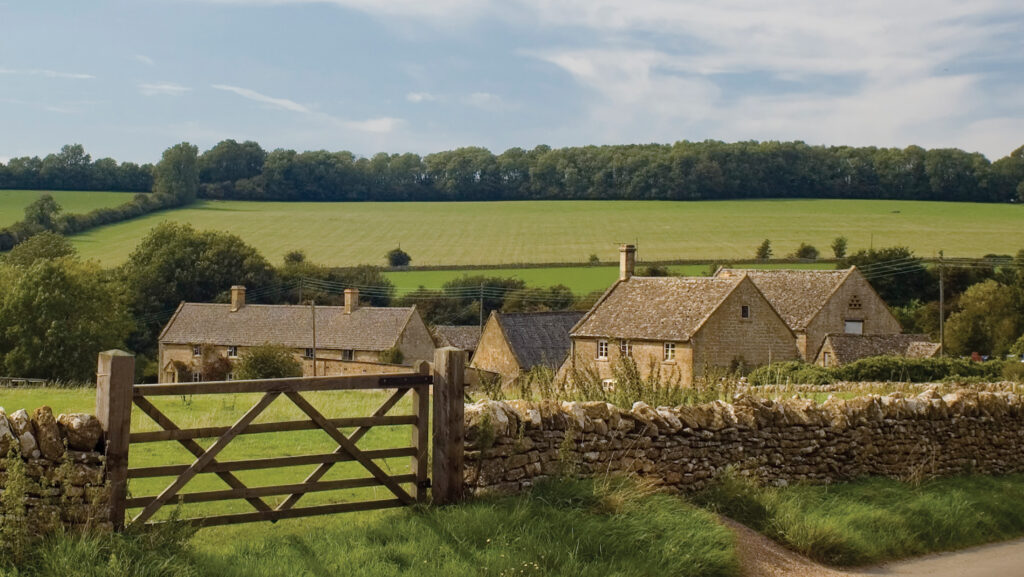 © Matthew Lees Dixon/ Istockphoto
 Whether it’s a legal, tax, finance or management question, Farmers Weekly’s expert panel can help.
Here, Oxford-based Lucinda Brooks, a partner in Carter Jonas, advises on energy efficiency installation questions for rural properties.
See also: Business Clinic: what’s the best route to market for large farm sale?
About the author
 Lucinda Brooks is a Partner in the estate management and rural division at Carter Jonas, based in the firm’s Oxford office.
She has more than two decades of experience advising private and institutional clients on rural property and estate management matters.
Q: Our small, mixed rural estate in Buckinghamshire has several let cottages, most of which are off the mains gas grid and currently heated by a range of oil, storage heaters, and LPG gas boilers.
With Energy Performance Certificates (EPCs) and Minimum Energy Efficiency Standards (Mees) tightening, I may replace these ageing systems.
Is the boiler upgrade scheme worth pursuing for properties like mine? What should I be aware of before committing, particularly around costs, insulation requirements and listed buildings?
A: The boiler upgrade scheme (BUS) provides capital grants to support the replacement of fossil fuel heating systems with low-carbon alternatives, including heat pumps and biomass boilers.
For rural estates, where properties are typically off the mains gas grid, the scheme presents a valuable opportunity to modernise heating systems while improving energy performance.
Currently, core grants of up to £7,500 are available for air source and ground source heat pumps, while £5,000 is available for biomass boilers and £2,500 for air-to-air heat pumps in eligible properties.
From July 2026 the government is introducing a ‘rural uplift’ of £9,000. These contributions can reduce the upfront cost of installation and make low-carbon alternatives more financially viable.
That said, the decision should not be driven by grant funding alone. Estate owners often need to take a long-term view and assess each property individually before committing to a particular technology.
Cost and suitability
One of the most important considerations is cost. A replacement oil boiler may typically cost around £5,000 to supply and install, whereas an air source heat pump installation can often exceed £15,000.
While the BUS grant can offset a substantial proportion of this expenditure, a significant capital contribution will still be required from the property owner.
The suitability of the building itself is equally important. Some estates have installed an air source pump and found the cost of the electricity required to run the pump excessive.
This can be because older buildings don’t have modern insulation, or optimal system set-up, so the pump must work even harder.
Upgrading insulation, reducing draughts and improving the overall thermal performance of the building may be necessary before a heat pump can operate effectively and economically.
However, with EPCs and Mees expected to evolve over the coming years, landlords should remain cautious about undertaking piecemeal improvements.
Until the new criteria is confirmed, you risk spending a lot of money insulating your building, only for it to fall short of the new requirements.
Listed buildings challenges
Many assume that listed properties are automatically exempt from energy-efficiency requirements, but exemptions are generally assessed on a case-by-case basis.
Where improvement works would unacceptably alter the character or fabric of a listed building, an exemption may be available.
However, owners should always consider the need for listed building consent and planning permission before undertaking alterations.
Maintenance and servicing should also form part of the decision-making process.
While the number of engineers qualified to install and maintain heat pump systems continues to grow, availability can be more limited in some rural areas, and Microgeneration Certification Scheme accredited installers must be used to apply for the BUS grants.
Estate owners should therefore consider future arrangements before committing.
Whole building approach essential
Rather than focusing solely on replacing the boiler, I advise landlords to assess the condition and performance of the building fabric, insulation and the heating system as a whole.
Recent periods of extreme weather have also highlighted the importance of considering ventilation.
For many rural estates, the BUS could play an important role in future-proofing residential buildings.
However, grant funding should be viewed as one component of a broader approach.
Seeking professional advice at an early stage can help identify the most appropriate solution for each property.
Whether you’re primarily concerned about the compliance burden coming down the tracks, or you’re motivated by decarbonisation and net zero, an expert will consider the project as a whole to help you meet your goals.
Do you have a question for the panel?
Outline your legal, tax, finance, insurance or farm management question in no more than 350 words and Farmers Weekly will put it to a member of the panel. Please give as much information as possible.
Email your question to FW-Businessclinic@markallengroup.com using the subject line “Business Clinic”.