Farm management challenges demand radical business reviews
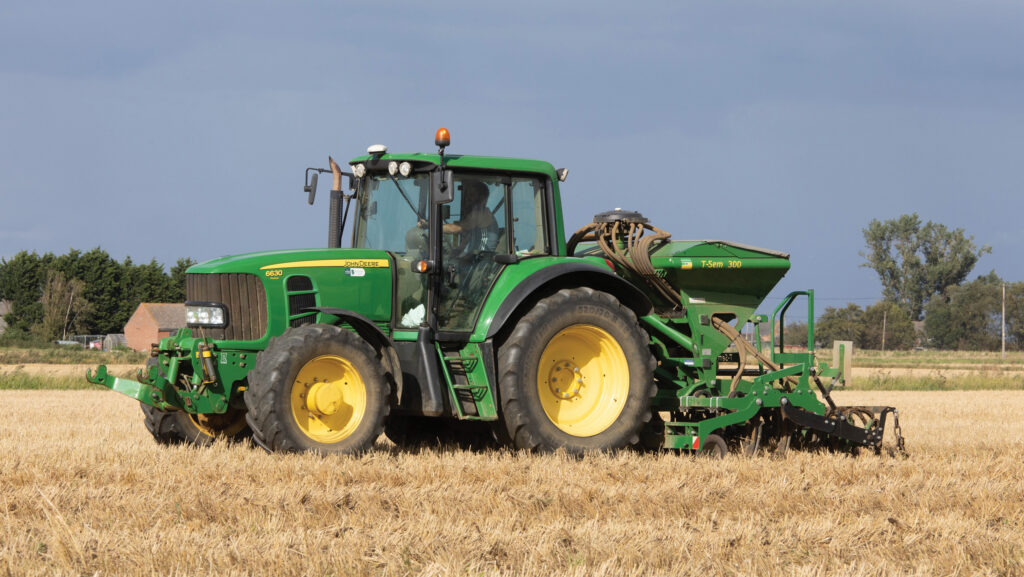 © Tim Scrivener
 Some farming businesses are going to have to radically review what they do, says farm business consultant Andersons in its latest assessment of the outlook.
The firm runs several farm models to demonstrate budgets and performance. Its Regen Farm model on clay loam soils is fully regenerative and has been for some years.
The outlook for the 2026 harvest on this 600ha farm is a farming or production loss of £39/ha, before Basic Payment Scheme income (£1/ha) and Sustainable Farming Incentive (SFI) income of £124/ha.
See also: Rollover relief pitfalls – what farm businesses need to know
This marks the fourth year in which the business made a loss from its pure farming activity, after drawings, rent and finance.
Amelia Rose, a farm business consultant with the firm, says that like many others with SFI agreements ending next year, the Andersons model regenerative farm has a dilemma: does it go for SFI26 this autumn and risk being able to put in only a limited area, or wait until March/April next year when its current SFI scheme ends, in order to potentially get a bigger slice of the SFI budget.
Yields are forecast to improve for this year’s harvest and crop prices have recently improved. Variable costs have been kept under control as the farm bought fertiliser before the sharp increases in spring.
2027 harvest
Making a profit from production remains challenging for the 2027 harvest, with higher fertiliser and fuel prices, plus general inflation and lower SFI income.
The financial stress on combinable cropping businesses is beginning to build, after a run of poor harvests. While there are no new answers, the scope for collaboration with other farmers remains one of the most direct routes to improving performance and lowering costs, says the firm.
This farm business needs a total review as its level of output is not sufficient to cover the cost of production, says Amelia.
“We’re only two to three years into a period of possibly five years of hard going. It’s very hard to justify a combine on 600ha.
“Overheads need to be managed where they can be. Labour, power and machinery are all big items – labour could perhaps be cut by half a full time equivalent, using self-employed resources,” she suggests.
“There are no easy wins but small savings do add up.”
Review insurance
Insurance is one area she suggests where there is potential for savings. Farms of this size and type would typically be spending about £15,000 a year on insurance – the equivalent of £26/ha or £2.60/t on a 10-tonne/ha performance.
There is a tendency to renew insurance without a proper review, says Amelia. Savings could be made by checking cover levels and what is covered.
For example, there may be unused machinery on farm that is still on the schedule, or some that has been sold but is still on the list.
Buildings is another area. “If a building such as an old pole barn is no longer in use, would you replace it if it blew down in a storm? The same applies to non-listed traditional buildings – if they would not be replaced, then insure them just for demolition costs.”
Living costs should also be calculated as part of a business review, as drawings can add up to a level that may surprise some people when they do the exercise.
“There needs to be a level of discipline on drawings,” says Amelia.
Roadmap shows direction
Farm management is likely to have to undertake more compulsory, legislated environmental measures in future, for no payment, suggests Jeremy Moody, secretary and adviser to the Central Association of Agricultural Valuers.
“In practice, producers should see the present Environmental Land Management schemes as a transitional regime,” he says.
“Items like buffer strips, which have previously been paid for, are likely to become compulsory in legislation, while conversion of farming practices is to be for decision in the marketplace by farmers, perhaps in conjunction with supply chains. Money will move purely to public goods, such as habitat creation.”
Commenting on the government’s Farming Roadmap for England, he says it sets out a line of direction for farmers, who may need to make some difficult decisions about a future that’s very different from the past.
“The Roadmap’s overall aim is towards lower input, high technology farming, with a mistrust of fertiliser and a concern about water quality. Farmers should expect the regulatory baseline for good farming practice to rise, with no more money to be paid.”
Andersons’ regen farm model – performance and budget |
||||
|
£/ha |
Harvest
2024 (actual)
|
Harvest 2025 (actual) |
Harvest 2026 (provisional)
|
Harvest 2027 (budget)
|
|
Output |
1,246 |
1,334 |
1,407 |
1,453 |
|
Variable costs |
510 |
503 |
511 |
594 |
|
Gross margin |
736 |
831 |
896 |
859 |
|
Overheads |
539 |
573 |
579 |
599 |
|
Rent and finance |
266 |
264 |
267 |
267 |
|
Drawings |
86 |
89 |
89 |
89 |
|
Farming margin |
(155) |
(95) |
(39) |
(96) |
|
BPS and SFI* |
93+112 |
12 +139 |
1+139 |
1+124 |
|
Business surplus |
50 |
56 |
101 |
29 |
|
Note: *SFI payments shown gross, costs of compliance are in farming costs. Source: Andersons Andersons’ Regen Farm is a notional 600ha business created to model the fortunes of arable farms using regenerative techniques. It has 200ha of feed winter wheat and 100ha each of spring malting barley, winter oats and spring beans. There is also 80ha of milling winter wheat and 20ha of herbal leys. Cover crops are grown ahead of the spring crops and the farm uses third-party livestock (sheep) to graze the herbal leys and cover crops. All crops are direct drilled. |
||||
Contract farming agreements need to evolve
Contract farming agreements (CFAs) continue to evolve, becoming more nuanced to fit the circumstances of individual farmers and contractors.
“The detail is where performance is made or lost,” says Edward Hutley, a partner at Ceres Rural.
“Margins are tighter, policy is shifting, and agreements are carrying more moving parts than they were five years ago, for example whether SFI is included and how rotational and non-rotational elements are managed. That means structure matters more than ever.”
A well-structured agreement should:
- Clearly separate strategic control (landowner) and delivery (contractor)
- Have a transparent cost and margin structure, with realistic contractor charging
- Be built around a robust budget, using data analysis and experience-led assumptions
- Properly integrate environmental scheme income and obligations
- Include a clear framework for decision-making and dispute resolution
“It’s becoming increasingly difficult for a contractor to predict where the avenues of funding are going to be coming from to bolster income,” says Edward.
He stresses the importance of a CFA being actively managed as a trading business, to preserve the tax status of the farmer, with regular minuted meetings, leading to actions and ensuring decisions are recorded and both parties remain engaged in management.
Cost reconciliation can be tricky, but a well defined CFA will have a breakdown of what cost are expected to be included.
One example is where the farmer puts in their own working capital to fund the operation, rather than using an overdraft. “They will expect some financial recognition for this,” says Edward.
Drift of work can also be a problem, so that gradually more jobs are done by the contractor or the approach changes with a change of objective on the farmer’s part.
Even if these are only small elements of additional work, that drift can give rise to resentment, so agreements should make provision for how these extras are dealt with, rather than being treated on an ad hoc basis or being left over long periods.
“Not enough agreements are clear enough about that. These elements make it all the more important that CFAs are regularly reviewed, including the charges,” says Edward, giving examples of common issues arising with CFAs.
- Budgets not being revisited as conditions change.
- Contractors not understanding farmer objectives, and charges not being thoroughly reviewed to make sure they are realistic.
- Environmental schemes layered on without consultation with the contractor – often resulting in poorer land being retained in production, while better-performing areas are taken out or placed into impractical options. Simpler scheme choices tend to deliver more effective outcomes within a CFA, says Edward. For example, while pollen and nectar mixes should not be ruled out, grass mixes should be considered for some awkward corners and shaded areas where pollen and nectar mixes are not going to thrive.
- Lack of clear records of decisions and responsibilities.
- The landowner becoming insufficiently involved.