Farmers offered little in Chancellor Healey’s first Budget
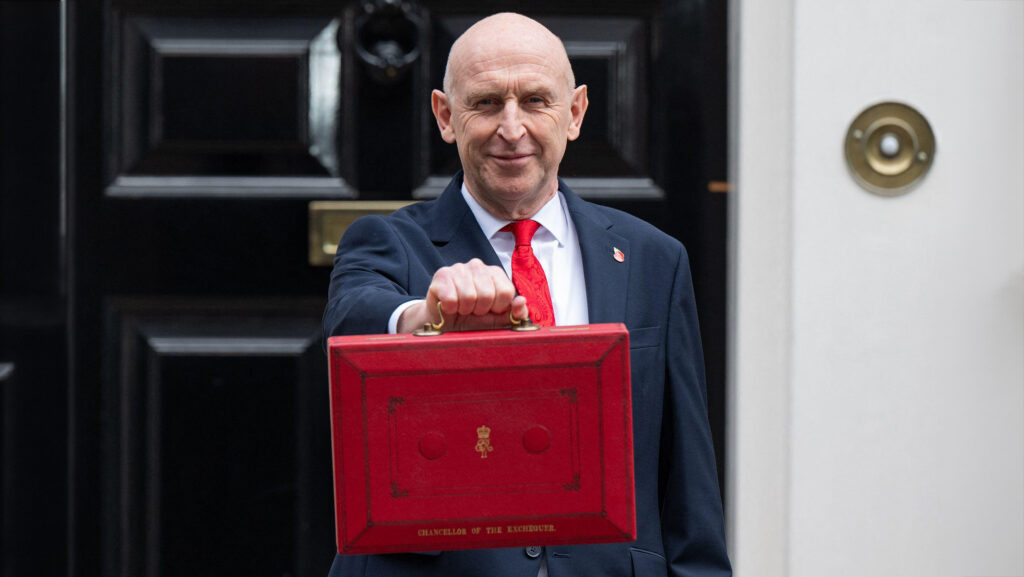 Chancellor John Healey © Alamy
Chancellor John Healey has offered a few titbits to farmers and rural businesses in his first Budget on Wednesday (28 October), but came up well short of the big asks that farm unions were seeking to help a sector struggling with high costs and low profitability.
There was some relief that he once again extended the 5p/litre cut to road fuel duty and the 3.7p/litre cut to red diesel duty in a move he said should help farmers and households.
The cuts were due to end in December but have now been rolled forward to July 2027 – keeping road fuel duty at 52.95/litre and red diesel duty at 6.48p/litre.
Another potential positive for farmers is the increase in the small business rates relief threshold from £12,000 to £18,000, which may take some farm diversifications out of the rates net.
See also: Fertiliser tariff cuts will barely ease farm costs, NFU says
Despite the concession on fuel, NFU president Tom Bradshaw said the government had failed to live up to its “warm words” over the summer and had left farmers “feeling abandoned”.
“While the extension to the red diesel relief is welcome, fuel prices today are 65% higher than a year ago, so will offer minimal relief to the cashflow crisis facing farming businesses,” he said.
Mr Bradshaw also slammed the government for failing to extend the Annual Investment Allowance to include infrastructure such as on-farm reservoirs or new poultry housing.
“Action should also have been taken to reverse the investment-stifling family farm tax,” he added.
Ahead of the Budget, the chancellor had also revealed plans to cut import tariffs on a range of goods including fertiliser – which has attracted a tariff of 2-6.5% depending on origin – to ease the strain on household budgets.
However, again Mr Bradshaw questioned how much farmers would benefit, pointing out that much of the fertiliser imported into the UK already enters tariff-free.
Other negatives
Other negatives in the Budget included a halving of the threshold for Business Asset Disposal Relief from Capital Gains Tax (to £500,000), and a 3.9% rise in the National Minimum Wage for 18–21-year-olds, potentially pushing up wage bills.
“Adding a further 2% to tax on rental income will not encourage the letting of farmland either,” said Central Association of Agricultural Valuers secretary Jeremy Moody.
He added that the chancellor had missed an opportunity to stimulate growth in the wider economy or in agriculture.
“While we are told that ‘food security is national security’, there are just three mentions of agriculture in 166 pages – the temporary cut in fertiliser and kerosene tariffs, and the brief extension of cuts in red diesel duty,” Mr Moody said. “This does not promote our capacity to produce.”
Inheritance tax
One of the biggest disappointments in the Budget was the refusal to make any changes to Agricultural Property Relief and Business Property Relief from inheritance tax.
Tenant Farmers Association chief executive George Dunn said the lack of movement was “regrettable”.
“We asked for protection where the death of a joint agricultural tenant leaves the surviving tenant with a tax liability, but no saleable capital asset,” he said.
“We also proposed 100% Agricultural Property Relief for land let under tenancies of at least 10 years without scheduled break clauses. That would give landlords a clear incentive to offer the security tenants need to invest in buildings, drainage, soil health and the long-term future of their businesses.
“Failing to act means missing a practical opportunity to support food production, environmental delivery and new entrants.”