Advice on options to manage farm cashflow pressure
 © Alamy
Managing cash to keep things going is a challenge for many farm businesses, but there are things that can be reviewed to improve matters without borrowing more, says Mark Chatterton, head of agriculture at accountant Duncan & Toplis.
While the banks are generally keen to lend for land purchase, they are increasingly reluctant to extend overdrafts, especially if that’s for funding losses or drawings, he adds.
See also: How outside help can smooth the path for farm business admin
Pension payments
“You have to be looking at other sources of cash and one of the most obvious ones is to start drawing your pension, which you can do from age 55. It’s going to come into the IHT net from next April so it makes sense to start drawing it on a planned basis,” says Mark.
Drawings are another target, with many spending more than they can realistically afford in the present farming climate, says Mark, who advises farm businesses mainly in Lincolnshire and the East Midlands.
“People often don’t know how much they are spending in total and nor do they really look at what is being spent where – you need a drawings plan or policy for the next five years.
“It’s difficult to budget but it’s a good exercise – things might get better and then it can be reviewed again.”

© Adobe Stock
Review machinery
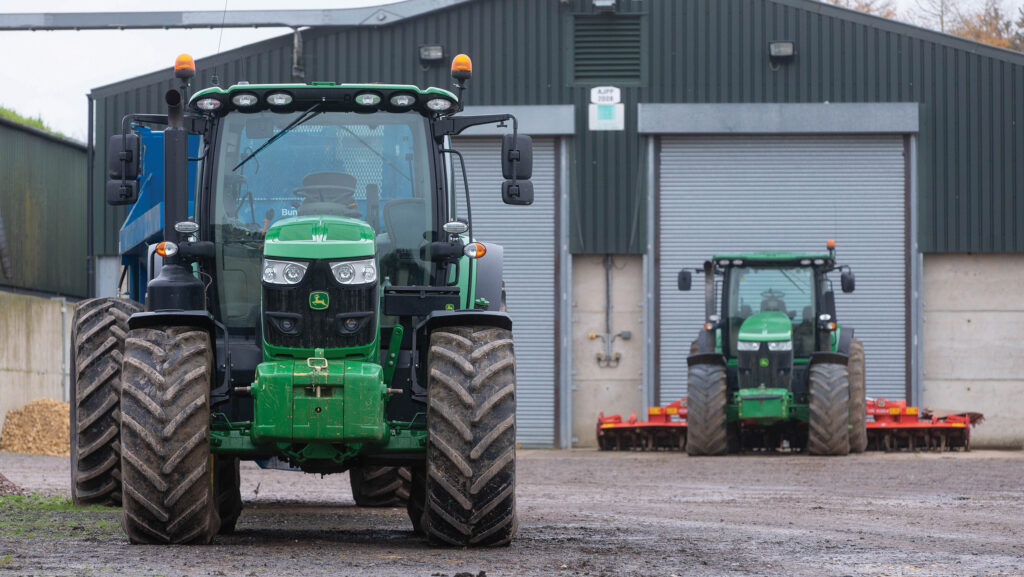
Machinery fleets need a look too: “There’s surplus machinery on every farm – that needs thinking about and perhaps can bring in some cash.”
The lack of income from harvests 2024, 2025 and 2026 means farmers’ creditors are building up and merchants and other suppliers are letting that happen because they will get the interest on outstanding amounts, says Mark.
“While there are a few formal input funding schemes where the terms and rates are clear, a lot of merchant credit is ad hoc and so are the rates. The customer is then on the back foot because they have had the goods and it’s a waste of time and energy fighting over the interest rates,” he says.
Contractor challenges
Many contractors are feeling the effect of farmers delaying payments. “When the BPS money traditionally came in around Christmas, that’s when a lot of bills would get settled but that’s not there now.
“While some contractors have got better at getting their invoices out in a more timely fashion, they need to put more effort into chasing the payments, which in some cases are not being made until after the March year end for work done six months earlier.”
National Association of Agricultural Contractors’ chief executive officer Jill Hewitt says there is scope for greater professionalisation on both the farmer and the contractor sides. “A lot of arrangements are not in writing.
We have terms and conditions members can use but a lot is still done on a phone call. Many contractors need to get invoices out sooner, they can’t afford to operate otherwise.
“Some farmers are finding it difficult to pay but if they are going to pay for their seed and fertiliser, why not pay the contractor too? We need better partnerships and working practices – payment plans can be sorted, or monthly payment terms if things are difficult.”

© Adobe Stock
Contractual issues
At law firm Shakespeare Martineau, colleagues Jennie Wheildon and Jayne Gardner have been working together advising farming businesses on resilience, which sometimes involves restructuring and reconsidering how and where to invest. They point to some areas people may not have considered in managing the financial side of the business.
Partner and head of debt and asset recovery Jayne works across a wide range of business types and says that many farmers may benefit from having someone with the right expertise to check their contracts, in particular finance and supply contracts.
“There is a lot of machinery on HP or lease agreements – have you reviewed or got a third party to review those agreements? If there’s equipment that you’re not really using have you got someone to support you to go through those agreements and see if you would be better off financially to keep paying out or terminating them,” she says.
© Tim Scrivener
“If someone wants to terminate a machinery agreement because of financial pressure or because the machine is no longer needed, check the terms first to see if they were fair and reasonable at the outset, rather than simply accepting an early termination charge,” she suggests.
Jayne makes the point that contract terms may be open to challenge even if the agreement has already run for a considerable time.
It’s all about retaining control, says Jennie, who is a partner in the firm’s agriculture team. “If the business ends up in insolvency proceedings, you lose the say in what livestock, machinery or other assets are sold for; everything is taken out of your hands.
“We help farmers navigate before they are in that situation – there’s a heavy weight for anyone who may feel they are the generation that is perhaps having to make a decision to end farming. It’s huge.
“But there is more pride to be had in taking control of the decisions than just letting things happen. If there’s a problem, get advice early when you have more options. Tell the bank if there’s a problem coming down the track, rather than once the problem has hit.
“As a third party looking at the business, we can undertake an objective review. In a multi-generational business there are bound to be decisions that are made from the heart and not the head and someone can come in from the outside and just look at the cold hard facts, to see if costs can be reduced and if a customer is a good customer.”
Borrowing reviews
“We’ve had some good conversations and outcomes after reviewing borrowing which may have resulted from irresponsible lending,” says Jennie. In some cases this led to a renegotiation of payment terms or a payment holiday, and in others even to part of the debt being written off.
“Lenders to individuals have to consider a number of facts including affordability and capacity to understand the product or its terms.
“If an opportunity to take this advice hasn’t been given, or there is a question over the borrower’s capability to understand, then adjustments to the amounts payable – or in exceptional circumstances, the ability to cancel the contract – may be available.
“Good advisers will help you to understand the borrowing you are taking on before you enter into any new loan.”
Value of contracts
Supply contracts should also be looked at to assess whether their terms are fair and reasonable, says Jayne – farmers tend to be presented with buyers’ terms and accept what is offered, but often there may be scope to challenge those at the outset or even later.
There is also a danger that a hard-won supply contract or arrangement brings in regular cash, but over time this may become less valuable. Unless its profitability is regularly reviewed, it may be relied upon simply because it brings in that regular income, says Jayne.
“And if the payment terms start to stretch outside of your agreed payment terms, you need to ask if it is really profitable to keep supplying them.”
Jennie says farmers are generally reluctant to have terms checked at the outset. “I see the bad end of this much more often than being asked to look at the terms before entering a contract,” she says.
Credit ratings
With much of the economy challenged, it’s important to keep an eye on customers’ credit ratings, rather than relying on a good rating when you started supplying them, warns law firm Shakespeare Martineau’s Jennie Wheildon.
Jennie’s colleague Jayne Gardner adds: “All businesses have been subject to many of the pressures that farmers have been facing so someone who was a good customer 12 months or two years ago may not be now.
“Credit score checks need to be done at least once a year, they are cheap to do, easy to access and could help reduce your potential loss, if their financial circumstances have changed.”

© Adobe Stock
Budget to retain control
Realistic and worst-case budgets are essential now more than ever, to stress test how farming businesses can respond to poor harvests and allow informed decision making says Jack Deal, a partner in accountant Scrutton Bland.
The firm has seen pressure on cashflows and overdrafts in the past six months, with some difficult conversations with banks taking place.
Some businesses have been carrying large overdrafts for a time, essentially with a core of borrowing that never really disappears, he says. “The banks have been relaxed about it and we all have those clients where we know the overdraft carries core debt.
“Some farmers are facing a bit more pressure, following two difficult harvests, and I have seen more than one placed into business support with their bank.
“Those clients have seen reduced flexibility from their bank and have had to incur additional cost in trying to reach difficult decisions for their business. Their banks are looking for profits to increase or capital to be raised from asset sales.” The call for extra profits is a big challenge, and selling assets isn’t quick, points out Jack.
The cashflow pressure to fund next year’s crop has left many arable businesses with less flexibility to wait for what seems like the right crop marketing opportunities, he says: “They haven’t been able to wait for that extra £5-£10/t, because they just have to get seed, fertiliser and chemical bills paid.
“We’ve also seen a slight slowdown in payments of our invoices, albeit I still to this day have not suffered a bad debt from my farming clients.
“We’re seeing farmers considering how much cash they put at risk this autumn, looking at how they put less cash in the ground, especially when confidence is low that we won’t see further droughts in 2027.”