

Extreme weather exposes growing gaps in farm insurance
 © Adobe Stock
 Farmers could face higher premiums, tighter exclusions and growing gaps in insurance cover as extreme weather and increasingly complex farm businesses reshape agricultural risk, insurers have warned.
New research suggests farmers are already exposed to losses that conventional insurance either cannot cover or does not adequately reflect, with drought, heat and waterlogging among the concerns.
See also: Farmers warned of cyber threats as SFI window set to open
The Emerging Risks in Agriculture report was produced by the Chartered Insurance Institute’s 2025-26 New Generation Underwriting group, examining diversification, technology and climate change.
Katy Burrough, agricultural underwriter at Victor Insurance and one of the report’s authors, said the scale of the insurance gap could not yet be quantified because industry-wide data on declined, unpaid and uninsured farm losses was unavailable.
“However, our research does suggest there are areas where farmers are increasingly exposed to losses that are either not insurable through conventional products, or not covered in a way that fully reflects how farming is impacted,” she said.
Climate risk is not typically assessed as a standalone factor in day-to-day farm underwriting or pricing, according to Ms Burrough, although actuarial pricing already reflects trends in weather-related losses such as fire and storm.
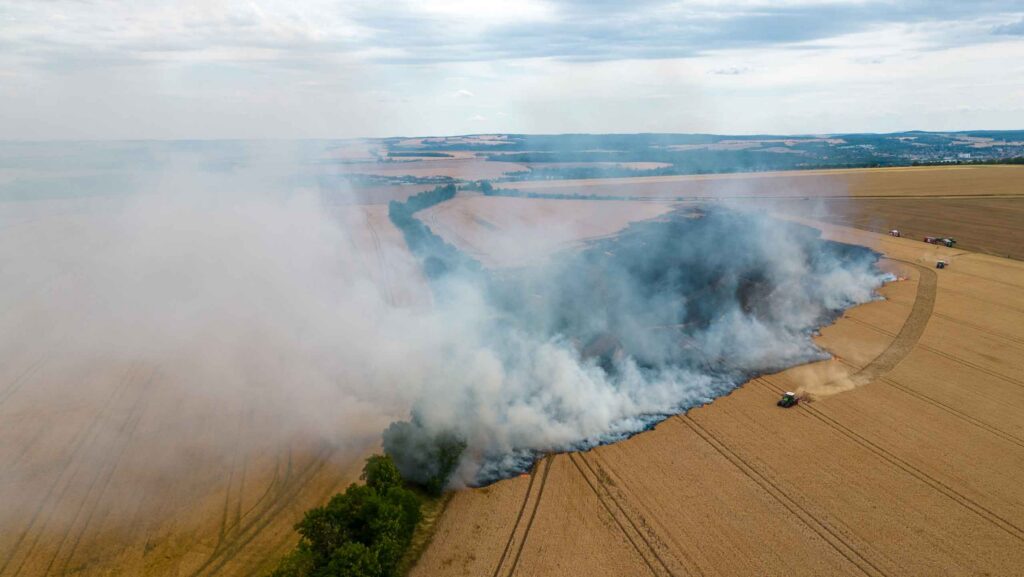
She said this summer had particularly highlighted fire risks on farms storing large quantities of timber, woodchip, hay and straw.
“As weather patterns become more volatile and less predictable, it is reasonable to expect pricing and underwriting approaches to evolve,” she added.
The report proposed new products to close the gap, including “prevented planting” insurance, which would compensate growers unable to establish crops because of flooding or waterlogging.
It also highlighted parametric insurance, where predetermined payments are triggered when measures such as rainfall, temperature or soil moisture cross agreed thresholds. These products are beginning to emerge in the UK, but remain niche.
Gavin Lane, president of the CLA, said: “Farmers are already seeing their income hit by climate change. Now, if insurance premiums rise, they could be punished for the same disaster twice.
“Extreme weather is making farming more volatile, but farmers can’t be expected to absorb every new risk themselves. If insurance becomes more expensive or harder to access, farmers could be left exposed right when they need protection the most.
“We need insurance products that reflect the new climate farmers are facing, so they don’t have to shoulder the risk alone.”