Controlled burns needed to offset ill-equipped fire services
 © AdobeStock
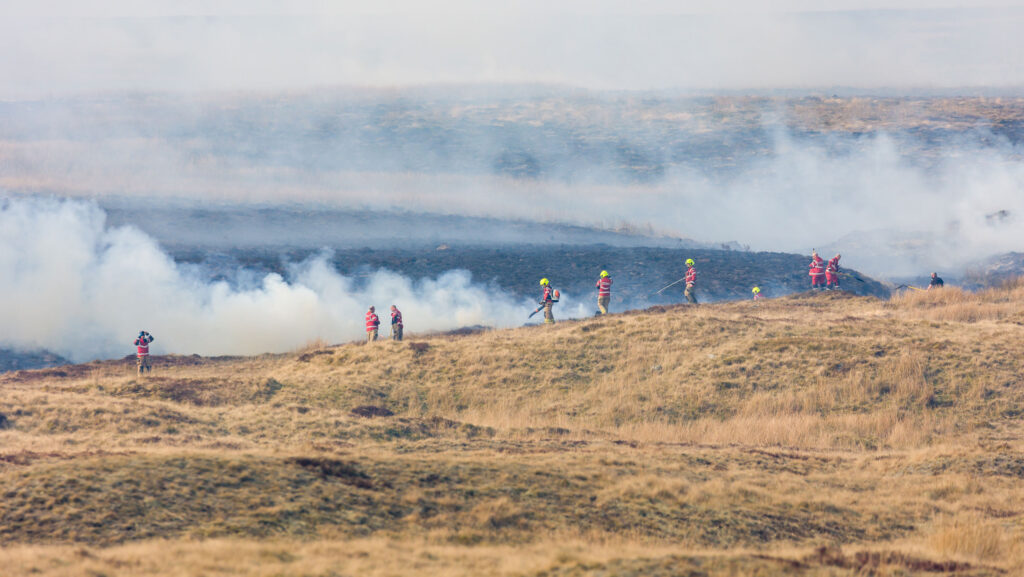
 The Country Land and Business Association (CLA) is stepping up its calls for government to lift its ban on controlled moorland burning, given the lack of preparedness of many fire services to deal with wildfires.
Freedom of Information requests by the CLA to some 47 fire services in England and Wales (of which 29 responded), paint a picture of inadequate resources, a lack of specialist training, and wide variations in response times.
See also: Pros and cons of controlled moorland fires
For example, over half of fire services said they have no wildfire PPE, despite repeated warnings from fire services that standard clothing can be too heavy and cause crews to overheat or remove their PPE altogether.
A third of stations also said they have no drones, seen as critical in allowing crews to safely track, monitor and tackle wildfires.
This is despite a sharp rise in the number of blazes across the country, with 77% of councils recording more incidents in the first half of 2026 than in the whole of 2024.
Training
Training is also lacking in many fire services.
In West Yorkshire, for example, only 15% of operational personnel hold an in-date certificate for wildfires, while in Cheshire, just 8% of employees have received training.
The picture is varied, however, with 100% of firefighters and officers in Durham, Kent and East Sussex trained in wildfire operations, though most of that is done online, not in the field.
The FOI feedback also reveals some disturbing details on the amount of time fire engines are out of action due to crew shortages, and wide variation in response times.
Across the 29 services who shared data, on-call engines were unavailable for an average of 32% of the year, reducing their ability to respond when fires first break out.
Response
Gavin Lane, CLA president, said: “We ask firefighters to risk their lives in conditions most of us would not go near. So, we should be giving them the equipment, training and support to come back safely.
“Yet some are being sent into wildfires in heavy kit made for burning buildings, worn for hours across open ground in summer heat.
“Fire services need the people, training and specialist equipment to protect communities. And government must lift the ban on controlled burning, so landowners have the freedom to reduce fuel loads before a blaze becomes a disaster.”
The Fire Brigades Union agreed, calling on government to ensure the service was better prepared for the “inevitable” wildfires next year.
Steve Wright, Fire Brigades Union general secretary, said: “Wildfires have been on the risk register since 2013. Yet between 2010 and 2018, the Conservative-led government cut 12,000 firefighters.
“This has proven unsustainable and amongst our demands for greater wildfire resilience is better land management, stronger public awareness campaigns, and long-term prevention measures.”
A government spokesman insisted that wildfire preparedness was a government priority.
“We are convening a summit with fire and rescue service partners to make sure we are as resilient as possible,” said the spokesman.
“This includes making sure services have the right equipment and resources, building on the £100m we previously gave to upgrade our national resilience assets.”
The spokesman added that land management and landscape adaptation plays an important part in this, including the restoration of peatlands, the creation of firebreaks and “other adaptions that help prevent fires from starting or from spreading as quickly during incidents”.