Family calls for compulsory tractor tests after fatal collision
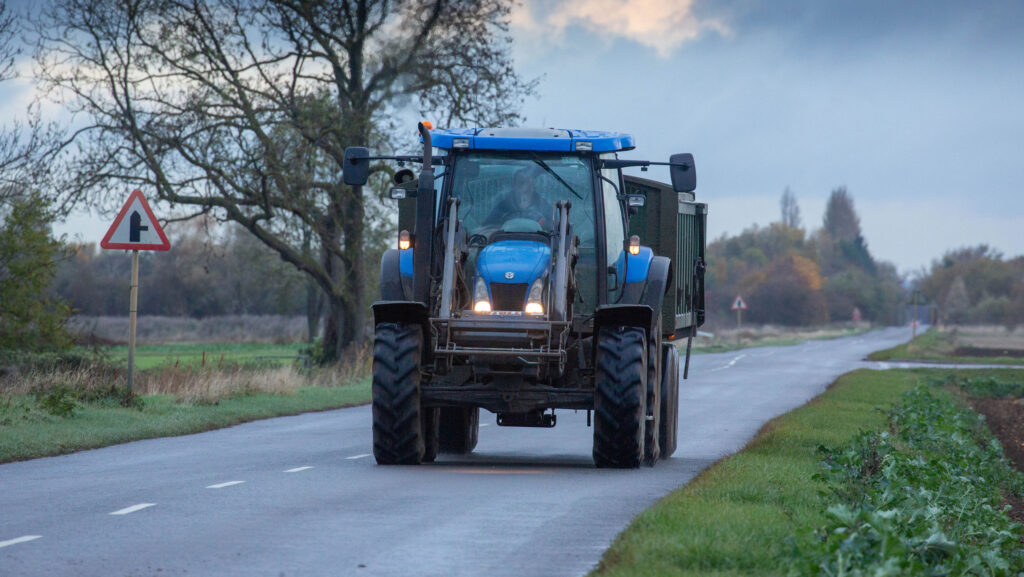 © Tim Scrivener
The family of a motorcyclist killed in a collision with an agricultural tractor is calling for mandatory annual roadworthiness tests for tractors and trailers used on public roads.
A petition calling for the introduction of Steven’s Law has been launched by the family of Steven Lee, 26, who died in August 2022 after his motorcycle collided with a tractor and straw trailer being driven by Philip Baker on the A40 near Ganarew, Herefordshire.
See also: Tractor driver jailed for eight years over fatal A40 collision
Mr Baker was jailed for eight years in September 2026 after being found guilty of causing death by dangerous driving.
The tractor and trailer had several dangerous defects, including a missing amber beacon, an overloaded trailer and poorly maintained hydraulic equipment. The trailer brakes were also not working or connected to the tractor cab.
Mr Lee’s sister, Rachel Sargeant, said the family wanted an MOT-style inspection to ensure agricultural vehicles met minimum safety standards, without creating unnecessary difficulties for farmers.
“We are not against farmers – it is the complete opposite,” she said. “We recognise the pressures they work under, particularly during busy periods. But tractors are large vehicles and it is important that some basic legislation is in place to ensure they are roadworthy.”
The family has been working with the Driver and Vehicle Standards Agency (DVSA) on potential legislative changes and recently met representatives from the British Agricultural and Garden Machinery Association and the Agricultural Engineers Association.
Adapting existing tests
Both organisations have previously supported calls for compulsory roadworthiness testing, particularly for larger and heavier agricultural vehicles.
In a joint response to a coroner’s report, they said the existing voluntary Agricultural Tractor-Trailer Scheme, which includes inspections and brake performance testing, could form the basis of a mandatory system.
Jill Hewitt at the National Association of Agricultural Contractors (NAAC) said roadworthiness was vital to protect operators and other road users.
“The NAAC encourages its members to carry out daily checks to ensure all vehicles are roadworthy before leaving the yard. All vehicles, trailers and trailed appliances used on the public highway must legally be in a roadworthy condition every time they go on the road.”
The parliamentary petition for Steven’s Law had attracted almost 1,600 signatures within four days of its launch, Ms Sargeant said.
She said the family wanted to use Mr Law’s death to bring about meaningful change and hoped growing support would help move discussions with government forward.
Legal position: Agricultural vehicle roadworthiness
- Tractors used solely for agriculture, horticulture or forestry and taxed in the agricultural vehicle class are generally exempt from mandatory roadworthiness testing.
- All tractor owners must ensure their vehicles are roadworthy before using them on public roads, regardless of whether a formal test is required.
- Vehicles with four or more wheels, capable of a maximum speed below 25mph and used on unrestricted dual carriageways must display at least one amber warning beacon on the vehicle or trailer.
- Agricultural tractor and trailer combinations are subject to a 31t weight limit, with trailers limited to 18.29t, including any load imposed on the tractor through the hitch.
- Most tractors are limited to 40km/h (25mph), although higher-specification models can travel at up to 65km/h (40mph) if they meet additional requirements.
- Wider special-type agricultural vehicles face lower speed limits, depending on their width.
Source: GOV.UK guidance on agricultural vehicle requirements. The precise requirements depend on vehicle classification, use and specification.