Farmers urged to put health and safety first this harvest
 © Tim Scrivener
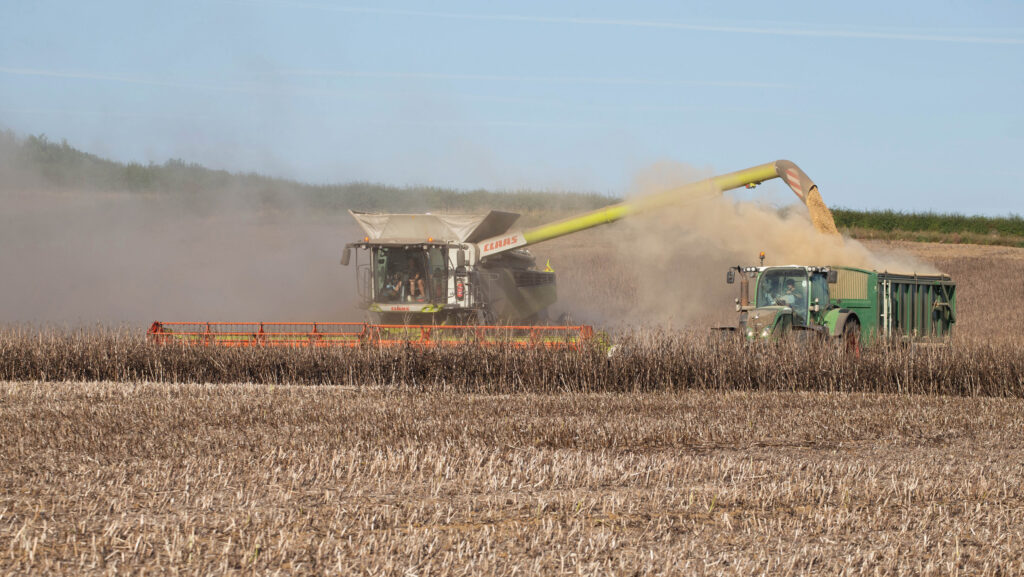
 As combines prepare to roll into fields across Britain, another harvest season is beginning under the shadow of farm fatalities.
More than 30 people lost their lives in farm-related incidents over the past year, while seven deaths since April have already cast a dark shadow over the 2026 “season”.
With another intense harvest approaching, health and safety experts warn the risks are set to escalate as long hours, lone working, tight weather windows and financial strain push farmers and contractors to their limits.
See also: How care with contractor instructions protects both sides
The challenge is understanding why experienced operators continue making decisions they know could seriously injure or kill them.
Wayne Owen, agriculture lead at the Health and Safety Executive (HSE), says the causes behind many harvest deaths are already well understood.
“The main causes of fatality involving contact with machinery include unsafe systems of work, poorly maintained machinery, poor or missing guarding, working under unsupported loads such as raised trailer bodies, and failing to implement the Safe Stop procedure before working on machinery,” he explains.
Between 2020-21 and 2024-25, 20 farmworkers in Great Britain were killed following contact with machinery.
Safety experts say many incidents remain preventable through relatively simple precautions – fully stopping machinery before leaving the cab and ensuring guards and PTO covers are correctly fitted.
They also stress the importance of planning safe traffic routes through busy yards and briefing contractors and seasonal workers before work begins.
The perils of overhead and underground power lines
Two people on average lose their lives each year in the UK after farm machinery comes into contact with overhead power lines.
As harvest gets under way and machinery grows in size, Chris Cleveland, head of safety at National Grid Electricity Distribution, says risks are increasing.
“During harvest, farmers are busy and under pressure and with machinery getting bigger, the margin for error is smaller,” he says.
National Grid teams are called to incidents every year involving combines, sprayers and trailers striking overhead lines or poles.
The biggest mistake is failing to stop and assess risks.
“We often see incidents during routine work like tipping trailers or lifting equipment,” he says. “Familiarity or GPS does not remove the risk.”
Advice is simple – know line locations, understand machine height, and stop before starting.
“You do not need to touch a line to be in danger – electricity can jump gaps,” he warns.
Underground cables also present serious hazards, causing burns or shock if struck.
A brief site induction for seasonal staff can prevent incidents.
If contact occurs, remain in the cab if safe, call 105, and wait for isolation. If life is at risk, call 999.
Harvest intensity
Harvest compresses risk into a short and relentless period. Machinery runs almost constantly, weather dictates timing and delays can carry major financial consequences.
Fatigue and rushing around remains a major danger. Tiredness reduces concentration, slows reaction times and makes workers more likely to rely on habit and shortcuts.
“The warning signs are usually there,” says Jill Hewitt, chief executive of the National Association of Agricultural Contractors (NAAC).
“People skip breaks, communication starts to break down, operators climb machinery without thinking, or attempt repairs while engines are still running. That’s when accidents happen.”
Clive Johnson, head of health and safety for the Duchy of Lancaster, has more than 30 years of experience as a professional health and safety influencer.
He says more focus must be given to farmworker health and wellbeing. “For years, we have shouted about safety and whispered about health. We have now got to give them equal billing,” he explains.
Mr Johnson says safety incidents are immediately visible, whereas health issues often develop over time and may only become apparent years later – sometimes with long-term consequences.
“For example, inhaling dusts or fumes without proper respiratory protection can lead to long-term health consequences, often emerging years later if appropriate PPE is not used,” he adds.
Adequate sleep, good nutrition, hydration, suncream and regular breaks will be key to a successful harvest, he adds.
According to HSE data, about 12,000 people working in agriculture, forestry and fishing suffer from work-related ill health each year.
Respiratory conditions, including occupational asthma and diseases linked to exposure to agricultural dust, remain a major concern.
NAAC Stay Safe campaign: key messages
The NAAC “Stay Safe!” campaign reinforces basic safety:
- Handle livestock correctly
- Use professional contractors and communicate hazards
- Switch machinery off before maintenance
- Wear helmets and PPE
- Keep children under 13 off machinery
- Secure fall hazards
- Avoid overhead power lines
- Never go onto a fragile roof
For further information, visit naac.co.uk/naac-safety-campaign.
Experience and routine
Experience can improve safety, but also increases risk through complacency.
HSE figures show that between 2020-21 and 2024-25, half of all work-related fatalities involved workers aged over 60.
“There is definitely a risk for older people working in the industry,” says Ms Hewitt.
“Familiarity can be dangerous – ‘we’ve always done it this way’. But modern machinery has changed and got a lot bigger.”
Mr Johnson says repetition can gradually alter how people assess danger.
“Because many farm tasks are repeated regularly, farmers can become complacent,” he adds. “Familiarity with a job can lead to overconfidence, increasing the risk of serious injury or death.”
Danger of reactive jobs
Mr Johnson says reactive works are an activity that can result in poor outcomes, often due to a lack of planning and resource.
He explains: “Now the better weather is here, farmers will often decide to carry out jobs they’ve been waiting all winter to do.
“From my experience, they quite often don’t have the correct equipment for working at height and then improvise, which can cause serious accidents. Think ‘what if’ before you start a job, not ‘if only’ after the event.”
Children on farms
Children are killed in farm incidents every year in the UK, with increased risk during summer holidays and harvest.
“The bottom line is children are safer not in the workplace,” says Ms Hewitt. “You wouldn’t let a 13-year-old work on a building site, so why do we accept it on farms?”
From a contractor’s perspective, having children in farmyards is a major safety hazard.
Falls remain a persistent danger, particularly from trailers, combines and bale stacks. Moving machinery and shifting loads also cause serious injuries.
“On average, two people a year die from hay or straw bales falling on them,” she notes.
Changing behaviour
Despite years of campaigns, serious incidents and fatalities remain stubbornly high.
“HSE can play its part, but the industry must own and take responsibility for its poor health and safety record,” Mr Owen says.
“It must change the cultural attitudes that exist in some parts of the industry.”
Ms Hewitt says responsibility must be shared. “It’s about collective responsibility – everyone on the farm has a role to play in preventing accidents.”
As combines begin rolling across the country this summer, the industry once again faces a familiar challenge of ensuring harvest is remembered for the crop brought in – not the lives lost bringing it home.
Contractor who lost arm warns against harvest complacency
Lincolnshire contractor James Bannister is urging farmers not to let complacency creep in after losing his left arm in a potato harvester accident.
Mr Bannister was dragged into machinery while clearing a blockage in August 1998 and spent more than two hours trapped before being airlifted to hospital.
Now a prominent NAAC farm safety campaigner, he says the industry must take machinery risks more seriously.
“It could have been a fatality if my mate had not turned the machine off,” he says.
His message is simple – always follow the Safe Stop procedure before attempting to clear, inspect or repair machinery.
“Switch the machine off before you do anything,” he says. “Take the key out to be doubly sure. It only takes a split second for something to go wrong.”
Mr Bannister, who is co-owner of JLR Farm Services agricultural contractors alongside his partner Lorraine, based in Beckingham, Doncaster, warns familiarity breeds risks.
“You get complacent because you’ve done the job so many times,” he says. “People think they can just crack on, but that’s when accidents happen.”
He also urges workers to speak up if they feel under pressure to cut corners this harvest.
“Your life is worth more than saving five minutes. An accident can happen in a split second.”