

Hot, dry weather fuels £150m farm fire losses
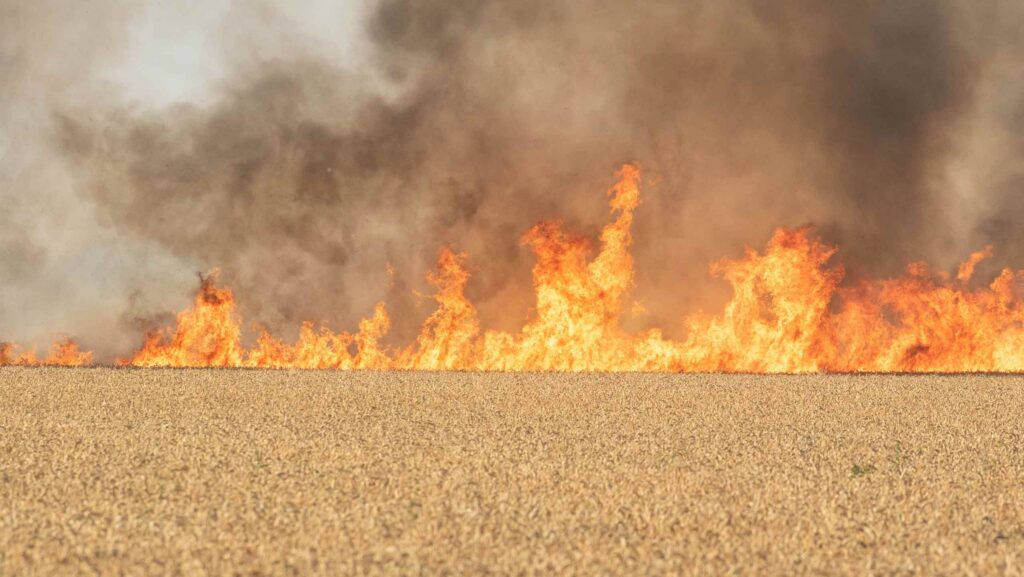 © Tim Scrivener
 Farm fires caused an estimated £150m in damage across the UK in 2025, equivalent to more than £400,000/day, as hot, dry conditions heightened the risks to crops, buildings and machinery.
In the east of England, fire damage costs nearly tripled, rising from £8.7m to £23.9m, according to NFU Mutual’s latest Farm Fires report (opens in PDF).
Fires involving crops, buildings and farm equipment rose by 18% to £118m, while agricultural vehicle fires accounted for a further £32m. Tractors were responsible for the largest share of vehicle fire costs, at £16.1m, followed by combine harvesters at £4.8m.
See also: Fire risk planning – what to consider on a livestock farm
The main known causes of fires involving crops, buildings and equipment on farms were arson, lightning strikes and electrical faults.
NFU vice-president Robyn Munt said: “Crops, livestock, machinery and vital infrastructure, built up through months or even years of investment, can be destroyed in a matter of minutes.
“As this latest data shows, this can have a serious financial impact on the business involved.”
She added that farm fires “can also take an emotional toll on those involved, adding further stress to what is already an incredibly pressured job”.
Hannah Binns, NFU Mutual’s rural affairs specialist, said record-breaking heat and sunshine in 2025, followed by further prolonged hot and dry spells in 2026, have left the countryside facing an unprecedented fire risk, particularly during harvest.
“Farmers do what they can to minimise risk, but prevention cannot fall to farmers alone,” she said, adding: “Stronger policy is needed, more than ever, to help tackle the causes of farm fires and protect rural businesses from their devastating impact.”
Calls for action
Ms Munt said fire services must be given sufficient funding and appropriate vehicles and equipment to respond effectively in rural areas, which can present additional challenges.
She said this had been underlined by this summer’s outdoor blazes and devastating wildfires, and urged councils to act.
“Local authorities also have an important role to play. They should make use of public space protection orders that prohibit lighting barbecues, building or igniting campfires and camping stoves during times when the risk of fire is greater.”
NFU Mutual and the NFU are also calling for improved access to on-farm water supplies and a national wildfire strategy.
Regional picture
The east of England recorded the highest costs in 2025, followed by the South West (£18.2m) and North East (£16.3m). Northern Ireland saw a 73% rise to £11.8m and the North West a 78% increase to £7.6m.
The Midlands fell 33% to £6.7m, and the South West was down 20% from £22.8m. These figures (see table below) exclude vehicle fires.
Estimated regional farm fire claims costs reported to NFU Mutual |
|||
|
Area |
2024 cost |
2025 cost |
% cost change |
|
East |
£8.7m |
£23.9m |
+173% |
|
Midlands |
£10m |
£6.7m |
-33% |
|
North East |
£17.8m |
£16.3m |
-9% |
|
North West |
£4.3m |
£7.6m |
+78% |
|
Northern Ireland |
£6.9m |
£11.8m |
+73% |
|
Scotland |
£12m |
£14.7m |
+22% |
|
South East |
£12.8m |
£12.4m |
-3% |
|
South West |
£20.8m |
£18.2m |
-20% |
|
Wales |
£4.8m |
£6.2m |
+29% |
|
UK total |
£102m |
£118m |
-8% |
|
Figures rounded to the nearest £100,000. Percentage difference based on exact claims figures. The costs do not include agricultural vehicle fires. |
|||
Case study: Spark suspected of causing wheat field blaze
Fifty-one acres of valuable winter wheat were destroyed when a suspected spark from a combine harvester set the field ablaze.
Arable farmer Jim Simmons was driving the grain trailer when the blaze broke out on the family farm near Guildford, Surrey, during harvest in July 2025.
Another tractor pulling a grain trailer had left the field just minutes earlier and Jim passed it on the road. When he got back into the field it was already ablaze and an acre of standing crops had been destroyed in just minutes.

Jim Simmons © NFU Mutual
His first concern was for the safety of the harvest team. “I rang the combine driver to check he was OK and then the fire brigade,” he said. “It feels like an eternity when you’re waiting for the emergency services, even though it was only minutes.
“It could have been much worse. The main thing is no one was hurt, we were covered by insurance, and they paid up. But it was just a reminder of how dangerous farming can be.”
He said the speed and the ferocity of the fire was alarming. Within just 30 minutes around 80% of the standing wheat in the field had been destroyed, with the flames driven on by a strong south westerly wind.
Mr Simmons is a tenant farmer and runs a contract farming operation across 890ha growing combinable crops including wheat, barley, linseed and peas.
He was growing the wheat for sale and would have been seriously out of pocket without his insurance pay-out.
Fire prevention
NFU Mutual runs pre-harvest training workshops and offers insurance discounts to eligible policyholders who fit accredited fire suppression systems to combines. Regular cleaning and maintenance remain key when dust, debris and heat combine.
Five fire prevention tips from NFU Mutual Risk Management Services
- Have a plan in place Put people at the heart of your fire plan and ensure everyone on site knows what to do in the event of a fire
- Keep electrics maintained Electrical faults are a major cause of farm fires and a single spark can trigger a massive blaze
- Control hot work Welding, cutting or grinding equipment, along with blowlamps and blow torches, produce sparks that can turn into fires if they hit combustible material
- Suppress the risk Suppression systems and water bowsers play a critical role in quickly containing and extinguishing fire
- Keep things clean and clear Good housekeeping helps to eliminate dust and debris and store machinery and stock safely, removing potential fuel for a fire