How contracting partnerships can cut fixed farm business costs
 © GNP
© GNP Diminishing government support and geopolitical upheaval have hit margins, putting pressure on farm businesses to find new ways of transitioning to financial sustainability.
Variable costs are usually the main target when trying to maintain margins because they are easier to cut than fixed costs which are often tied into complex and sometimes longstanding agreements.
See also: SDLT charges on asset transfers – what farmers need to know
But there is a much bigger variation in the fixed-cost structure between comparable farm businesses and it is often these costs that could become the difference between survival and failure, according to Strutt & Parker director Ian Ashbridge.
So it is worth considering the ways that a farm business could get those lumpy fixed costs like borrowing, labour and machinery, off its books, says Ian.
He and Paul Hardman, corporate lawyer at Shakespeare Martineau, believe one way to do that is with a business restructure via a contracting partnership.
This is an innovative option. It can free up capital, reduce fixed costs and create economies of scale while the owner retains control of the farming strategy and the way the work is carried out – an important aim for many working farmers, says Ian.
Typically set up as a limited liability partnership (LLP) agreement this little-used approach could cut costs and increase efficiency while allowing farmers and growers to retain control of their businesses, Paul suggests.
He explains that a contracting partnership is a way of reducing the cost burden by tackling fixed costs.
How it works
The contracting partnership is a joint venture with one or more neighbouring farms.
It is born out of the philosophy behind machinery rings where assets are shared and fixed costs reduced. But this joint venture goes further by setting up an entirely separate contracting entity as a limited liability partnership, explains Ian.
Effectively the farm owners involved, operate their own contracting business which possesses the machinery and labour and carries out the work for them.
The new business is a separate entity from the parent farms which introduce the capital, to enable it to carry out the required tasks. It is not a profit-making venture, its sole purpose is to provide all the services to the farms at the lowest cost possible, adds Paul.
The entity has its own accounts so the parent farmers pay a fee based on cost of operating divided by acreage or turnover, he says.
Operationally, it does not go as far as being a co-operative where all the buying, selling and crop planning are done centrally.
Instead the contracting LLP allows the parent farms to use the centrally held machinery and labour from the new entity, so allowing them to retain control of their own cropping or grazing regimes.
It also creates economies of scale.
Machinery
Rather than each farm owning all of the machinery and labour necessary to cover operations, the capital is instead owned by the new entity which serves the combined acreage of the parent farms involved.
A joint decision on the level and scope of the machinery needed is made by the parent companies at the outset. Parent businesses may sell off equipment or sell it into the new entity to be used across the farms.
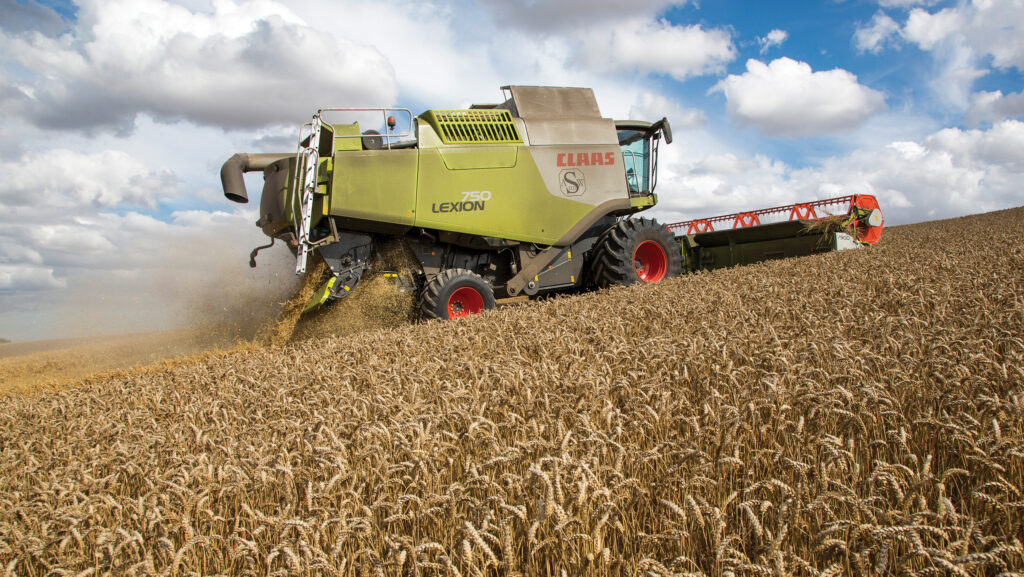
The new entity may also buy in appropriate machinery, for example, a new combine that more efficiently meets the scale and reduce costs across the farms.
Whatever the decision, the machinery costs are off the books for the individual units.
Labour
Labour profiling to establish requirements should be carried out to see where the peak needs are for the farms and to identify any overlaps in staff.
The overall aim is to find efficiencies and reduce fixed costs. It may make sense for appropriately skilled staff to become employed by the contracting entity directly, suggests Ian.
There are laws governing the transfer of employees to a new business. As the new business is a separate entity it is also a new employer for existing staff.
This process is covered by legislation under the Transfer of Undertakings (Protection of Employment) Act.
This legislation must be adhered to, he says. Alternatively, the parent businesses may keep some staff and second them at peak times according to workflow, for example, calving or harvest times.
Management
While cropping regimes, grazing patterns, buying inputs, selling produce and other strategic planning remain under the control of the farm owners, decisions on machinery and labour operations are carried out centrally.
That means the operations across the farms will require management time. Partnerships operating like this often delegate one of the farmers to take up the role.
But an external manager could be employed if no one has the time or motivation.
Whatever the decision, the manager will need an agreed remuneration package under a professionally drawn up contract, Paul points out.
Decisions and direction should then be agreed at regular meetings. Communication is vital between the farmers with regular meetings, a chairman appointed and minutes taken and agreed on with an agent or adviser present to take an impartial position.
Tax
The whole objective of the contracting LLP is to cover costs. In the rare circumstances where the LLP does show a profit, it would typically be reinvested in plant and machinery, if the partners agreed.
Alternatively they would have a rebate against the contract fees they paid.
The LLP itself is not taxed says Paul, but as ever with tax issues specific advice on each person’s circumstances should be obtained and the structure has wider tax implications that need specialist input before going ahead.
These include VAT on the contracting fees charged to the parent farms, capital allowances and any chargeable gains when machinery is sold into or out of the new entity, and the effect on Agricultural and Business Property Relief for inheritance tax – particularly given the reforms capping those reliefs from April 2026.
If it was a company the company would be taxed. This makes the LLP a more straightforward operation than say a limited company which would remunerate via directors’ loans, dividends and a payroll set-up for salaries, he says.
Income is instead divided between the parent farm businesses and tax paid according to income standard thresholds.
Setting up
While this is a relatively simple, tax efficient system it must be set-up with input from legal, accountancy and business experts.
Although this is a cost the outlay is minor when the savings made on machinery and labour are taking into account.
It is vital that watertight contracts and agreements are in place before going ahead, says Paul. There must be an LLP agreement drawn up by a solicitor.
This should cover who has put in what, based on acreage, turnover, or how much money has been invested.
Fee structures for the contracting work must be clearly set out too so that there is no dispute once the business is up and running. Any partner farm must be transparent about their current financial and operating status.
The idea is to have equal partners, not to prop up an ailing business so there needs to be a level of scrutiny, openness and trust applied, Paul says.
For example, if one of the parent farmers wants to leave. There must be an agreement in place for compensation to be paid in lieu of investments made.
It should also cover timescales for departures, perhaps, to rule out a parent leaving during harvest time or other disruptive period.
Policy statements should also be agreed that cover any potential points of contention such as operating procedures meeting attendance, remuneration and usage times for the machine.
Key considerations
Opting to work with others after years, maybe even generations of working independently, is a decision that needs careful consideration, advice and legal representation.
Alignment
Working with others is central to this strategy and the farm owners must be aligned in their aims, commitment and farm size and types, says Ian.
Alignment is arguably the most essential element to address when setting up a contracting partnership, he stresses.
It is important that individuals can strike up and maintain a positive working relationship that will endure the challenges of farming.
Any differences – whether they are in opinions or ways of working – could potentially disrupt operations and transactions.
For example, one of the farmers may want to adopt regen or organic methods and this would require a change of kit and philosophy that could put strain on the efficiency of the business.
Growth
It would be possible to take on extra partners as the business becomes established. It is untested but the model could stretch to four, five six or more parent farms, if they were suitably aligned, says Ian.
Again the need for legal representation and advice is vital. The difficulty is more people, more divergent views and varying objectives.