

How dairy farm’s new staffing model benefits people and cows
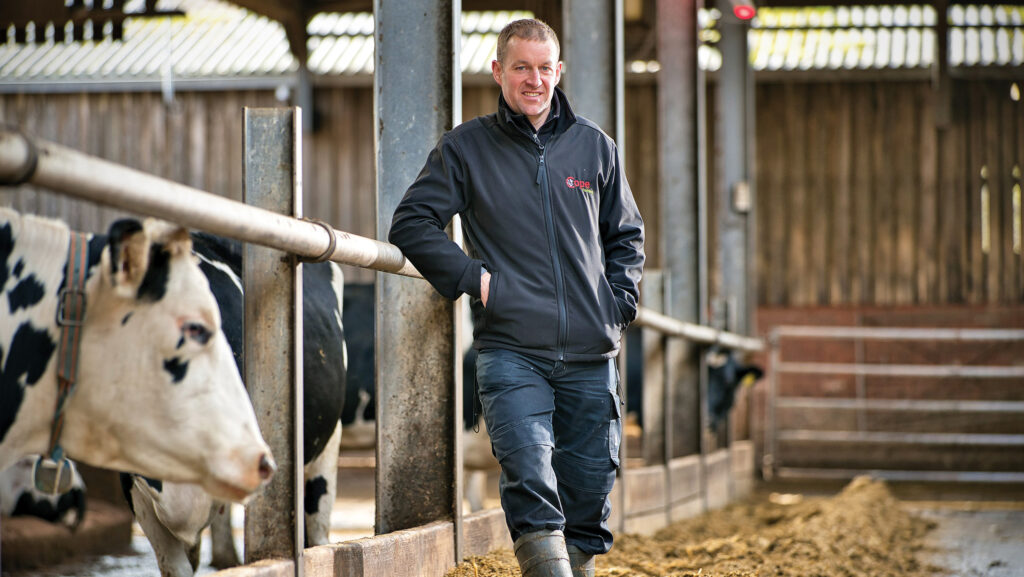 Steve Cope © Richard Stanton
 Like many other UK dairy businesses, Steve and Carolyn Cope’s Bawhill Farm in Shropshire relied on a steady flow of Eastern European workers to milk the cows. But Brexit rules put paid to that strategy.
Up until Brexit, staffing had been relatively straightforward, says Steve. The workforce of two older UK staff and eight from the European Union, worked well as a team and took good care of the farm’s 1,100 milking cows.
See also: Why dairy-beef enterprise fits well alongside suckler herd
Cows are milked three times a day at Bawhill Farm and there was an acceptance among the team that farmwork meant long hours with limited downtime.
The farm operated a 12-days-on, two-days-off system – a long-established work pattern that is common in the dairy sector.
But once the UK left the European Union it was obvious that the traditional staffing and recruitment policy was no longer sustainable, says Steve. And, it wasn’t as simple as just switching to UK-based labour.
“It was difficult to attract workers from the UK who were put off by the long-hours and a lack of apparent career progression in the dairy sector.
“It quickly became very clear we would have to change our whole approach,” says Steve. He started researching alternative recruitment policies online.
A family member who was working in a hotel chain, also suggested how the leisure industry was evolving to cope without EU workers.
Steve took advice from staffing and recruitment specialist Real Success who explained that the transition would be a long process.
“We are still on that long journey,” says Steve who stresses that while the process is very much under way he is still learning and adapting the staff structure.
The first and most obvious issue was that British workers have different career expectations to their Eastern European counterparts.
“British people don’t expect to work 12 days without a break – they want regular breaks and a better work-life balance,” says Steve.
“The hotel sector has moved towards employing staff on shift work patterns so that is where we have focused, made changes and adopted a new process,” he says.
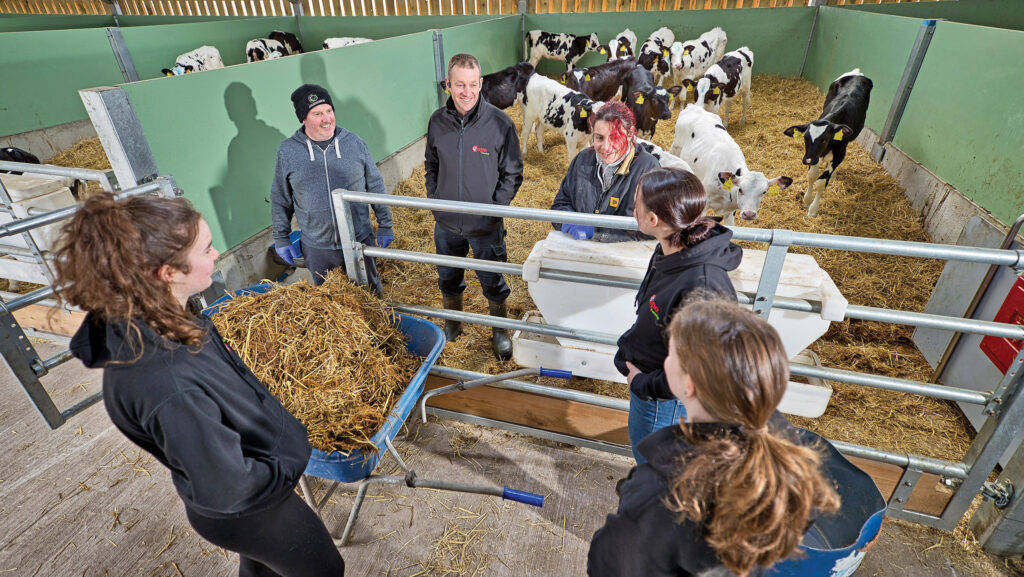
Members of the Cope Farming team have regular catch-ups © Richard Stanton
Working hours
Before Brexit the farm employed seven or eight EU workers and two UK staff. All of them worked long hours with some at the farm for 70 hours a week.
Now the farm employs 20 workers, each making a vital contribution to the team. But instead of the long hours, they tackle the workload in a patchwork of shifts.
“My attitude has changed. If someone said they wanted to work 70 hours a week, I would see that as too much of a risk now,” says Steve.
“The likely outcome of those long hours is fatigue. It is far better to have sharper, focused people doing the job. It’s better for productivity and it’s better for the welfare of the cows,” he says.
“I hope too that it is a better place to work and the feedback suggests that we are on the way to achieving that aim,” Steve adds.
The biggest practical challenge in managing the team is controlling the rota and making sure there are no shortfalls or overlaps.
To keep on top of the rota the farm uses a software package to set out the shifts.
As well as being able to offer staff regular time off each week, Bawhill has addressed the issue of career progression.
Despite the team’s growth the business invests more in the individuals with better communication and understanding of each member’s differing goals.
“We recognise that everyone is different. If people are happy with less responsibility and just want to keep doing what they like doing then we are comfortable with that.
“But if others are more ambitious, then we want to be a responsible employer and help facilitate their progression too,” he says. To achieve this Steve is working at developing more regular discussions with team members to help build up individual profiles and goals.
Profiles are documented and regularly revisited and coaching sessions can be arranged if needed to help staff develop.
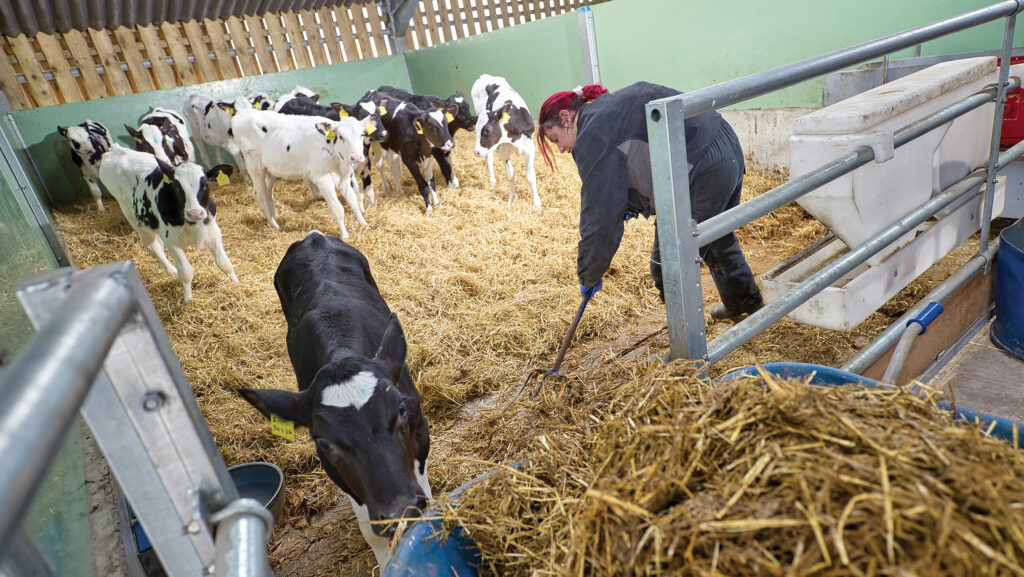
© Richard Stanton
Efforts are also being made to help staff understand how their roles affect the productivity of the business.
For example, the farm has held staff sessions with Real Success and the farm’s nutritionists to explain how management inputs and feed affect the productivity of the cows.
“Helping the staff to have the big picture gets them involved in the whole production process.
“If we all understand how things work and what we can do to improve, then we are all pulling in the same direction, and that is a positive thing,” says Steve.
He is also trying to foster communication within the team. “We have a meeting room where we have regular chats, a WhatsApp group and we try to remember everybody’s birthdays,” he says.
“I hope, in time, it will all add up to better team spirit and that extra level of communication means we will all work together when challenges arise.”
Mindset change
A change of mindset is the key to successful recruitment and staff retention, according to Paul Harris of agricultural employment specialists Real Success.
The firm has helped guide Steve Cope and the team at Bawhill as they transition to the new recruitment policy. Paul suggests the biggest challenge in farm recruitment is moving on from the traditional strategies and switching to a different mindset.
In the recent past, farm recruitment has focused on two strategies – drawing in European labour and a local search for individuals with experience in farming, says Paul.
The driver for that has been to find people who are willing to put up with the often harsh conditions of working in all weathers and sometimes mucky handling of farm animals. But the chances of attracting those people has diminished.
Supplies of EU labour have dried up since Brexit while UK workers have alternative employment options that have become more appealing.
The manufacturing, retail, construction and leisure sectors have all responded by improving working conditions and career progression prospects. “So farming needs to up its game and change its mindset. It must look again at the challenges and adapt the business to offer what potential employees are looking for,” advises Paul.
UK candidates are more discerning – nobody wants to work long hours anymore. The lack of clear prospects, tough working conditions and long hours have to be reviewed and addressed. Paul suggests, the starting point is stepping back and viewing the farm behind the farmgate as a prospective place to work with a focus on the following five key areas.
1. Safety
Health and safety protocols must be in place, understood by everybody and reinforced as part of the workforce culture. Equipment should be well maintained, up-to-date, reliable and capable of carrying out the tasks it is assigned to. Having modern equipment and technology are strong motivators both in terms of keeping and attracting staff.
2. Clean, modern environment
Staff rooms, toilets and washrooms should be clean. “We have for too long, expected farm staff to accept that an outdoor industry means low standards in sanitation and breakout areas,” says Paul.
3. Work-life balance
Staff will want regular time off and shorter working weeks than have been the norm in farming. This can be achieved by covering the same total amount of man hours but employing a higher number of staff working on shorter shifts.
4. Career progression
Many UK candidates want a role where they can achieve their personal goals and ambitions. Candidates want a farm business to invest in their development in exchange for a commitment to support their business in the future.
Offering training and development gives you a considerable advantage in attracting high-quality candidates.
5. Farm reputation
These factors will improve the reputation of the farm as an employer. To enhance it further, consider having a farm Facebook page or website with a gallery and frequent updates to demonstrate the good points about working at the farm.
With these five factors addressed, attracting good workers will be easier, Paul explains.
The Facebook page and farm website are also good places to advertise for workers because prospective candidates can see the positivity surrounding the business.
Other places to consider searching are the online jobsites and universities and colleges which need not be strictly agricultural. Students on food, engineering and technology courses have transferable skillsets and could play a key role in modern farming.
Once you have the applications, the interview process should cover questions that will assess what the candidate would do in certain situations to assess their experience and attitudes.
It should also be a two-way process, allowing the candidate to ask questions about the farm. While it is a positive approach that will appeal to the candidate, the questions they ask can also reveal what their motivations and expectations are, suggests Paul.
Once chosen the new staff member should have a proper induction and a training programme to ensure they are brought up to speed, he concludes.
Why training is a vital part of recruitment
Training is critical in farming progression because it equips the farm workforce with the skills to cope with change, according to The Institute of Agriculture and Horticulture (Tiah). It also clearly demonstrates that farming is not a dead-end job.
A training programme, tailored to meet individual staff member’s needs, shows that it is possible to move from entry-level positions to more senior roles.
The upshot is employees feel valued, which as well as increasing productivity, increases staff retention rates. And, seeing a stable team with known progression steps helps to attract more people into the industry. Tiah offers tailored and accredited development programme through its 24/7 online learning hub.
Users can record their training, to amass an evidence-based record of competency for audits or career advancement.
Explore more / Transition
During the series we follow our group of 16 Transition Farmers through the challenges and opportunities as they seek to improve their farm businesses.
Transition is an independent editorial initiative supported by our UK-wide network of partners, who have made it possible to bring you this series.
Visit the Transition content hub to find out more.
