How forest initiative works with farmers and landowners
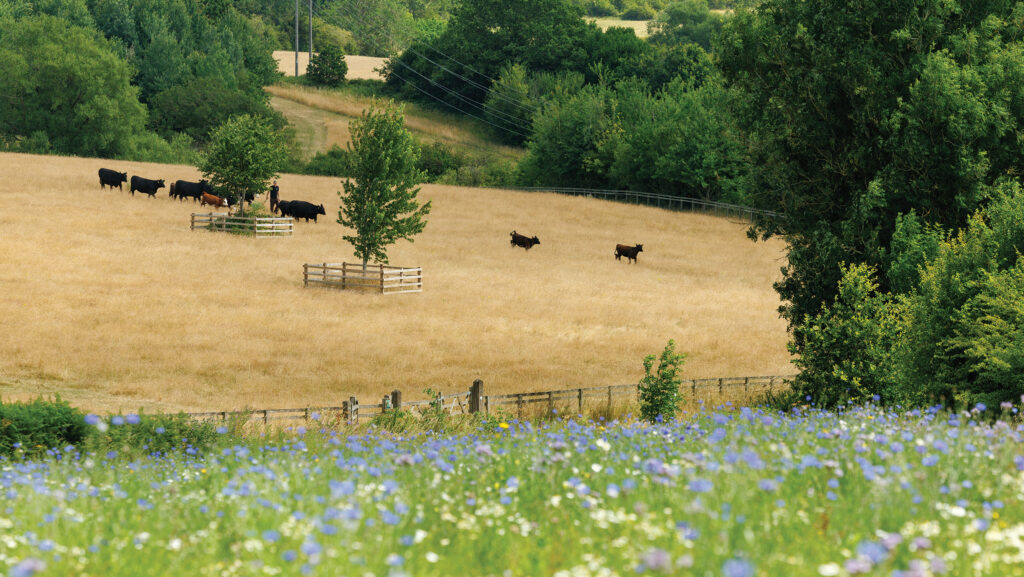 Tenant’s cattle on the National Forest estate at Boothorpe, Moira, Leicestershire © National Forest
 The National Forest is often cited as an example of how tree planting and habitat creation can sit alongside productive agriculture, while delivering environmental, economic and social benefits.
Launched in the early 1990s, it aimed to regenerate 200 square miles of Derbyshire, Leicestershire, and Staffordshire, revitalising landscapes, communities and local economies after the decline of coal and clay mining.
The National Forest – a charity with support from Defra – is responsible for the delivery of the initiative.
It has increased forest cover from 2% to more than 40% around its core near Moira, Leicestershire, and from 6% to 26% across the wider forest area.
See also: Why a private project is looking to buy farmland for forest
Expanding the model
Three decades on, the model is expanding. The Western Forest, covering Gloucestershire, the West of England and Wiltshire, is already working with farmers and landowners on woodland, parkland and habitat creation projects, planting 242ha in its first year.
Further forests are planned for the Oxford-Cambridge corridor and either the Midlands or the North of England, launching later this year and next year, respectively.
“The new forests are modelled on the success of the first forest,” says Sam Lattaway, the National Forest’s head of land strategy and research.
“Each forest benefits people, place and planet, but also focuses on delivering for the different challenges and opportunities of its location.
“For example, the Western Forest has been designed with agricultural businesses as a key focus and will support high-value tree cover through agroforestry and opportunities for diversification.”
Working with farmers
Despite the name, the National Forest is not about wall-to-wall tree planting. “When we talk about forest cover, we don’t just mean woodland,” says its forest creation manager Rob Cleaver.
“It includes parkland, silvopasture, species-rich grassland, wetlands and ponds, all working together to create a functioning ecosystem.
“We’re also talking about the benefit from and to the people and businesses that reside and operate within the forest. It’s that old-fashioned sort of definition of forest.”
Crucially, the National Forest does not buy land. Instead, it works with farmers and landowners to identify where trees might fit within existing businesses.
“We don’t tell people what to do,” stresses Rob. “We go out and listen to the farmer or landowner and understand their objectives and the potential for their land.
“Trees are planted because the farmer wants them there, rather than having them imposed.”
One of the National Forest’s biggest draws is that, in most cases, grant funding covers the full cost of design, establishment and early management.
Sam says removing the need for significant upfront investment has enabled farmers and landowners to take on projects that might otherwise have been unaffordable.
“There are a number of landowners that did big schemes, and the money that came through from the grants helped them change their farming operation.
“It was a big investment that helped them reshape their entire operation and allowed them to do something different.”
Why plant trees
Planting objectives vary, from screening buildings and enhancing biodiversity to supporting rural sport and recreation or diversification enterprises like campsites and cafés.
“People often plant trees for landscape reasons,” says Charles Robinson, independent forestry agent and managing director of Robinson Forestry.
“Then a year or so later they realise livestock are using them for shade and shelter. The benefits often go beyond what was originally intended.”
As woodlands mature, they can also create new opportunities, from tourism and recreation to timber production.
“If you can create a woodland that’s got the potential to grow timber, and then go on managing it, you’ve got that future income as well.”
Agroforestry is also gaining interest, but Rob says many farms continue to focus on awkward or less productive areas.
“But that can help straighten up field edges and actually save you in productivity, despite losing a little traditional grazing or arable land,” he says.
Rob is optimistic for the potential for farms to generate income by delivering public goods, including natural flood management and health benefits.
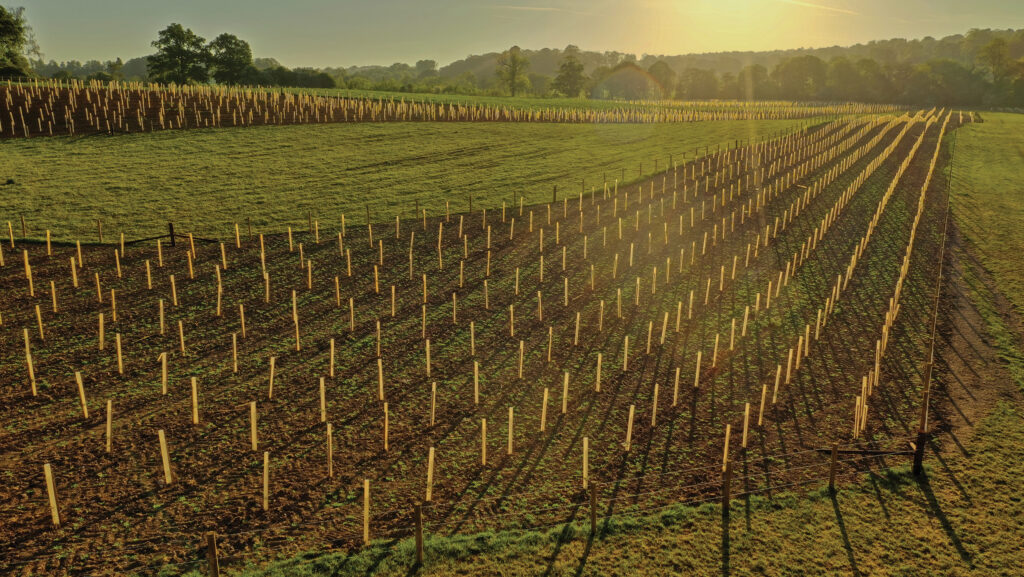
New trees planted © National Forest
From concept to planting
For some farmers, the complexity of woodland creation and habitat grants can be a barrier.
To simplify the process, the National Forest’s team visits the farm and prepares an initial concept map before introducing the farmer to an independent forestry agent, who develops the final proposal and manages the design and regulatory process.
“The National Forest pays us to design it,” says Charles.
“We do our due diligence, fill in the application forms, and they help us access wildlife and historic environment searches through local councils.”
The Forestry Commission then assesses proposals to ensure planting will not adversely affect wildlife, watercourses, soils, geology, or the wider landscape.
Projects smaller than 2ha generally follow a simpler approval process, says Charles.
Larger, higher risk and environmentally sensitive projects, however, require more detailed assessment and can take longer.
Rob stresses that while existing agri-environment agreements can influence what is possible where land is already committed, stacking of industry schemes and grants which complement each other is often very feasible.
However, decisions should be based on long-term business planning, he says.
“Trees are a permanent feature and planting should consider future operations, including machinery access, harvesting, management and other scheme obligations.”
When it comes to species selection, Charles says native broadleaves are widely used for screening and habitat creation, but faster-growing conifers and quality broadleaves are better suited where timber production is a high priority.
Shelter belts often combine evergreen and deciduous species, while parkland planting favours larger maturing trees like oak.
“It’s about the right tree in the right place,” says Charles.
“You have to consider soil type, landscape character and how planting will fit within the farm in two decades’ time.”
Establishment and maintenance
The first three years after planting are the most critical. Weed control, drought, browsing by deer and squirrels, and routine maintenance all influence the success of establishment.
To improve resilience, schemes encourage a diverse mix of species so disease or drought is less likely to affect an entire woodland.
Funding also covers loss surveys and replacement of up to 25% of trees where necessary.
Maintaining tree protection – like spirals, guards and railings – is highly recommended, particularly where livestock and wildlife browse.
Charles says while watering is essential for any farm establishing larger trees in landscapes, like parkland planting, during the dryer and warmer months watering woodland is not practical and so higher losses can be inevitable.
Thirty years after the first plantings, the project continues to demonstrate how trees can strengthen productive farm businesses.
“Tree planting isn’t an all-or-nothing decision,” says Sam.
“Start with a small area, see the benefits for yourself, and expand when the time is right.”
At a glance: National Forest grant support
The National Forest offers grants to help farmers integrate trees and habitats into productive businesses. Support is available for:
- Woodland creation from 0.25ha
- Parkland and wood pasture planting
- Agroforestry, including shelter belts
- Hedgerows, ponds, wetlands and species-rich grassland
- Woodland management and maintenance
- Forestry agent support and project management
- Advice on timber, carbon and business diversification.
The National Forest can provide up to 100% funding for design, establishment and management.
Payments are staggered, with 80% of funding released following establishment works and the remainder paid over the 15-year agreement.
Case study: Rupert Whyte, Formark Park Farm, Derbyshire
When Rupert Whyte planted his first woodland at Formark Park Farm 25 years ago, it was about making better use of the least productive parts of his 101ha of arable land and building resilience.
“We were entirely arable at the time,” says Rupert.
“We had some areas of the farm that weren’t that productive – steep slopes, awkward corners and strangely shaped fields.
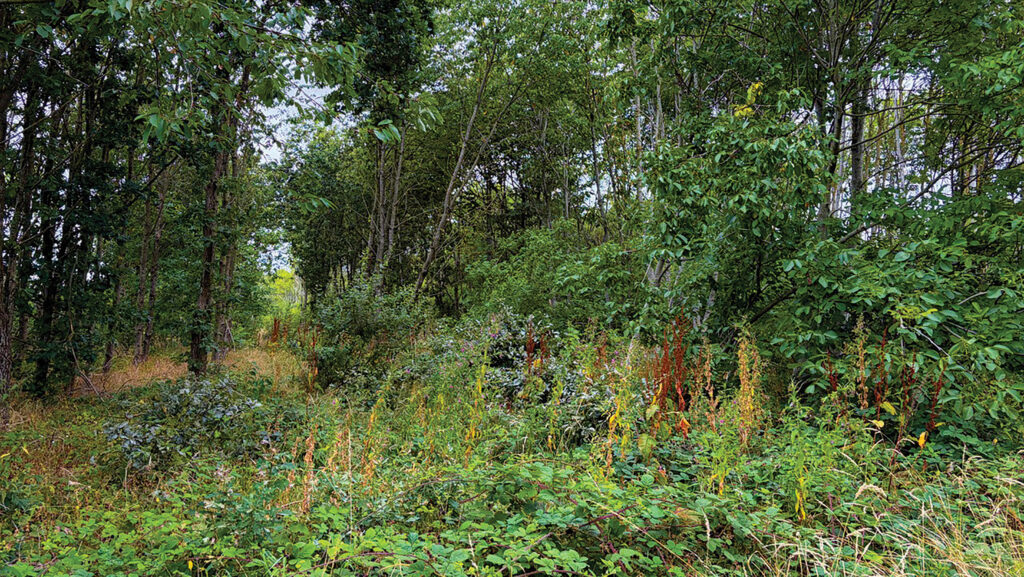
Woodland creation started at Foremark Park Farm 25 years ago © Rupert Whyte
“We try not to think of it as taking land out of production; it’s forward planning, another income stream, and making the business more resilient.”
The first 10ha was planted through the National Forest in 2001, followed by further schemes in 2003 and 2006.
Working with a forestry agent, Rupert established native broadleaf woodland, woodland rides, and restored an old farm pond.
Today, about 36ha of woodland sit alongside 61ha of grassland.
The greatest benefits have emerged as both the trees and the business have matured.
Around 2015, the farm moved from arable to stewardship grazing on herbal leys, and the woodland became an integral part of the livestock enterprise.
“The trees give a great bit of protection from the prevailing weather,” he says.
“They’ve got to improve the way the water runs off the land, and they’re now mature enough that we’re getting timber out of them as well.”
However, he is keen to stress that woodland is an active enterprise.
“It’s still part of the farming business. It’s still something you’ve got to manage and farm effectively if you’re going to have wildlife in there and produce timber.”
Regular thinning improves tree growth while generating income from timber and woodchip.
Some of the harvested timber is returned to the farm as kiln-dried firewood for its newest diversification venture.
This is a nature and wellbeing-focused glamping site, begun following discussions with the National Forest, which funded a viability study and planning pre-application work before the site opened in summer 2024.
More recently, new shelter belts, parkland trees and a 140-tree orchard have been established to support biodiversity, future food production and the visitor experience.
Looking back, Rupert believes the biggest lesson is to take a long-term view.
“All the things we’ve done and all the benefits we’re getting from them now – it’s definitely worth looking at, particularly on land that’s less productive or more difficult to farm.”