How hot dry harvest will help shape plans
 © Tim Scrivener
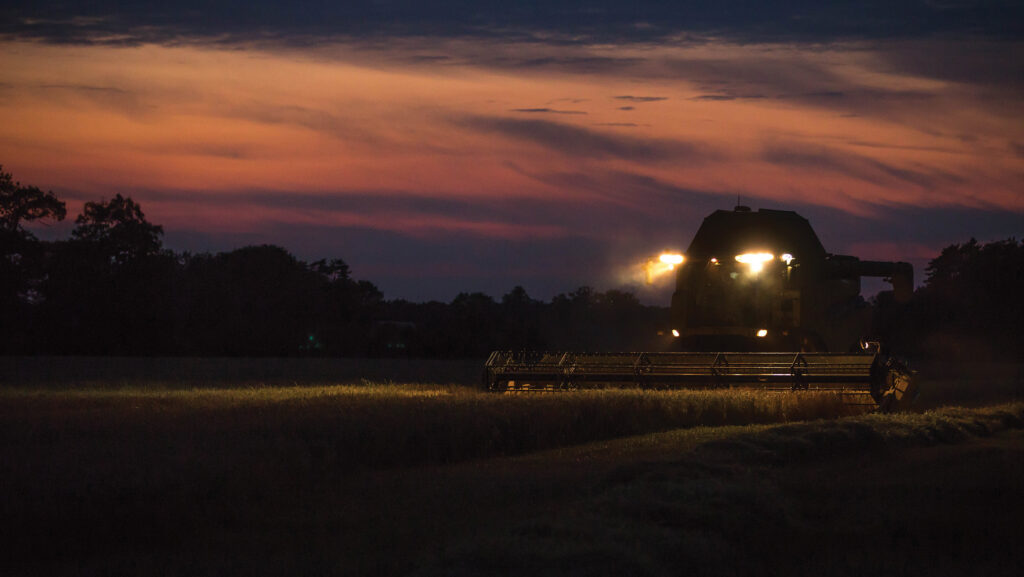
The early start to harvest caught many by surprise. The weeks of hot dry weather that followed without a rain break for the vast majority was just as much a surprise.
However, the two combined meant harvest 2026 was compressed into a short period and leaves some important pointers for next year’s plan, says Mia Bambury, managing director of health and safety advisers Safety Revolution.
Pre-harvest health and safety briefings had to be pulled forward and, in some cases, held before seasonal harvest help had arrived, meaning those new staff members had to be briefed separately, often when harvest had already started.
See also: Why farmers should have a health and safety emergency plan
Advice following 2026 early and swift harvest
With more hot dry summers likely, and the potential for 2027 to be the hottest year on record globally, advisers stress the importance of planning:
- Hold pre-harvest health and safety briefings earlier than usual
- Review how kit will move and what fire and other emergency precautions and plans are in place
- Build in staff relief/rest capacity and stress importance of proper breaks and sensible eating and hydration
- Stress importance of daily maintenance
- Check insurance cover
- Review risk assessments and siting of flammable materials
- Check compliance with the Dangerous Substances (Notification and Marking of Sites) Regulations 1990
“Using technology meant we could hold some team meetings remotely, which helped, but it’s much better if everyone is on the ground, so the preparation and timing of these, to ensure delivery of key operational and safety information is something for people to think about for next year,” says Mia.
Fire risk
Fire risk assessments need to be undertaken not only for compliance but also with practical processes in mind.
With the fire risk heightened by the intensity of the heat and length of the dry spell and people and kit moving swiftly from one field to another, enough extinguishers of the right type need to be in place, advises Mia.
Building in water bowser movements to your kit movement plans as standard means when it’s needed, it’s there, Mia adds, knowing of one fire where this had not happened.
“Ultimately the protection of life is the priority so emergency procedures must take into account safety of the team and getting them to a safe location when fires can move so quickly in dry conditions.”
Separately, in Hampshire a combine fire spread to 30ha of crop across two fields, with about 40 firefighters in attendance and fire breaks created by farm machinery to prevent further spread. Crews and equipment from 11 stations and the service headquarters were involved.
Exhaustion risk
Understandably, the drive to get crops in as quickly as possible did not diminish, despite extended good weather forecasts. Night working became a regular thing to preserve moisture, combined with hot days.
“The intensity of the sun and heat can be very fatiguing, so people need to look out for each other and recognise when others should be taking a break,” says Mia.
“It’s important to have someone available to relieve tired workers, utilise longer periods of known good weather to manage hours and provide rest, in turn reducing risk.
“It can be a challenge because seasonal staff come to farms expecting to earn well through doing long hours so it’s a management task to plan and enforce breaks and finish times.”
Good hydration helps to prevent fatigue and electrolyte drinks replace essential minerals lost through sweat and physical activity, advises Mia.
She cautions against overconsumption of energy drinks, as too much caffeine can have the knock-on effect of preventing good sleep and means people will return to work not properly rested.
“Not unusually, we heard of a few fatigue-related incidents like posts being clipped, machinery damage, but thankfully nothing major in our client base,” says Mia.
Kit checks
Daily kit checks not only reduce risk but recording that these have been done means the compliance trail is in place should anything happen.
This includes checking trailers and loads are secure, lights and flashing beacons are operating, braking systems are fully functional, tyres are in good condition as well as blowing down combines and other kit such as balers, says Mia.
Communications
Good communication helps in the first place, with correct accessible maps, good training and clear instructions, with extra care taken with workers not familiar with the farm. However, once staff are in the field or on the road, poor signal makes things difficult on many holdings.
Solutions include a subscription to satellite broadband through Starlink, for example. Alternatively, dual sim phones can switch between networks when one signal is poor, or multi-network smart sims automatically look for the strongest signal at any location.
“Signal has always been a challenge but it is so critical for lone working, emergency procedures and for technological systems to work now, and we have quite a few people looking to Starlink in the most remote areas,” says Mia.
Insurance issues
Improved fire prevention measures mean that Nigel Wellings, founder and chairman of Acres Insurance Brokers, has seen no more combine fire claims than usual, although there were more field fires, he says.
With so many fires last summer, fire services were stretched and so sometimes took longer to arrive than might otherwise have been the case, so this needs to be taken into account in risk assessments and emergency plans, Nigel advises.
Farmers who have chosen business interruption insurance should be covered for crop losses from field fires, or this may be included in their standard cover, he says.
“The air flows on the latest combine models are much better and not so much of a dust trap, as they used to be. However, these type 4, 5 and 6 engines operate at such high temperatures that this can be an issue.”
There is going to have to be more investment in grain cooling systems in future, he says. “And we really need to think about whether electricity is really the thing to be powering this type of kit on farms.”
The Highlands Farm fire in Essex (see panel – Fertiliser storage warning) should act as an alert for farms of all types to consider where and how flammable materials are stored, whether fuel, fertiliser or anything else, says Nigel. This means not only the type of building used, its proximity to other buildings and materials but to fields with potential crops at fire risk.
Converted buildings and commercial lets are another area that may need more attention from a fire risk perspective – landlords need to know what is really going on in those buildings.
Fertiliser storage warning
A fire on an industrial site in Essex on 24 July, involving several units and surrounding farmland, was made worse when fertiliser in one of the units exploded, leading to Essex County Fire and Rescue Service declaring a major incident because of the scale and complexity of the event.
The fire and explosion destroyed three fire engines and two officer cars, underlying the scale and intensity of the conditions faced by crews, said the service’s chief fire officer Rick Hylton. Twenty firefighters were taken to hospital following the incident.
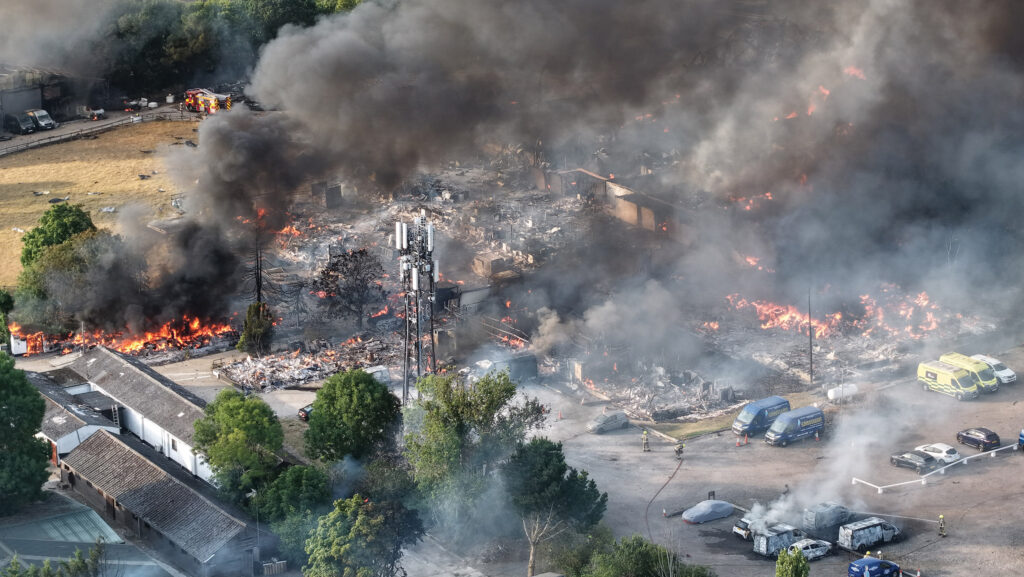
The Health & Safety Executive has opened an investigation into the incident, which demonstrates how fast an ordinary fire can escalate when fertiliser is involved, says Robert Gazely, a partner with farming adviser Ceres Rural.
He points to this incident at Highlands Farm near East Hanningfield as a reminder for farmers to risk assess stored materials and comply with the Dangerous Substances (Notification and Marking of Sites) Regulations 1990 (Namos).
These require notification to the relevant authorities when specified quantities of dangerous substances or ammonium nitrate mixtures are stored.
The main purpose of this is so that firefighters arriving at an incident are warned about substances that could significantly affect the tactics they will use, also where appliances and people should or can be positioned and any measures needed to protect nearby properties and communities, explains Robert.
Notification requirements vary according to the type and tonnage of materials, so that when 25t or more of a dangerous substance is stored, the local fire and rescue service and the enforcing authority (usually the HSE) must be notified and a sign fixed at the site entrance.
Where 150t or more of relevant ammonium nitrate mixtures (with nitrogen at 15.75% or more by weight), the local fire and rescue service must be notified.
If both of these thresholds are met then the local fire and rescue service plus the HSE must be notified and an entrance sign fixed.