

How to measure farm business resilience
 © GNP
Transition experts are urging farmers and growers to think again about the data they use to gauge the health of their businesses.
In addition to the conventional performance measures they are calling for the wide-scale adoption of resilience indicators that better represent a business’s ability to withstand change.
KPIs v KRIs
Farm businesses monitor performance through a range of long-established indicators – gross margins, yields, lambing percentages, feed conversion ratios, growth rates and profit.
These are referred to as key performance indicators or KPIs, and it is a term that has become part of the modern farming vernacular.
However, while KPIs are a guide to current performance they don’t paint the full picture of a farm’s resilience to challenges such as increasing market volatility, climate change and staffing issues.
Used alone, KPIs could even mask business risks such as increasing debt. For example, a farm might produce rapid growth rates, high yields, solid gross margins and healthy profits.
But those growth rates may be achieved from expensive, imported feed, the high yields might be grown on soils propped up by artificial fertilisers and all of the output could be produced by an ageing or unstable workforce.
© Tim Scrivener
Strutt & Parker head of farming Natalie Gaibani explains the important point to note is that resilience is not the same as productivity or profitability.
Profit is a relatively short-term indicator of performance while resilience is a factor that underpins a business’s ability to cope and adapt to ensure it can stay solvent in the long-term, says Natalie.
One way to establish the level of resilience is to monitor indicators that better set out the business’s ability to cope with future challenges, she says.
The value of a key resilience indicator (KRI) then is to highlight a potential or developing weakness before it undermines the ability to continue trading.
KRIs point to
- The financial leeway if costs and prices change
- Dependency on income from a key enterprise
- Soil health and ability to withstand weather extremes
- Dependency on key individual workers
- Whether the business can invest to maintain productivity
Here our Transition Partners set out some of the most important KRIs, the questions to ask and the warning signs that can point to a potential challenge.
Economic and financial
Profit levels are important but indicators such as cashflow and financial headroom often matter more when challenges occur.
KRIs include:
- Profit levels
- Cashflow
- Debt and interest costs
- Working capital
- Breakeven output and price
- Reliance on overdraft facilities
- Dependence on a single enterprise
- Ability to withstand a price drop and input costs
- Number of significant customers and suppliers
- Contracts versus open-market exposure
- Supply chain involvement
Profit needs
Natalie Gaibani head of farming Strutt & Parker
Financial resilience starts with being clear about what profit the business needs to generate, rather than simply aiming to maximise profit.
Ask yourself: What average figure over five years does the farm need to provide for the people who depend on it and allow for reinvestment back into the business?
Are you making that level of profit? Is it achievable with your current system, or do you need to look at fundamental changes to the enterprise mix?
How much will you be relying on everything going to plan, and choosing exactly the right investments to make? Is there a contingency for bad years?
Warning lights: The danger signs tend to be where there are no financial controls or oversight, along with wider unresolved succession issues.
© GNP
Farms that use monthly management accounts have a much better oversight of spending, which helps to avoid straying wildly from budget.
A financially resilient farm understands what return it needs, monitors that against actual performance and makes investment decisions based on clear, realistic gains.
Knowing how much profit is enough profit, can also prevent people from continually striving for more at the expense of their physical and mental health, where there is a choice.
Cashflow
Michelle Nuttall head of knowledge exchange Frontier Agriculture
Cashflow is often one of the earliest indicators of a threat to farm resilience. Unlike other business sectors, farming requires significant expenditure on seed, fertiliser, crop protection and other inputs long before the final return is known.
Ask yourself: Is there sufficient cashflow to cope with the impact of weather, low yields, market and policy changes?
Warning lights: Cashflow becoming tight, increased reliance on short-term borrowing, delays to investment, inability to respond to challenges and opportunities as they arise.
Financially resilient farms take a proactive approach to managing both cashflow and risk.
They understand where pressures may occur, plan for different scenarios and consider how public and private funding can support productivity, sustainability and long-term growth.
They also monitor markets and look for ways to reduce uncertainty through marketing strategies, supply chain partnerships and production decisions that provide greater certainty around key business choices.
While risk can never be removed entirely, maintaining sufficient financial flexibility is key to navigating difficult seasons, seizing opportunities and investing for the future.
Input management
Michelle Nuttall head of knowledge exchange Frontier Agriculture and Natalie Gaibani head of farming Strutt and Parker
Effective input management is a key part of running a resilient farm business. The best return is not about spending less, but about investing in the right products, at the right rate, at the right time.
Ask yourself: Does the business regularly review results? Does it benchmark performance and use data to inform decisions? Do you speak regularly to your advisers, agronomists, vets and other farmers to challenge your thinking? Do you make time to keep up with new ideas?
Warning lights: Reacting to short-term price movements without considering the wider impact on crop performance or business returns. Purchasing the same inputs year-in, year-out regardless of conditions.
The goal is to maximise the value of every pound spent. Targeting inputs more effectively can help maintain productivity, improve margins and support long-term business resilience.
At the same time, look for ways to build the underlying resilience of your farm so you are less dependent on purchased inputs.
The strongest decisions are based on robust data, crop need and field-specific requirements. Businesses can strengthen their decision-making by regularly reviewing results, benchmarking performance and using data.
Marketing
Michelle Nuttall head of knowledge exchange Frontier Agriculture
A resilient farm business understands that growing the crop is only part of the job. Profitability depends on knowing what it costs to produce, identifying where value can be added and understanding the opportunities available within the market.
Ask yourself: How much influence do I have over the prices achieved? How often do I analyse markets and the factors affecting them? What links do I have beyond the farmgate and with other farm businesses?
Warning lights: Little co-operation, poor supply chain integration and limited use of market analysis. While farmers cannot control global commodity markets, they can influence how they respond to them.
Understanding the options available and making informed decisions throughout the season can help businesses capture value, reduce exposure to market volatility, provide greater confidence and create more flexibility for the future.
Potential value can be lost when grain is sold without a clear understanding of production costs, premium opportunities are overlooked, or different marketing options and routes to market are not fully explored.
Marketing is most effective when considered within the whole-farm plan and throughout the season.
Keeping up with market developments can help to identify opportunities through contracts and sustainability programmes.
Delegating crop marketing to an expert, for example via grain pools, can relieve the time and pressure associated with watching commodity markets.
People
The people who make the business tick are one of the most overlooked resilience factors.
A farm can be highly vulnerable if only one person can make critical decisions or knows how to operate key machinery or manage livestock health and welfare.
KRIs include:
- Age and availability of the workforce
- Staff turnover
- Skills coverage
- Training
- Succession planning
- Number of critical tasks dependent on one person
- Availability of contractors or relief labour
- Staff wellbeing and workload
Staffing
Paul Harris CEO Real Success
A resilient farm needs a sustainable workforce.
Ask yourself: Are people regularly working excessive hours? Does too much knowledge or responsibility sit with one individual? Could someone else step into a key role tomorrow? Are your people developing, engaged and likely to still be with you in three years’ time?
These are indicators of human sustainability – whether your people can continue performing well without becoming exhausted, disengaged or deciding to leave.
Warning lights: Increasing absence, long hours, poor communication, falling morale, repeated recruitment problems or a business that simply couldn’t function without one key person.
© Tim Scrivener
A resilient farm doesn’t just protect its land, livestock and finances, it protects and develops the people on whom the whole business depends.
Regularly review how workloads, knowledge and responsibilities are shared. Encourage open feedback and make time for development.
A sustainable team is one where everyone understands their role, feels valued and can step up when needed.
Health and Safety
Paul Harris CEO Real Success
Are you preventing accidents or just reacting to them? A resilient farm needs people who can work safely, confidently and consistently.
Health and Safety is not simply about paperwork or compliance – it is about protecting your people and your ability to keep the business running.
Ask yourself: Do people understand the risks associated with their work? Are safe practices followed when nobody is watching? Do employees feel able to speak up about a concern or near miss without fear of blame?
And are you confident that new or inexperienced team members receive the training and supervision they need?
Warning lights: Shortcuts becoming the norm, repeated near misses, tired people taking unnecessary risks, outdated risk assessments, or safety becoming something discussed only after an incident.
A serious accident can have enormous human consequences, but it can also expose how dependent a business is on particular people.
Build safety into everyday conversations. Encourage people to challenge unsafe practices and learn from near misses.
Succession
Paul Hardman solicitor Shakespeare Martineau
Having a documented succession plan is a key indicator for the long-term resilience of a farm business.
A plan will set out how the business transitions smoothly from the existing generation to the next, providing continuous strategies and avoiding legal consequences that could interfere with the business operation or even break it up.
Ask yourself: Are family members consulted on how decisions are taken? Is the next generation excluded from business data and information? Are younger members given opportunities to take responsibility?
Warning lights: No documented plan for handover or contingencies built in for events such as death, divorce and family member departures. Poor succession plans are ones where the consequences are not fully thought through.
A Family Charter and the Wills of parents/grandparents and children should be reviewed and, if necessary, the shareholders agreement and articles of association/partnership agreement.
Good communication and consensus building are key to successful planning through open-dialogue where decisions are taken following a consistent process which is respected by all stakeholders.
Operational
Modern farms depend on a huge array of operational factors from soil and water to machinery, buildings, electricity, telecommunications and digital systems.
KRIs include:
- Soil health
- Water management
- Age and reliability of key machinery
- Machinery utilisation
- Dependence on contractors
- Condition of buildings, roads, yards, fences and drainage
Machinery and infrastructure
Natalie Gaibani head of farming Strutt & Parker
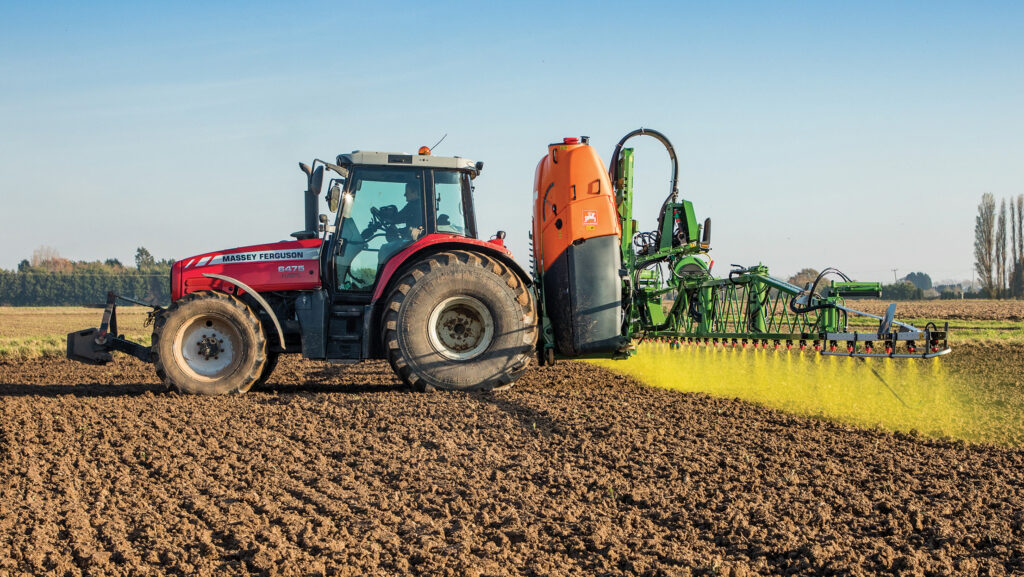
A resilient farm treats its physical resources as critical infrastructure, not just something to repair when there is a problem.
This means thinking about how well – or badly – land, drainage, tracks, buildings and handling systems have been coping with the increasingly extreme weather patterns.
In terms of machinery, it is about giving careful consideration to issues such as reliability, adaptability and affordability.
© GNP
Ask yourself: Is machinery breaking down more frequently? Is there a contingency for a major machinery failure? What is the potential financial consequence if I don’t make an investment?
Warning lights: Breakdown frequency, repair bills rising above the cost of a new machine, over-dependence on critical machinery or single contractor.
Risk management needs to be integral to any decision-making around infrastructure.
As part of any analysis, stress test both your physical and financial performance according to a hot year, a drought and flood.
Investment in things such as renewable energy, water recycling and storage, cooling equipment for livestock sheds and irrigation, are becoming increasingly valuable, or even essential, as risk mitigation and for farms to remain viable in future years.
Soil Health
Martin Lines CEO, Nature Friendly Farming Network
Soil underpins all grazing and crop enterprises so understanding its ability to maintain its production potential is vital – it is a crucial part of resilience.
We should treat healthy soils as we treat other farm infrastructure, that is, something that needs investment, care and maintenance.
Ask yourself: Do you carry out soil sampling and structure across the farm? Are soils spongy in texture with high levels of organic matter? Do soils absorb heavy rain and retain it for extended dry spells?
Warning lights: Patchy growth across fields and declining crop yields, slow growth rates and poor fertility in stock, flood-prone areas in fields, erosion damage and increasing reliance on artificial fertiliser.
For arable farms, cover cropping and nature-based nutrient solutions should replace synthetic or chemical options to improve soil health and quality.
Overall, the five key principles of regenerative agriculture – protecting the soil surface, promoting diversity over monocultures, integrating livestock, minimising soil disturbance and maintaining living roots in the soil – remain a good guide for farms looking to build future resilience in a time of climate crisis.
Reducing dependence on external inputs like bought-in feed is also a key indicator.
Water
Chris Hewis Anglian Water and Martin Lines CEO Nature Friendly Farming Network
Water resilience encompasses effective management supply, usage, capture, storage and drainage.
A resilient farm needs to be managing all water effectively and efficiently, whether it’s from the mains or from the sky.
Ask yourself: Do you face yield and crop losses due to drought or wet weather? Do you see runoff and erosion? Are there controls and storage to manage flows and capture water?
Warning lights: Water shortages becoming more frequent, little storage or contingency capacity, single borehole supply, drainage system failures, inaccessible field areas.
The most resilient farms tend to look beyond summer drought and winter downpours and instead have a year-round, holistic system to manage the collection, retention and use of water across a farm.
View water like you do energy and look for efficiencies and savings.
Something as simple as locating and mapping all water pipes can be a useful exercise, to help with repairs and avoid future damage.
Increasing soil organic matter content, reducing compaction and maintaining a good structure will all improve resilience by aiding water infiltration in wet seasons and increasing the water holding capacity and nutrient availability in dry ones.
Explore more / Transition
Follow the experiences of our 16 Transition Farmers and access in-depth supplements, expert webinars, live events and practical content covering the challenges and opportunities facing farm businesses.
Transition is an independent editorial initiative supported by our UK-wide network of partners.
Explore the Transition hub for the latest insights, resources and events.
