Employ more dairy staff for fewer hours, farmers advised
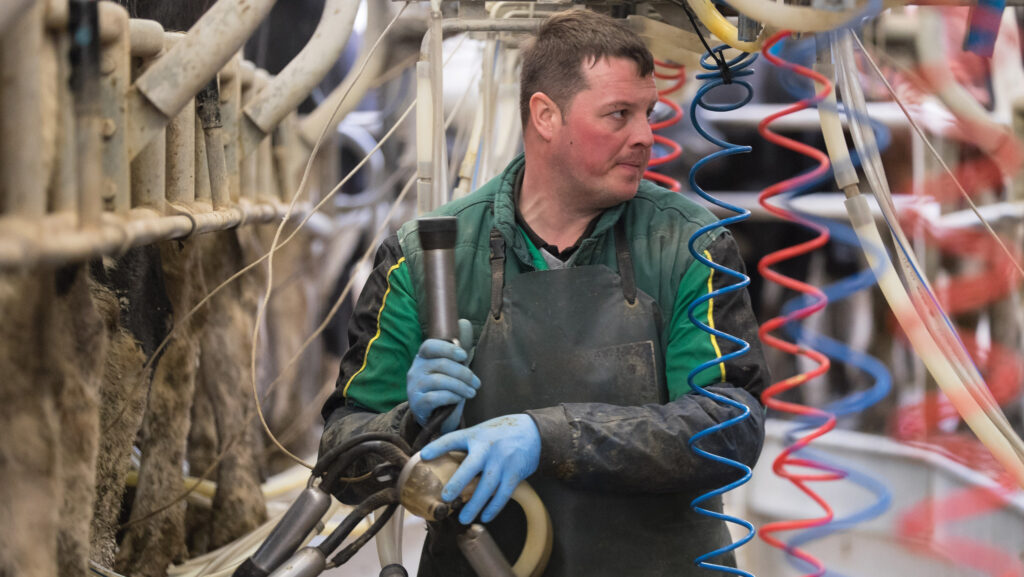 © Tim Scrivener
 The dairy industry does not have a labour shortage. Instead, farmers need to fundamentally address the way they manage people to make the sector more attractive, believes recruitment specialist Paul Harris of Real Success.
See also: Top leadership tips to help dairy workforce thrive
Speaking at the Dairy-Tech event (4 February), he said: “There are millions of people working in the UK, so why are they not working on our farms?” He thought it false that “the next generation is woke”.
“Quite rightly, they don’t want to work 10 hours a day because they have seen what it has done to their parents,” he pointed out.
It was “no wonder” the industry could not attract people, he said, when many farms were still asking staff to work 10- to 12-hour days for 12 days before getting any time off.
He encouraged farmers to employ more people for fewer hours, and consider how they could make the industry more attractive.
Clean and working toilets, investment in people management training, and providing accommodation that farmers and their families would be happy to live in are mandatory, Paul said.
“The skills of managing people are just as important as technical skills like foot-trimming.”
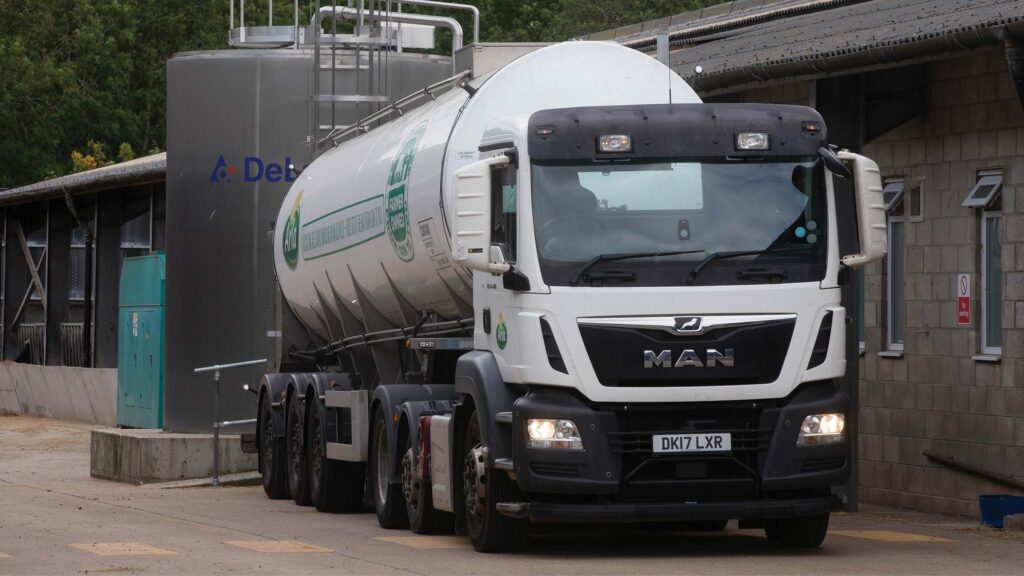
© Tim Scrivener
Training even when margins tight
RABDF council member Karen Halton urged producers not to cut back on staff training despite the low milk price.
“Investing in people is important when margins are being squeezed, because this is when we need them to be on the top of their game the most,” she said.
Staff team stable and morale up at Staffs dairy
For fourth-generation dairy farmer Rupert Major and his herdsperson Will Sanders, rethinking people management has transformed staff retention and team morale.
“When I came back from university, we had three employees who had worked for us for 20 years each,” Rupert said.
“I was taught you need to manage people well, but as long-standing employees retired, we realised our approach needed to change because we had a regular turnover of staff.”
Farm facts: Castle Hayes Park Farm, Staffordshire
- Milking 640 Jersey cross Friesian cows, spring calving
- Supplying Arla
- Yielding 6,000 litres at 4.5% butterfat and 3.8% protein
- Farming 404ha
With the help of Real Success, the duo made many small improvements that together have had a significant impact. These include:
- Personality profiling to better understand communication preferences
- Restructured interviewing processes: a full sit-down interview with prepared questions followed by a farm tour, then a trial day with feedback from the team
- Team alignment prioritised above skills, because skills can be taught
- Team restructuring, with everyone given clear roles and responsibilities – this has also aided succession
- Weekly team meetings that start half-an-hour before lunch to prevent them from overrunning
- Annual reviews
- Work rota changed from 12 days on, two days off, to one in three working weekends, based on staff feedback
- A 40- to 50-hour working week, on average
- Regular staff training.
“It gets worse before it gets better. It’s a low point having to listen to employee feedback, but now we have a stable, well-organised team,” reflected Rupert.
Will said having a top-down structure, with more managers and defined roles and responsibilities, has made the biggest difference. In addition, empowering staff through training means they no longer need to call him with problems.
Since overhauling staff management, the team at Castle Hayes Park Farm have had 18 months of solid staff retention.
Change that has biggest impact
What one change can make the biggest difference, based on your experience?
Rupert Major: “Understanding that your team is different to you and one size does not fit all.”
Will Sanders: “When you bring the team with you, the team starts to hold each other to account.”
Paul Harris, Rupert Major, Will Sanders and Karen Halton were speaking on a panel at Dairy-Tech, Stoneleigh, Warwickshire on 4 February.