4 key steps to support and retain staff on UK farms
 © Tim Scrivener
 A recent survey by land agent Knight Frank has revealed that almost 90% of agricultural estates are struggling to attract competent staff, while 60% of respondents say it is becoming more challenging to hold on to decent workers.
So what can farmers do to better support their staff, improve employee wellbeing and strengthen long-term workforce stability?
We spoke to two organisations – employment consultant Real Success and the Farming Community Network (FCN) – to seek their advice on staff retention.
See also: Find out more about careers and professional development
1. Invest in people management and training
Real Success says farms must shift their thinking away from viewing staff purely as a cost and instead recognise them as an investment.
The organisation warns that failing to invest in training risks losing experienced employees.
“Recruitment has got harder and retention is extremely fragile in the industry,” says Paul Harris, founder and managing director of Real Success.
“People skills aren’t something that is taught… I don’t think we have a labour gap; we have a people gap.”
Many employees leave due to management issues rather than the work itself, he suggests.
“When we ask people why they have left farming, we find that people leave people, they don’t leave farms.”
Both Real Success and FCN also stress the importance of training beyond technical skills, particularly in leadership and people management.
Alex Phillimore, head of operations and communications at FCN (and a former employee at the Institution of Occupational Safety and Health), agrees that ongoing learning opportunities help retain staff.
“If you’re constantly learning or given opportunities to learn, you’re more likely to stay in a business because you feel like, actually, ‘I’m not just here for the hour, I’m learning some skills’.”
© GNP
2. Working hours and work-life balance
Long hours and limited rest are also identified as major contributors to staff fatigue and disengagement.
Real Success advises farms to plan labour levels slightly above the minimum requirement to allow for time off, sickness cover and training.
Mr Harris adds that structured rest can also improve productivity.
“We have farmers who have given their staff two days off after five, and their productivity has gone up,” he says.
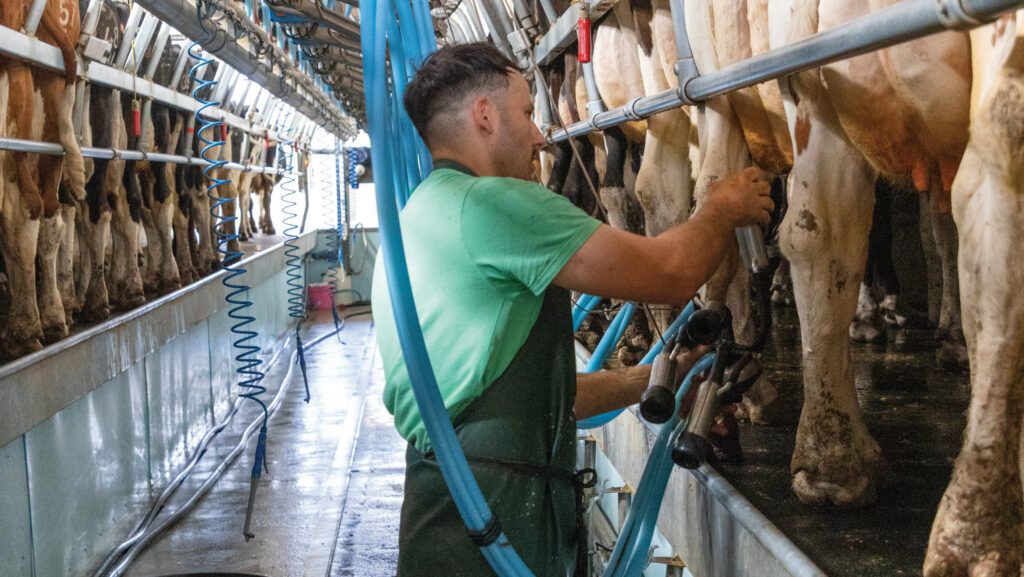
FCN’s Mr Phillimore says many staff struggle to take time off because they feel their role cannot be covered.
“One issue why there’s not a better work-life balance for a lot of people is because they’re the only person doing their job,” he says.
Introducing backup systems or rotas can help address this.
“Recognising that staff don’t take time off not because they don’t want to, but because they feel that they can’t, is something for businesses to consider,” he adds.
Real Success also warns that excessive working hours increase the risk of accidents and mistakes.
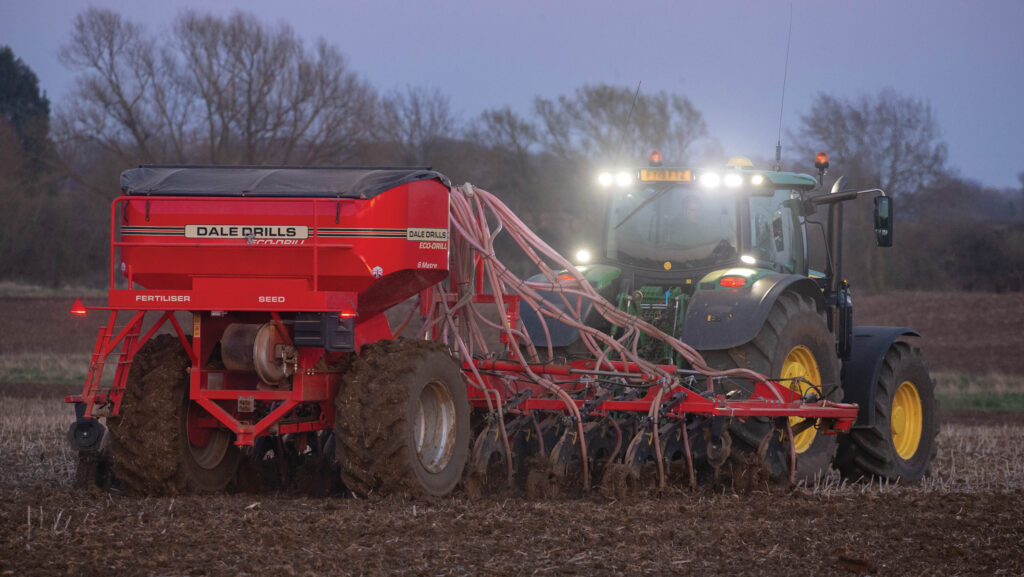
“When people are exhausted, they make mistakes. Is it safe for people to be working at three o’clock in the morning with their lights on?” he asks.
3. Decent staff facilities
Facilities and accommodation are described as a visible sign of how much a business values its workforce.
Real Success says poor facilities can undermine morale and deter potential recruits.
“Good facilities attract people, bad facilities put people off,” says Mr Harris. “A dirty room at the back of the cow shed with furniture that was destined for the skip, and a toilet with no seat needs to stop.”
Providing warm, dry staff rooms and well-maintained housing does not require a large investment, but can significantly improve staff loyalty.
Conversely, draughty or unsafe accommodation does not represent a suitable working environment.
Mr Phillimore also highlights the importance of inclusive facilities.
“Even just adequate toilets and what’s available in them – things like bins for sanitary products – are fairly simple steps that can be taken to show that you’re appreciating the diversity of your workforce.”
Both organisations say addressing small issues around facilities can often convince staff to stay.
Mr Harris adds: “For many farms, they are a smidge from being really good; it’s just that small gap in facilities that is often making employees leave.”
4. Health and safety, inductions and reviews
Figures from the Health and Safety Executive (HSE) show that agriculture, forestry and fishing remain the most dangerous sectors for workers in Great Britain.
Although the sector employs about 1% of the workforce, agriculture accounts for 18.5% of all fatal workplace injuries, with farmworkers about 20 times more likely to be killed at work than the average across other industries.
Real Success warns that dangerous farms are more likely to experience higher staff turnover.
Mr Harris says: “We [the farming sector] are the worst for health and safety, and that isn’t due to government policy, it’s down to farmers. We need to have an ambition on the farm for intentional safety.”
For Mr Phillimore, safety and wellbeing must be led from the top.
“If a manager doesn’t take health and safety seriously, or doesn’t take mental health seriously, you can’t then expect your team to,” he says.
Both organisations highlight the importance of proper inductions.
Mr Harris says many new starters receive minimal guidance, adding: “You often turn up at a farm and get shown around the place, and that’s it. We need proper inductions.”
Regular appraisals and one-to-one meetings are also seen as vital.
Mr Phillimore says these should not be viewed as an opportunity for criticism. “It’s a really important opportunity to sit down and ask: How are things actually going? What support do you need?”
Listening to staff can also lead to practical adjustments that reduce stress and improve retention. “It doesn’t cost anything to listen to people and get their thoughts on how we might do things differently,” he says.
Real Success has called for a national people leadership programme and national standards for farm working conditions.
It argues that retention depends on creating workplaces where people feel safe, supported and valued.
Practical investment in people on the farm
Andrew Robinson © Tim Scrivener
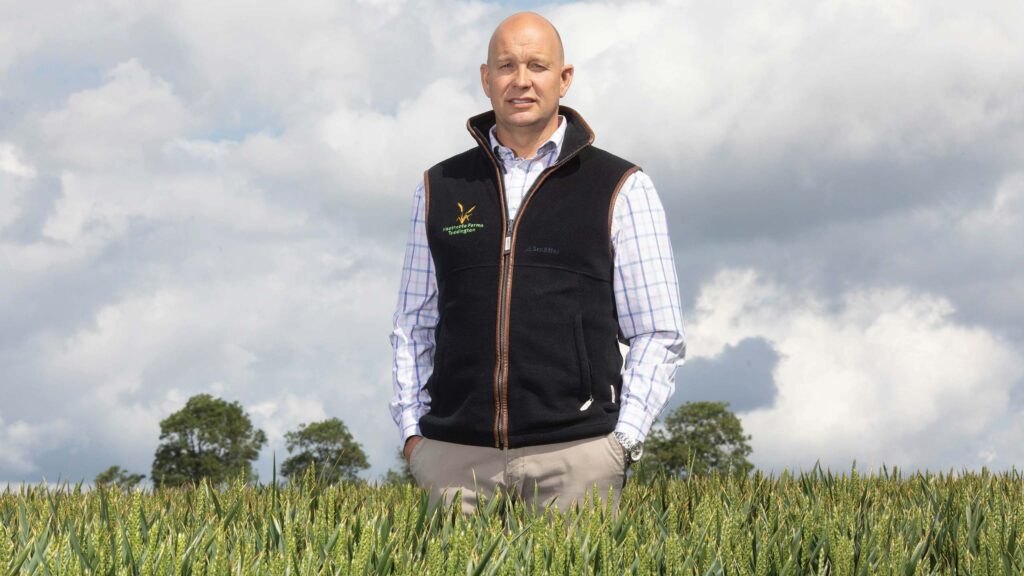
Andrew Robinson, an arable farmer from Toddington, Bedfordshire, outlines how long-term investment in people, training, and workplace culture has underpinned staff retention on his farm.
Mr Robinson, the 2019 Farmers Weekly Farm Manager of the Year, runs Heathcote Farm with a workforce that includes several long-serving employees as well as seasonal students.
His longest-serving staff member has been employed for 14 years, while others have nine and eight-and-a-half years’ service.
Mr Robinson says workplace culture is central to retention. “I want people to enjoy themselves when they come to work. It’s driven from the top; it’s down to me to create that environment.
“A happy team is a healthy team and a productive one.”
When recruiting staff, enthusiasm is prioritised alongside skill sets. “An employee has a level of skill, but it’s more important for me that someone wants to be here.
“We can teach them everything they want to learn, but we can’t teach them enthusiasm.”
Trial work
Staff are involved directly in business operations, including trial work, which Mr Robinson says shows them they are valued.
“Staff help design trials with us and get really involved. We give them the trial information so they know exactly what’s happening and can have an input.”
He also focuses on workload management and development. “You need to ensure staff can cope with workload and have a good work-life balance.”
Training, regular appraisals and structured progression plans help support retention.
“We also have four students across the summer,” he says. “We have spent a lot on our student accommodation. You really need to invest in people to make them want them to stay.
“You might spend a lot on facilities, but there is value in encouraging people to stay, and to come back.”
Social activities and safety are also part of the approach. “We take our staff go-karting, for meals and spontaneous days out. It doesn’t cost a lot of money, but it makes them feel appreciated.”
Ultimately, retaining staff strengthens the business. “It gives you cohesion. It’s teamwork, and then you grow a good business.”