

How new schemes offer scope for farm work candidates
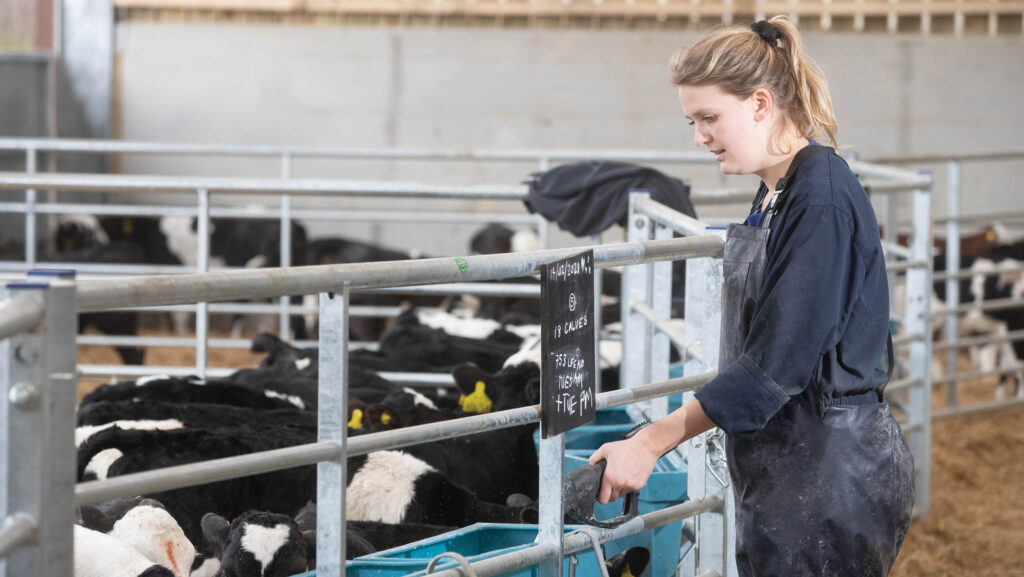 © Tim Scrivener
 The November 2025 Budget included some positive news on opportunities with potential to encourage more young people into agricultural employment.
The government allocated £820m to, in part, fund six months of paid work for many young people in long-term receipt of Universal Credit to gain skills and experience, including on farms.
The Department for Work and Pensions (DWP) is already working with organisations such as the NFU to identify opportunities through the Jobs Guarantee initiative for young people in agriculture.
See also: What to do when taking on a new farm employee
Trial areas start spring 2026
The scheme will be trialled in six areas of the UK during its initial rollout this spring.
The pilot areas are Hertfordshire and Essex, the East Midlands, central and east Scotland, southwest and southeast Wales, Birmingham and Solihull, and Greater Manchester.
The Jobs Guarantee will provide 25 hours a week of fully funded paid work over a six-month period to 55,000 eligible 18- to 21-year-olds who have been on Universal Credit and have been looking for work for 18 months.
So-called delivery organisations to run the scheme are currently being chosen. Wages must be paid by the employer, with the cost, including employer’s national insurance, reclaimed from the delivery organisation.
Delivery partners will be responsible for securing suitable funded employment for eligible young people, who will be referred to them by the DWP, as well as providing support and training for the employee.
Fully funded apprentice training
A commitment was also made in the Budget on funding for apprenticeships for the under 25s, with a range of measures including fully funding apprenticeship training at small and medium-sized enterprises (SMEs) for eligible people aged 16-24 from the next academic year.
In Wales, Farming Connect, the government body providing support and advice for agriculture, forestry and rural communities, is facilitating six to 12 weeks of paid employment on farms through its Start to Farm programme, for people with no experience in agriculture.
The industry has welcomed the initiatives.
NFU employment and skills policy adviser Tom Price points out that for the Youth Guarantee Scheme to be successful, it will need to equip young people with the essential skills needed to be effective in the farm workplace.
He is pleased to see the changes to the apprenticeship system too, especially the increase in funding for SME employers, as the majority of NFU members fall into that category and have the potential to benefit.
SMEs are businesses with fewer than 250 staff (full-time equivalent) and less than or equal to £44m in annual turnover or a balance sheet total of less than or equal to £38m.
Tom says further clarity is needed on how farmers will benefit from changes to the apprenticeship levy and the freeing of apprenticeship levy funds for non-apprenticeship training.
All non-apprenticeship training funded from the levy needs to be approved by Skills England, which is prioritising eight sectors identified in the government’s industrial strategy as having growth potential.
These include advanced manufacturing, clean energy, creative industries, defence, digital and technologies, financial services, life sciences and professional and business services.
Becki Reay, head of UK corporate dairy at Kite Consulting, welcomes government-backed support for agricultural employers who make an investment in training the next generation of workers, as this reduces both the risk and cost to the farm business.
“But to be effective this needs to be in combination with raising awareness of agriculture as a career and increasing the positive perception of farming to ensure those coming into the workforce see it as a long-term viable career option with a structured and rewarding development pathway,” she says.
Start to Farm scheme
Although limited to Wales, a new element to Farming Connect’s Start to Farm programme could provide a valuable blueprint for other UK nations.
This is a pilot programme, with Farming Connect facilitating six to 12 weeks of paid employment on farms for people with no experience in agriculture.
The initial rollout involves just five farms with a mix of enterprises across the dairy, beef and poultry sectors. These have been selected from Farming Connect’s team of peer-to-peer mentors.
The farms were all seeking to recruit staff. Although they will pay the wages of their new recruits, Farming Connect organises the recruitment and induction process and provides ongoing support for both the employer and employee for the duration of the job.
Start to Farm co-ordinator Mali Iolo organised the interviews with the shortlisted applicants, which took place either on-farm or remotely and involved the farmers.
Once a job offer is accepted, Mali teams up with each farmer for a “welcome day” on the farm, joined by the Farming Connect health and safety officer to ensure every farm is up to scratch on statutory procedures and guidelines.
After that, responsibilities are handed over to the farmer.
“It works in just the same way it would if they were employing a staff member without our involvement, but I tell the employee that I will have my phone on me 24/7 so if there are any issues prior or during the placement they can get in touch with me. I do weekly check-ins with the employee and farmer too.”
There is an employment contract template if the farm business needs one, but all five in the pilot have their own contracts. The employer business is responsible for employer’s liability and other insurance cover.
The starting date is a decision for the farmer and the new recruit. “Every farm is different – there is no point in us selecting a start date of say 1 February if the farm doesn’t start calving or lambing until the middle of March,” says Mali.
There was a big response to the opportunity from potential employees, some with a background in farming.
However, the programme is intended as a learning opportunity for individuals who don’t have that background, or indeed existing experience in farming, so it is those candidates that are prioritised.
“By leveraging the expertise of Farming Connect mentors, the programme ensures that new recruits not only receive guidance as they embark on their roles but also benefit from a nurturing environment designed to maximise personal and professional development,” says Mali.
Farming Connect intends to run the programme annually and, because the pilot has been so successful, to draw in a greater number of applicants year on year.
Case study: Woodcroft, Bangor-on-Dee
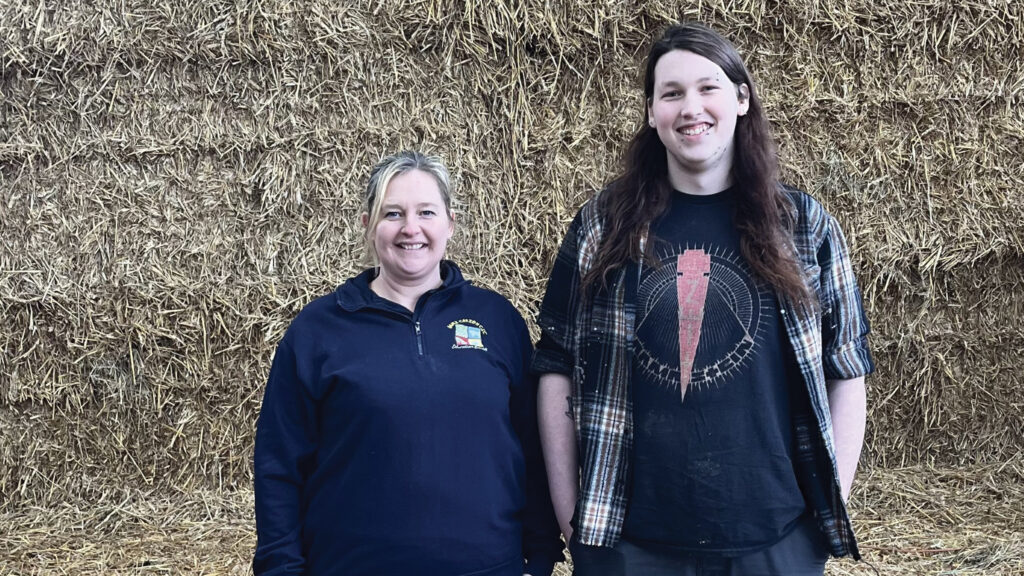
Cheryl Reeves (left) and Nox Hannigan © Farming Connect
As a farm with a social enterprise diversification focused on offering people opportunities to gain new skills, confidence and personal development through practical agricultural experiences, Woodcroft at Bangor-on-Dee, Wrexham, is well set up for delivering the requirements of Start to Farm.
The Reeves family rear 400 beef calves a year on their 57ha farm, as well as operating Agri-cation CIC, a community-focused social enterprise that reconnects people with farming, food, and nature.
Cheryl and Andrew Reeves wanted a staff member who, among other criteria, was willing to work outdoors in all weathers and had an interest in agriculture, sustainability and community development.
They had to be physically capable of manual work and comfortable around animals, at £12.21/hour for a 20-hour week.
From their seven applicants, they hired Nox Hannigan, who began their placement just two weeks ago.
Their attempts to gain employment in farming had been consistently thwarted because farmers didn’t think they had the necessary skills and experience, despite having done previous volunteer work outdoors in maintenance and land management for the National Trust.
“Nox has faced a lot of barriers in their life that have stopped them getting into agricultural employment and, at Agri-cation, we are all about breaking down those barriers so that people can reach their potential and into employment and volunteering,” said Cheryl.
Scheme differences
Jobs Guarantee
- UK-wide
- Government to fund six months paid work (25 hours a week) at minimum wage rates
- For those aged 18-21, looking for work and on Universal Credit for 18 months
- Starts in six pilot areas in spring 2026
Start to Farm
- Wales only
- Run by Farming Connect which helps with interviewing, induction and support though the employment
- Facilitates six to 12 weeks of paid employment on farms for people with no experience in agriculture
- Employer pays the wage
- Five placements in pilot, plans to extend the scheme