Machinery delivery delays affecting tax relief and cashflow
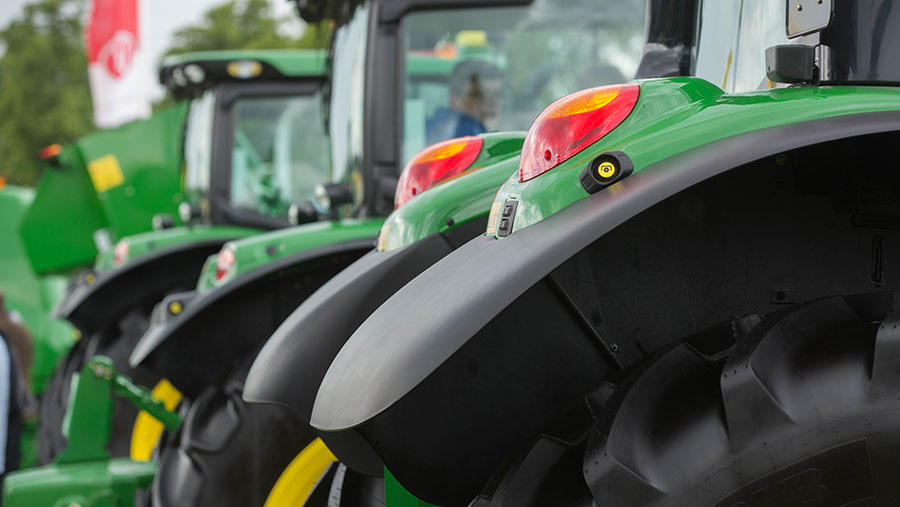 © Tim Scrivener
 Lengthy delays on delivery of new machinery and equipment could result in tax and cashflow challenges for some farm businesses.
The date when most purchases can qualify for capital allowances is the day of delivery.
However, for an asset bought on hire-purchase, the rules are more stringent as the item must be in use before the end of the accounting year in which tax relief is being claimed.
As a result of supply issues caused by the pandemic and Brexit, it is now commonplace for deliveries to take several months after ordering.
Budget for delays
This must be factored into farm budgets, says Andrew Robinson, head of agriculture at accountant Armstrong Watson.
See also: How does tax averaging work for farmers
He points out that many farmers will wait until close to the end of their accounting year to get an idea of likely profit, and then make decisions on their machinery and equipment investment, especially in the light of the 100% first year tax allowances under the Annual Investment Allowance (AIA).
The current machinery and equipment delivery delays mean this is not an option for many if they want to claim tax relief in that year.
For straightforward purchases, an invoice or other associated paperwork confirming purchase is not sufficient to satisfy HMRC – the item must have been delivered to the farm, advises Mr Robinson.
If delivery does not happen before a business’s financial year-end, tax relief cannot be claimed until the following tax year.
HMRC has the right to ask for supporting documentation associated with claims made for capital allowances, including a delivery note.
“If it is a big sum and it is having a big impact on tax, then that could well be the case,’’ says Mr Robinson.
Hire-purchase rules
For an item bought on hire-purchase, a business must demonstrate that it had been in use in the period in which tax relief is claimed.
Issues can arise, especially with equipment and machinery used for seasonal jobs, Mr Robinson warns.
“If a potato harvester bought on hire-purchase is delivered in March and the financial year end is April, tax relief can’t be claimed in that year because a harvester cannot possibly be put to use until later in the year when there are potatoes to be harvested,” he says.
“These rules are not new, but they have come much more into focus because of the long delivery times for plant and equipment.’’
Mr Robinson cites the case of one of his clients, a sizeable arable farming business, which intends to replace a tractor in October.
“The farmer was told that if he placed his order now, in January, there was no guarantee of the tractor being delivered by October. That is the extent of the supply issues we are seeing.’’
He also knows of sheep farmers who have struggled to replace quad bikes ahead of lambing.
Use registration document
Mr Robinson advises that farmers should be mindful of having the registration documents to support claims of when tractors or other vehicles are first used.
Although tax relief is the same whichever tax year it is allocated to, there are implications for cashflow if it can’t be claimed in the year it has been budgeted for.
“Farmers need to be having those conversations in advance if they are thinking of buying machinery or equipment. If the dates when orders are placed and items delivered straddle two tax years, consideration has to be given to how it will be budgeted for in the cashflow and bank balance.
“If it is a major purchase, for instance a combine which can cost hundreds of thousands of pounds, the absence of tax relief can have a major impact on the cashflow.’’
Capital allowances
- Businesses can claim 100% relief under the AIA on qualifying purchases of machinery, plant and equipment up to the value of £1m in 2022
- The AIA was also £1m in 2021
- Timing of purchases and claims must take account of the interaction between tax, accounting and AIA (calendar) years
- The rules are different depending on whether it is an outright purchase or hire-purchase