Why a farm machinery sales tax assessment is important
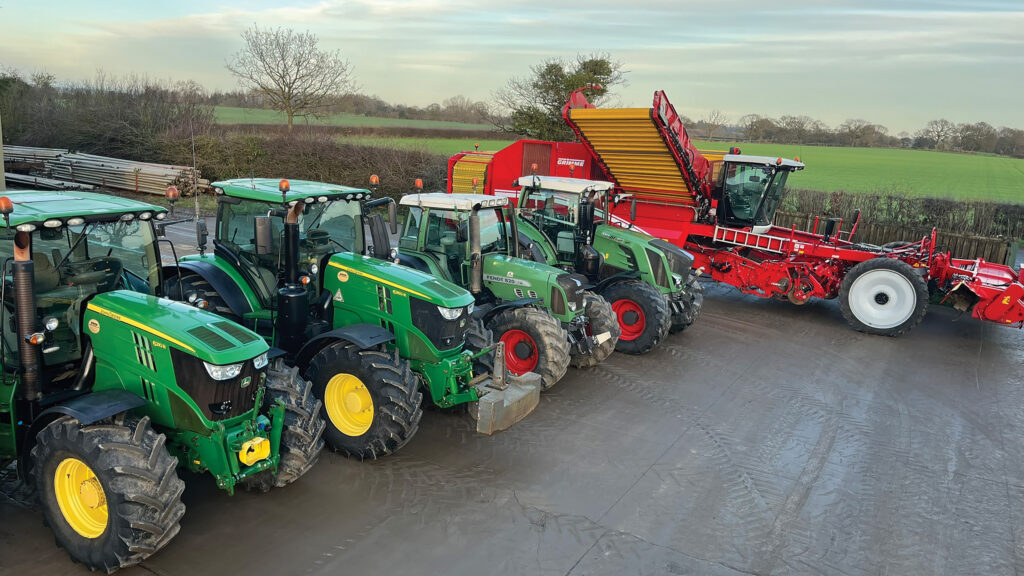 © Wayne Hutchinson
 Tax isn’t always front of mind when making machinery sales decisions, but getting the timing and a few other factors lined up correctly can make a big difference to the financial outcome.
Timing is critical, especially where a business is in its final year of trading, as farmers’ averaging cannot be used to even out profits and losses in a final year, says Kate Bell, a partner in the farms and landed estates team at accountant Albert Goodman.
“Sometimes it’s unavoidable that a sale happens in the final year of trading as the tax considerations, seasonal and commercial factors often don’t coincide,” says Kate.
See also: Business Clinic: How do I plan for tax on retirement farm sale?
However, planning well in advance can help – for example, a sale could be held in one trading year and then contractors used the next (and final) year of trading, allowing any profits or losses from the penultimate trading year’s sale to be included in averaging for income tax.
Alternatively, a sale of most of the machinery could be held in one year and the farming continue for a further year on a smaller scale, again allowing an averaging claim in the penultimate trading year.
The interaction of different taxes – for example, income or corporation tax and capital gains tax – also needs to be weighed up. This means plenty of time is needed to line up the best outcome all round, so speak to your accountant early.
Kate’s pre machinery sale advice also includes:
- Know what your tax pool is before selling The written-down value of machinery may be low or even zero, but if capital allowances have been claimed, the sale proceeds are liable to tax at the taxpayer’s marginal income tax rate, which often comes as a shock after the sale. Businesses (partnerships) with a corporate partner will potentially have a bigger tax pool because having a corporate partner means that the Annual Investment Allowance (AIA) capped at £1m, is not available and so tax relief hasn’t been had in full. If you have a £100,000 tax pool it means that you can sell plant and machinery up to £100,000 without creating an additional tax liability.
- Investing in plant and machinery It is important to plan ahead for capital allowances. Limited companies can benefit from both the AIA and full expensing (FE), allowing 100% of qualifying expenditure on plant and machinery to be deducted for tax purposes in the year of purchase. FE is available only to limited companies. Partnerships that include a corporate partner are not eligible for the AIA so should not assume 100% tax relief will be available in the first year when assessing investment decisions.The timing of a purchase, when the asset is brought into use, and the finance method can all have a significant impact on the availability and timing of tax relief. Careful planning is therefore essential to maximise the benefits.
- VAT Don’t deregister before selling machinery and other equipment. Deregistering before the sale means the seller will be personally liable for any VAT on the sale prices, so for every £100,000 of income from the sale, £20,000 would be due in VAT.
- Business asset disposal relief This can cut the Capital Gains Tax rate from 24% to 18% on qualifying business assets disposed of on the sale or cessation of a business from 6 April 2026, subject to a lifetime limit of £1m of qualifying gains.
- Review business structure This should be done well ahead of any sale to allow time for possible changes to be made to achieve a better tax outcome without inadvertently falling foul of anti-avoidance rules, which can lead to an unexpected tax bill.
Live- and deadstock sales tax considerations
Stock values Live- and deadstock values may be low in the closing valuation, but seasonal variations can mean a larger income tax bill than expected when stocks are sold for higher than those book values.
A good example this year is forage stocks which, because of shortages, are generally worth more than they cost to make.
Herd basis An election for the herd basis brings the advantage that any profit or loss on disposal of the herd, or of a significant number (more than 20%) of the animals is not taxable.
Only animals kept primarily for the products they produce, or in breeding cases for their offspring, are eligible for a herd-basis election and are then treated as capital assets.
Eligible herds include a dairy or suckler beef herd, a breeding flock, laying hens, sheep kept for fleece production and horses kept for breeding.
There are strict HMRC rules governing when a herd basis election can be made.