

What farmers can do to protect newly planted trees
 © Rob Cleaver/iStockphoto
 A record 20,660ha of woodland were created in 2023-24, with more than 20m new trees planted across the UK. But significant tree losses during the early growing phase are slowing progress.
While the average tree survival rate is put at 90%, losses on farms can be significant.
Reported loss rates of 50% or more have been recorded on some farms, with causes including poor species selection, planting issues and soil factors.
The biggest losses, however, are through damage caused by rabbits and deer.
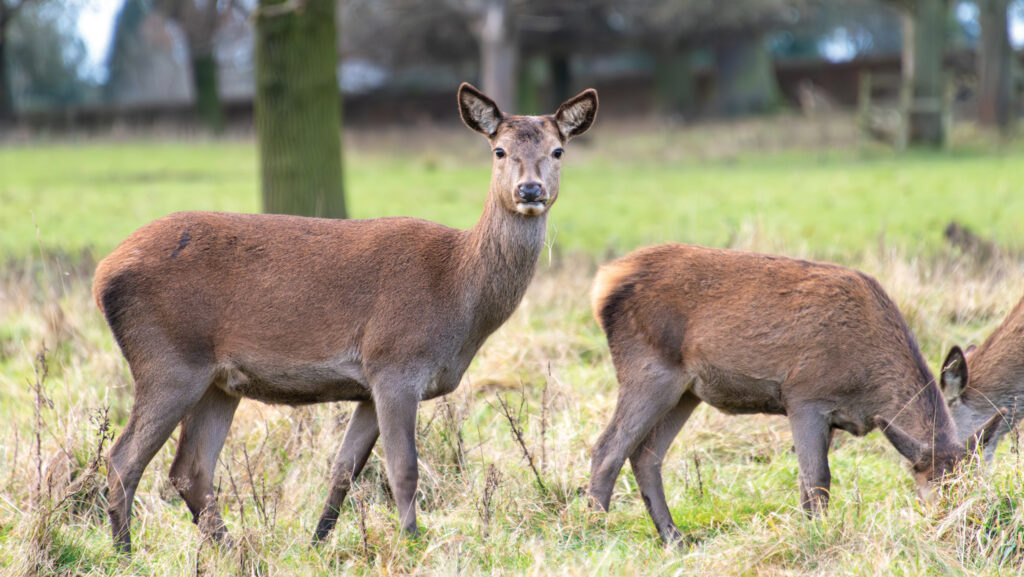
Of these, deer pose by far the most significant challenge, and with the UK herd expanding at record rates there is a growing battle to protect trees.
Here the Woodland Trust’s Jack Starbuck and Forestry Commission deer officer David Hooton set out the key factors threatening tree survival, with a strong and wider emphasis on tackling deer.
Site factors
Soil
Tree species have evolved to thrive within particular soil types, for example, acid, calcareous, free-draining or heavy moist soils.
Species such as alder and willow grow well in wet soils; others succumb more readily to rot.
Beech and lime do well in chalky landscapes while birch and pine have adapted to sandy, free-draining soils, says Jack Starbuck.
Inappropriate soil conditions can lead to significant tree losses.
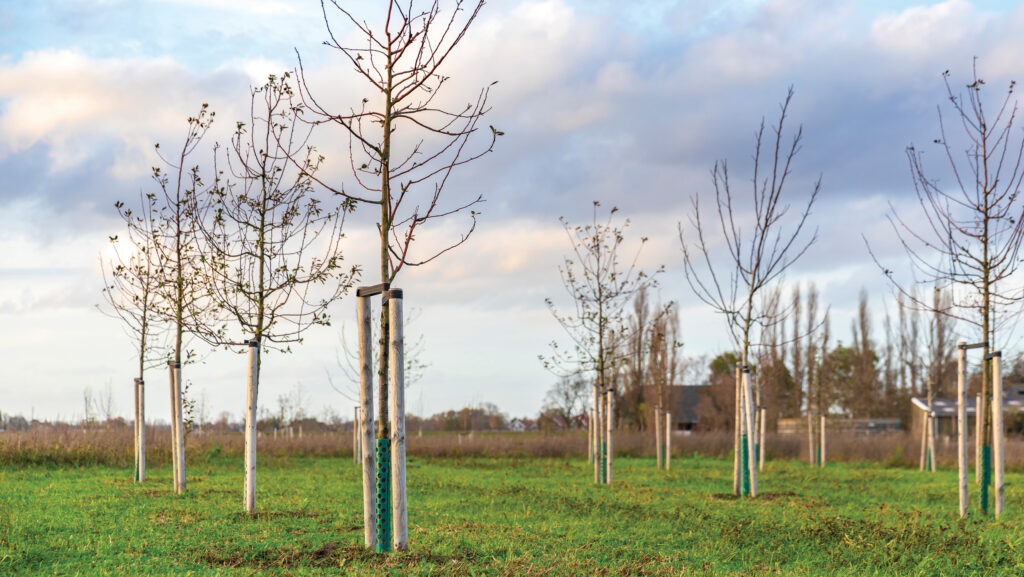
On former arable land, plough pans or other compacted areas can be an issue for saplings because roots may not be able to penetrate far enough to access soil moisture.
© Sander Meertins/iStockphoto
In these situations, dig a pit ahead of planting to assess the soil structure. If there is a pan it would be worth subsoiling first, Jack advises.
Obviously soil disturbance releases carbon, but it may be necessary to ensure the trees survive.
Once the trees are in the ground, they should be checked regularly. Wilting occurs in very dry years, with stunted growth an indication of drought stress.
Exposure
Exposure to raking wind may be another issue, and plantation design should take this into account.
The design itself will vary according to the objective – whether the site is for nature recovery or fast-growing timber plantations.
For nature recovery the taller native trees such as oak could be planted in clusters at the centre of the plantation with densities of 15 to 25 trees spaced 2m apart.
Outside the central zone, species such as birch can be planted in dense clusters to mimic how they occur naturally, but other secondary species may be planted in looser clusters or drifts.
Faster growing species can be grown on the windward side to nurse the slower growing, more ecologically valuable trees in the centre.
Further wind protection can be added around the outside with shrubby, fruiting species that also encourage pollinators.
Sourcing stock
It’s a well-worn phrase, but the right tree in the right place for the right reason is still the most valid approach to take when considering planting trees, says Jack.
Biosecurity should be added to this set of priorities, and the UK and Ireland Sourced and Grown (UKISG) accreditation scheme guarantees we are not importing any new tree pests or diseases, says Jack.
The Woodland Trust recommends selecting tree stocks that originate from, and are grown in, the same area where they are to be planted.
The benefit of matching tree stocks like this, Jack says, is that they will already be adapted to the local growing conditions.
To aid this process, the UK is split into numbered provenance zones, making it possible to identify more precisely the area where a tree stock is from.
This information is available in a handbook produced by the trust.
Bare root or cell-grown stock
Trees are supplied as bare root or cell grown with plugs of soil attached. Both have benefits and drawbacks.
Timing is more critical with bare root stock, which is prone to drying out, and this can be a major cause of tree loss.
It is really key to make sure the roots don’t dry out before planting, says Jack.
Bare roots should be kept in bags until the last moment and planted within seven days of delivery or tree survival will be compromised.
If this is not possible, bare root trees should be “heeled in” to a trench with a soil cover.
Cell-grown plants will retain moisture, but there is a higher cost and the extra weight makes transport more difficult, adding further to the financial outlay.
Where timing or labour are issues, the cell-grown stock will provide a longer planting window of several weeks.
Climate change has added further pressure on the planting window, which typically starts in November and ends in February or March.
UK springs are increasingly dry and the lack of moisture puts pressure on growth in later planted stock, adds Jack. The key is to order stock early to ensure the right trees are still available, he says.
Deer damage
© SaraTM/iStockphoto
Deer numbers are increasing. Although it is difficult to make an accurate assessment it is likely the head count for the UK herd has risen above 2m.
Muntjac populations are moving up the country from the south of England, Chinese water deer are spreading through East Anglia, and roe numbers have increased markedly in the past 10 years, reports David Hooton.
High estimated deer numbers are backed up by drone counts which point to densities of 100 head/sq km in some areas.
Population jumps are due in part to milder weather which has increased fawn and calf survival rates. Changes to farming systems have also aided deer survival.
Increased use of winter cover crops and wildlife crops such as nectar and wild bird mixes have added food sources.
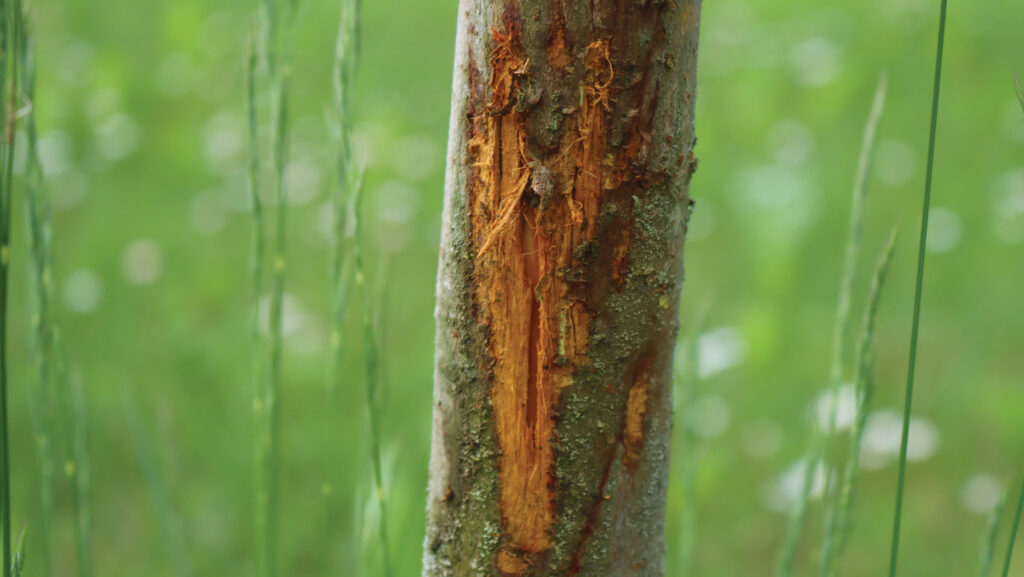
The resulting deer pressure is causing high levels of damage to trees and understoreys of vegetation, says David.
Even a moderate-sized fallow deer will consume 5kg of vegetation a day, and that mounts up on a herd scale over time, he adds.
The period in which young trees are vulnerable to deer damage is extensive.
A small deer such as a muntjac browses the top of a young tree at about 75cm to 1m. The largest species, the red deer, will browse at heights of 1.8m – which means the tree needs protecting for about five years after planting.
The length of time varies, though, according to the location. Trees tend to establish more quickly in southern England due to the milder climate compared with further north.
Protecting trees
When most people consider planting trees they think of tree guards as the main protection measure, but while that is a vital step, it is the last line of defence.
In fact, protecting planted woodland needs a carefully prepared and wide-based strategy that should begin months or even years before planting, advises David.
The starting point is to find out how big a challenge deer present by assessing the level and type of damage.
This can be backed up with drone surveys and expert insight on the ground to quantify the local population density.
The next part of the strategy is to reduce deer pressure through a programme of targeted culling before trees are planted.
This will be carried out by a stalker who needs to work on objectives agreed by the farmer and with expert advice available from the Woodland Trust and Forestry Commission.
The stalker then needs time to carry out the cull. If the stalker is full-time, finding that time will be easier.
But many are volunteers who operate outside work hours and the timespan for reducing deer to an appropriate level will inevitably need to be longer, explains David.
Infrastructure
Alongside the cull there has to be planned infrastructure to allow access to woodland and the safe and hygienic removal of culled deer.
Deer carcasses must be handled in accordance with food standards regulations.
There should be traceability measures in place and the carcass must be kept clean and any storage required ahead of collection should be in appropriate chiller units.
Physical protection such as tree shelters and deer fencing may also be used, says David, although the use of physical protection does not remove the need to maintain lower numbers of browsing mammals.
Fencing is the most effective approach for blocks of planted trees. The height will typically be at least 1.8m to deter larger species such as red, fallow and sika deer.
But expert advice may suggest a minimum of 1.5m where only smaller deer such as muntjac, Chinese water deer and roe are identified in surveys.
Deer fencing is likely to include rabbit mesh for further protection and possibly strands of electric wire.
Where smaller plantations are created or individual trees are planted to augment existing woodland habitats, it may be possible to use multi-strand electric fencing.
This should be clearly visible to the deer and maintained to prevent shorting, for example where foliage can grow and come into contact with the wires.
Tree guards
To protect individual trees there is a range of tubes and stakes available which are fixed at planting. Tree shelters and guards need to be at a height that prevents the deer from browsing the tops off as they emerge.
However, the protection from wind and cold provided by the guards can also speed up growth and harbour weeds. This can lead to leggy, weaker stemmed trees developing, often with reduced root establishment.
Case study: Joe and Emma Gray, JE Tabor Farms

Joe and Emma Grey © Emma Grey
Great Priory Farm and Bovingdon Farm, near Braintree in Essex, are managed by Joe and Emma Gray of JE Tabor Farms.
Of the 600ha managed area, crops make up 450ha with the remainder comprising woodland and some permanent pasture.
The farms are also part of the North Essex Farm Cluster, a farmer-led community interest company which Emma manages for part of the working week.
Formed in 2023, the cluster encompasses 80 farms and local businesses and covers 25,000ha of land around the Pant and Blackwater river catchments. The aim is to deliver landscape-scale benefits for water, soil, wildlife and food.
According to Emma, one of the biggest challenges to those objectives is the increasing pressure from deer species which threaten woodland and hedgerow restoration projects.
The woodland includes ancient sites and some designated as SSSIs, which have to be protected from growing populations of deer. The deer cause extensive damage by grazing crops, damaging coppiced areas, flattening standing crops and destroying newly planted hedgerows and trees.
But collaboration through the cluster is providing a footing to regain control. Bovingdon and Great Priory have joined other farms in the cluster to take part in a pilot deer management project supported by the Forestry Commission and Woodland Trust.
Estimating numbers
The project began with a drone survey to estimate numbers and identify denser pockets of deer, explains Emma.
The data matched information provided by local deer stalkers who are the central figures in culling programmes.
Stalkers traditionally operate on designated patches by agreement with the farm manager and fellow stalkers.
This creates boundaries from one farm, or a stalker’s patch, to another. This meant stalkers could not act if deer crossed to a neighbouring unit.
Now, however, the collaborating farms are operating across boundaries and bringing the groups of stalkers together. The culling programme is also more co-ordinated and intensive.
A decision was taken to introduce 10-day quiet periods, with no culling taking place over a wide area, to let herds settle.
These periods are then followed by designated culling weekends which have proven more efficient and effective for the time being spent.
Previously, this would have created a problem with more venison than the stalkers could find a market for.
This is an ongoing challenge, but Joe and Emma have invested in equipment to help solve the issue. A chiller unit has been purchased to store the carcasses in accordance with food hygiene and traceability requirements.
The chiller capacity means more deer can be culled at any one time. Joe and Emma have a woodland management plan in place and are currently applying for a Countryside Stewardship higher-tier agreement.
They are also applying for the PA7 standalone species management grant to help tackle species such as squirrel and deer, she adds.
Finding sources
England
Countryside Stewardship (CS) scheme
CWS1 Deer Control and Management (stalking). This is a supplement available under the Higher Tier of the CS scheme, offering a revenue payment of £105/ha a year for 10 years.
To qualify, you must:
- Submit a deer management plan agreed with the Forestry Commission
- Install monitoring exclosures and provide photographic evidence.
- Record and report all culling activities.
Capital Grants
The CS scheme also offers capital grants for specific items:
- PA7 species control plan – £204.79/type of species/approved plan to a maximum of £1,023.95
- FY1 Deer high seat – £265/unit
- FY8 Deer high seat legs (in conjunction with FY1) – £180
- FG9 Deer fencing to protect newly established trees – £10.27/m
- FG10 Temporary deer fencing – £8.09/m
- FG11 Deer exclosure monitoring plots of approximately 16sq m – £212.56/unit
- SM1 Deer management training – up to 100% of costs
- SM6 Monitoring equipment such as camera traps – up to 100% of costs
- Farming Equipment and Technology Fund Grants of up to 50% are available for specific equipment, such as chiller units.
Scotland
Funding is available through the Forestry Grant Scheme (FGS) administered by Scottish Forestry.
Woodland Improvement Grant – Planning (Deer Management Plan). This provides a grant to help landowners create a robust deer management plan based on population surveys and damage assessments (£12/ha for the first 500ha).
Sustainable Management of Forests – Reducing Deer Impact An annual grant of £6/ha for up to five years to support the costs of labour for culling and monitoring.
Wales
The Welsh government offers funding primarily through the Woodland Creation Grant and the Small Grants Environment Scheme.
The Woodland Creation Grant covers the costs of establishing new woodlands, including capital costs for deer fencing (about £11.93/m) and maintenance payments.
Explore more / Transition
During the series we follow our group of 16 Transition Farmers through the challenges and opportunities as they seek to improve their farm businesses.
Transition is an independent editorial initiative supported by our UK-wide network of partners, who have made it possible to bring you this series.
Visit the Transition content hub to find out more.
