How move to digital waste tracking could affect farmers
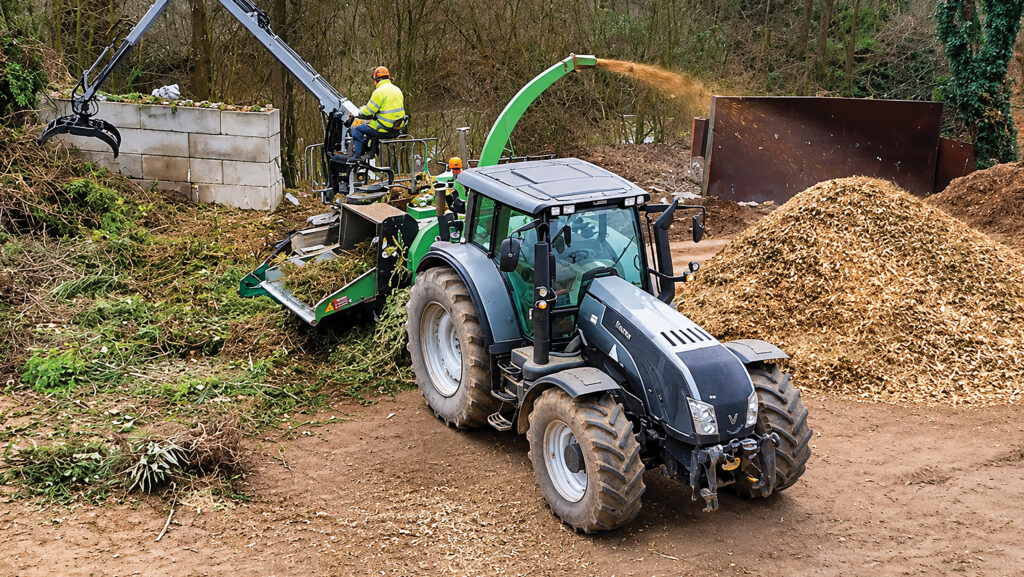 © Cheshire Green Waste
Battling waste crime has become something of a focus for politicians, with Defra minister Angela Eagle announcing the government’s latest idea, the Waste Crime Crackdown Group, on 4 November.
Although such initiatives may grab the headlines, much of the heavy lifting is being done by less snappily titled regulatory reforms that will increasingly affect farming businesses.
One of the most important is the rollout of a digital waste tracking system (DWTS) across the UK.
This will create an audit trail of controlled waste through a single digital system, which the government hopes will make it more challenging for illegal operators to play a role in the sector.
See also: Farm recycling sideline grows into full time enterprise
Phase 1 of DWTS came into effect in England and Wales on 1 October (Scotland and Northern Ireland will follow in early 2027) and applies to waste receivers.
Affected businesses will have to register, create a Defra account and pay a fee of £26.
They must then record information such as the waste code, movement details and waste carrier licence details for all waste deliveries (see case study).
Businesses are encouraged to use specialist software to submit the information, but Defra is also temporarily allowing this to be done using a spreadsheet.
Legal issues
Farms or estates renting space to waste-handling businesses or other tenants, such as car repairers, that could potentially generate a lot of waste, need to protect themselves in case the business collapses or absconds, warns Kevin Kennedy of solicitors Burges Salmon.
“It’s something I would be very cautious about because the onus for cleaning up any waste will often ultimately end up with the landowner.
“It’s the same situation as fly-tipping,” Kevin explains. “You may not have put it there, but once it’s on your land you are responsible for it.”
At the minimum, any rental agreement should include a ‘compliance with law obligation’, he advises. It is also possible to include financial guarantees to cover the cost of removing any waste.
Another option, Kevin notes, is a performance bond. These are three-party guarantees, often used for solar farms, issued by a bank that protect the landowner if a contractor becomes insolvent or fails to deliver their contracted obligations.
He says, however, that the best protection is often just keeping “eyes on the ground”. “Make sure you know what the businesses on your property are doing; that way you can avert any serious issues before they arise.”
This can be particularly important if you have tenants who are subletting space to other businesses.
“There is no need to be officious about it, but it’s surprising how much benefit a landowner can gain from showing a little interest, particularly as the consequences of not doing so can be very expensive.”
Farming exemptions
Farming businesses that operate under registered waste exemptions, which cover a wide range of common waste materials, will generally be exempt from phase 1 of DWTS.
“For most farmers, the immediate priority is to continue complying with existing waste duty-of-care requirements.
“This includes checking that waste contractors are appropriately registered, ensuring the correct waste transfer documentation is completed and retaining records,” says Lynette Steel, a farm policy adviser at the Tenant Farmers Association.
However, the regulations will affect farms operating permitted facilities that receive controlled waste from third parties.
These include anaerobic digestion plants, composting operations, waste-management businesses operating on farms and permitted waste-receiving facilities.
For those unsure what rules apply to them, Defra has created a website providing guidance on whether businesses need to report any waste they receive.
Although the farming industry has largely welcomed the new rules, the clarity of information around them has been questioned.
“The changes and guidance are confusing; that’s why the TFA is calling for clearer, farmer-focused guidance to ensure that as an industry we remain compliant,” says Lynette.
“While the TFA supports efforts to tackle waste crime and improve traceability, it is important that the system remains proportionate and straightforward for farm businesses, particularly those producing relatively small quantities of waste,” she adds.
NFU deputy president Robyn Munt says the union will be watching closely as the system is put in place.
The second phase of DWTS, which is due to be rolled out from October 2027, will extend the record-keeping process to other areas of the waste sector covering waste collectors, carriers, brokers and dealers.
Waste traps and opportunities
While there is speculation that the government’s housebuilding and infrastructure drive could create lots of extra waste, such as hardcore, that may be offered to farmers, Tim Broomhead, head of compulsory purchase and compensation at Knight Frank, says most big schemes will aim to reuse it on their own sites.
However, he highlights a specific instance that is becoming more common and could catch farmers unaware.
“Quite often contractors will establish temporary, albeit often quite large, worksites when they are working on projects such as pipelines.
They will strip the topsoil and lay down 15cm or so of hardcore on top of a membrane.”
The agreement with the landowner in such instances will include removing the hardcore once the project has been completed, but an amenable solution for both parties is often to leave any aggregate piled up on the farm so it can be used in the future for things like farm tracks and gateways.
Tim warns that this hardcore will now be considered waste. Even though the landowner can likely apply for a U1 exemption – using waste in construction – there are limits to the amount that can be stored, and it can only be kept for a maximum of 12 months.
“The rules are getting stricter, including changes to the U1 exemption from January 2027, so you need to be very careful that an apparent windfall doesn’t turn into a potential liability,” says Tim.
Recycling sites
The government’s wider focus on recycling, including the long-awaited introduction of deposit-return schemes, could also create opportunities for rural businesses, reckons Tom Banks, a waste specialist at Savills.
“For example, at the moment I’m working with a business that is looking for 280-370sq m units across 20 locations in the UK where bottles and cans from the hospitality sector will be collected, counted and sorted before being sent to a central facility.
“For farmers on the periphery of large urban conurbations, there could be growing demand from these sorts of companies because the number of bottles and cans that need to be recycled is huge.”
Case study: Cheshire Green Waste
Peter Jackson set up Cheshire Green Waste 25 years ago at Tanyard Farm, an arable unit near Altrincham that has been run by his family for five generations.
Now led by son Richard, the business takes in waste from gardening and tree-surgery businesses. Once processed, the waste is either composted on the farm or sold as a feedstock to biomass energy generators.
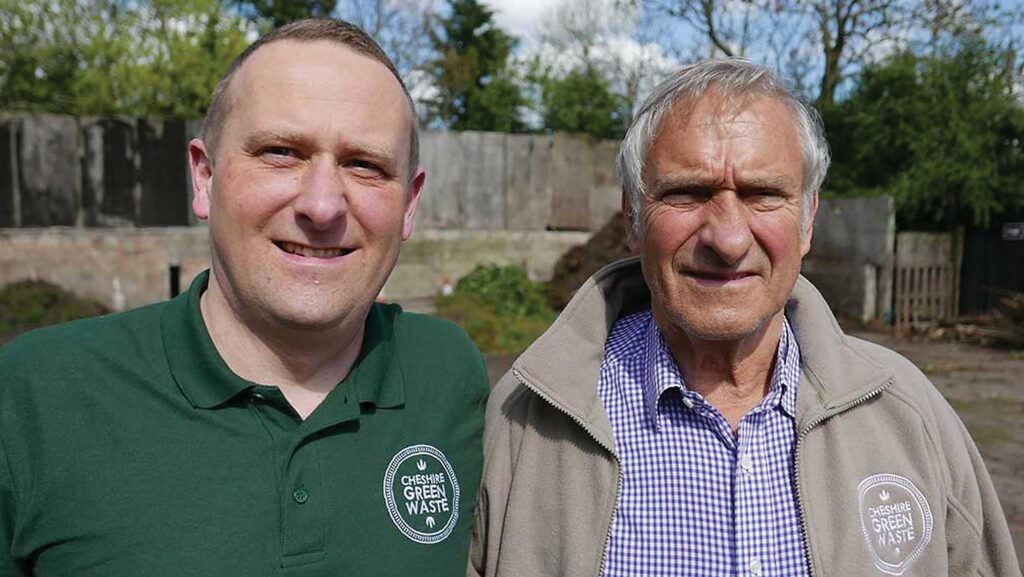
Richard and Peter Jackson © Cheshire Green Waste
Despite its small size, the operation has had to follow the same rules as much larger businesses since the digital waste tracking rules were introduced, says Richard. “It’s just another layer of bureaucracy for two or three loads a day, I suppose.
“It was a little bit confusing to begin with because although we already had computer records for our customers, the actual software needed to submit it was all new to me and I had to do quite a bit of research,” he adds.
“In the end, I picked a company called WasteBolt, and it seems to be working quite well. You basically pre-populate the software with your customer’s details, including their waste carrier’s licence. But it’s a few hundred quid a year, so it’s another cost for a small business.”
The biggest issue with the new rules is making sure they can be easily followed by staff, says Richard. “We have three or four people who work on the farm, but I’m the only person who uses the computer. In the end, we’ve settled on a system where if I’m not around, they write down the details of each load and send me a photograph from their phones. It’s just a bit more paperwork.”
Delivery details have to be submitted within two working days of receipt, but Richard logs them every evening. “I’m less likely to forget or get confused about what I’ve put down.”