

How to assess whether rooftop solar is right for your farm
 © ArtistGNDphotography/iStockphoto
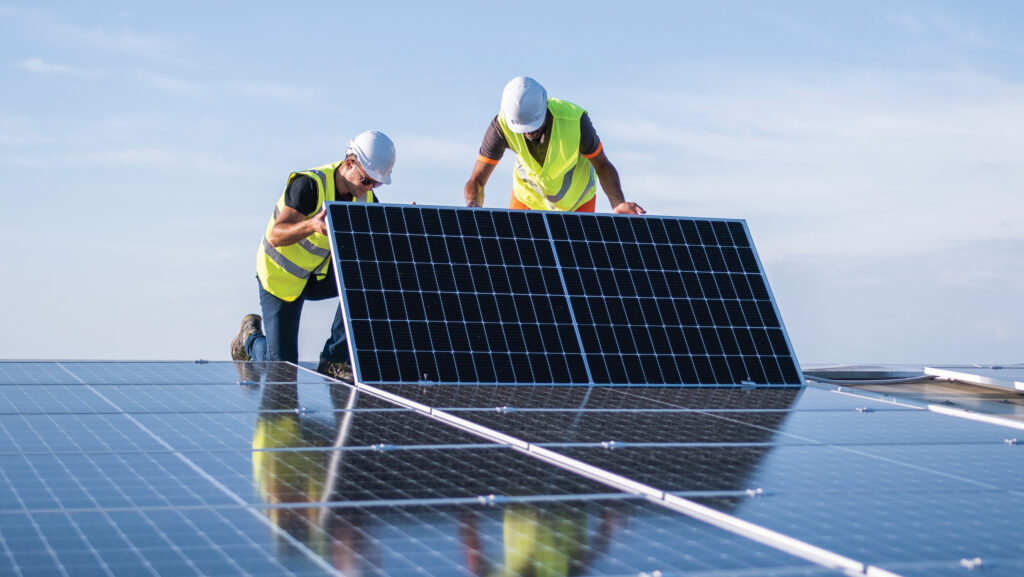
 With equipment costs at historic lows and a favourable government policy towards renewables, now could be a good opportunity to invest in rooftop solar photovoltaic (PV) panels.
However, this is only the case if systems are designed carefully to meet the needs of your business, cautions Savills senior energy consultant, Henry Cody.
See also: 157 solar farms approved amid food security fears
“The past couple of years have seen incredibly low equipment pricing for solar PV, but there are signs that certain factors are starting to push prices up.
“If you are considering investing, there might not be a better time,” he reckons.
One potential inflationary factor is the recent rise in the precious metals markets, particularly silver, which is used in PV panels.
This could add “a couple of percent” to the capital expenditure for projects, although it is unlikely to be a definitive factor in determining whether a project goes ahead or not, Henry says.
Developing technology
Solar technology has advanced hugely in recent years, helping drive costs down, with further advancements coming, says Henry Cody of Savills.
PV module manufacturers are already looking to substitute silver for base metals such as copper, to mitigate the rise in precious metal costs, while panel efficiency continues to increase.
Efficiency refers to the percentage of total solar irradiation converted to electricity.
“In 2020-21, the efficiency of new monocrystalline panels was around 20-21%, whereas now we’re up to 25-28%. That’s a significant increase in a short space of time.”
The supply chain is also becoming more circular, with work going on in Italy to develop panels that are 99% recyclable.
“Solar technology is improving day-by-day, and rooftops can present a real opportunity.
“But they are only viable when the fundamentals align, and those must be examined in detail before any commitment is made,” Henry concludes.
Assessing costs
With farm margins already squeezed, investing in solar is not a decision to take lightly, so good homework is crucial, says Henry.
Farmers should start by carefully evaluating if solar is right for the broader aims of the business, for example:
- How much generation capacity is required?
- Is battery storage needed to balance differences in generation and demand?
- What is feasible within the budget available?
“These are long-term, 25- to 30-year investments, so there needs to be foresight to plan what’s needed now, and in the future,” Henry says.
“Batteries, for example, can serve a fantastic purpose. But depending on the size and type of batteries used they can almost double the capital expenditure of some projects, so won’t be for everyone.
“There are things you can do to future-proof designs to take batteries at a later date, such as fitting a hybrid inverter or planning for AC coupling, but this will still add some cost.”
© GNP
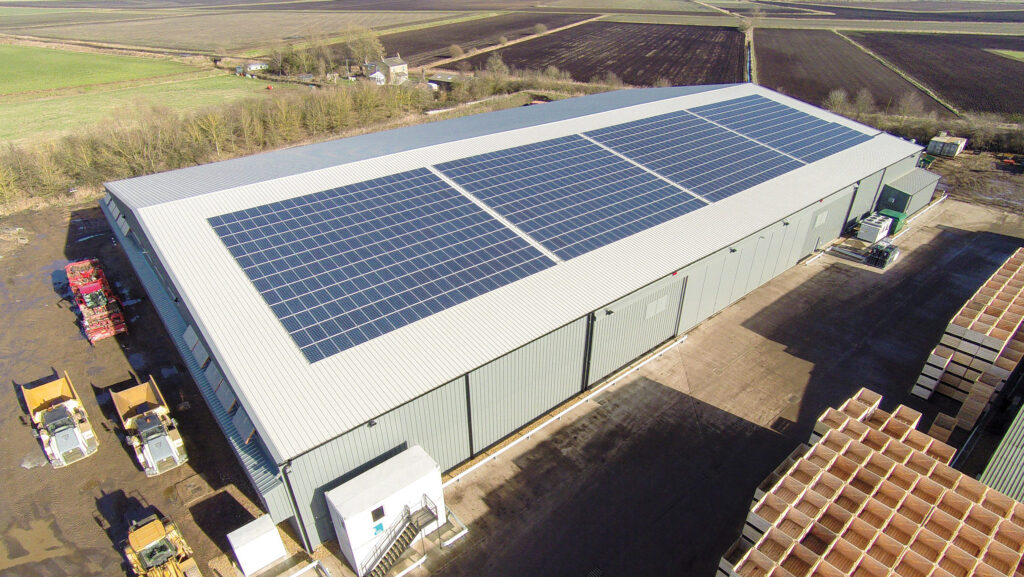
With so much variation in the characteristics, constraints, and pre-installation work required for farm rooftop sites, he says it is hard to give reliable estimates of cost and payback without knowing all of the details.
Figures of £800-£1,200 for each kW of installed capacity are often quoted, which may be a reasonable ballpark cost for a straightforward project (for example, fitting solar to a new barn roof), but figures can look very different for more complex projects, he says.
“Payback can be anything from a couple of years to a couple of decades. If anyone is quick to promise you a certain payback without doing due diligence and assessing your site, I’d be very cautious.”
Henry says an assessment of site constraints and remedial costs must be part of the feasibility process for rooftop solar. Key considerations include:
- Electricity supply (age, size and condition) – for single-phase supplies, an export limit of 3.68kW applies. Upgrading to a three-phase electricity supply will increase costs.
- Does the potential solar site contain asbestos? Any removal should be done professionally.
- Structural integrity – is the building and roof suitable for solar PV or is structural work needed?
- Building orientation and pitch – generally a south-facing roof, at a 30-40deg angle is optimum, and variations around that will affect electricity output and payback.
- Roof area required – as a general rule, 5sq m of roof area is needed for each 1kWp of generation capacity, but this varies depending on the type/size/wattage of panels and other factors.
- Grid availability – are new connections permitted by your local distribution network operator?
- Aesthetics and planning – rooftop solar generally falls within permitted development, but some projects may require full planning (for example, if they are within an area of outstanding natural beauty, national landscape, national park, or near airports), so check with your local authority what is allowed.
A growing sector
Official figures show the UK’s total solar generation capacity increased 13.6% (2.6GW) last year, to 21.6GW, across 1,918,000 installations, the biggest annual increase for a decade.
While most solar PV installations are domestic, these account for only 29% of total capacity, with the greatest proportion coming from large-scale ground-mounted solar farms.
The most recent statistics on the proportion of the country’s electricity generated from renewable sources are for July to September 2025, when it reached 54.7%, up 3.6 percentage points compared with the same period in 2024, and just under the record quarterly share recorded in the second quarter of 2025.
The amount of electricity generated from renewables rose by 7.4 % to reach 35.5TWh, driven by increases in both solar and wind generation.
Solar generation rose by 26% to 6.6TWh, and total wind generation rose by 7.3% to 17.9TWh.
While energy generation will be costly across all technologies, renewables are shown to be the most cost-effective and prudent long-term option, argues the Renewable Energy Association (REA), the UK’s largest trade association for renewable energy and clean technologies, in its latest report.
The Renewable Energy Cost Analysis Report 2025 demonstrates that, once system-wide costs such as grid reinforcement, transmission upgrades and storage are fully accounted for, renewable electricity becomes the net economic winner over natural gas by 2027-28, says the REA.