

Record 157 solar farms approved amid food security fears
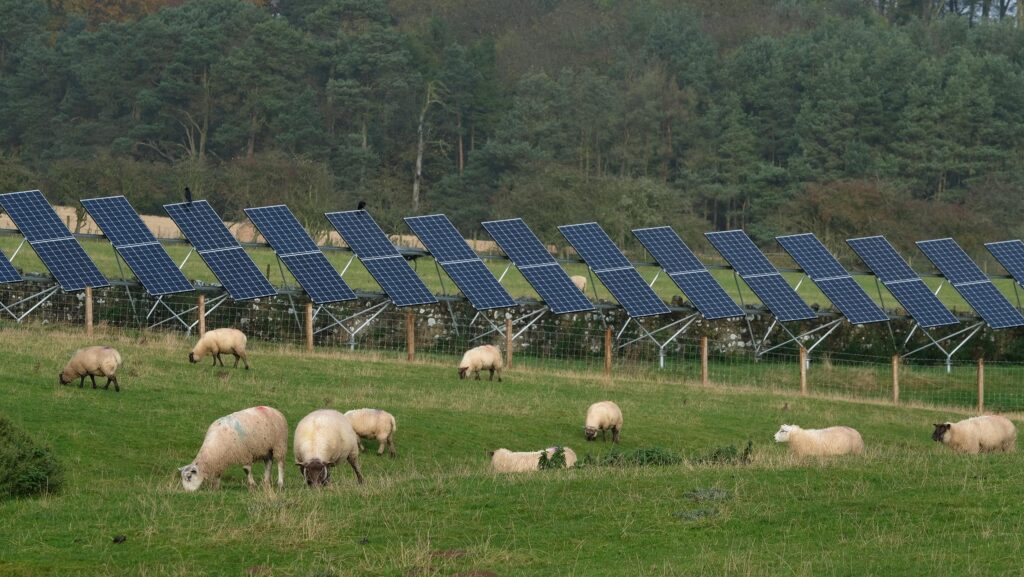 © Tim Scrivener
 A record 157 new solar projects are in the latest clean energy auction, marking the largest-ever procurement of solar power in the UK and underlining the government’s accelerating push towards energy independence.
The solar farm contracts in England, Scotland, and Wales, due online by 2029, total 4.9GW of capacity across 157 projects, eclipsing the 3.3GW across 93 projects in the last auction in 2024.
But while ministers hailed the results as a landmark moment for cheap, home-grown electricity, the sheer scale of solar expansion will likely reignite concerns about land use and long-term food security.
See also: Lancashire ‘mega’ solar farm to run alongside sheep farming
The West Burton solar farm, a 788ha project approved for the Lincolnshire and Nottinghamshire border, all of which is currently used for arable land, has become the largest ever to win a government contract.
Local opposition
But the project has faced intense local opposition from farmers, residents and local council leaders.
They fear it will cause “mass industrialisation” of the countryside, resulting in the loss of valuable agricultural land and rural character.
Combined with new onshore wind, tidal schemes and January’s offshore wind results, the government has now locked in 14.7GW of clean power – enough, it says, to supply the equivalent of 16m homes.
By 2030, the UK government aims to have at least 95% of Britain’s electricity to come from low‑carbon clean sources, including renewables and nuclear.
Energy secretary Ed Miliband described the outcome as proof that renewables can deliver energy security at a fraction of the cost of new gas generation, with solar contracts clearing at £65.23/MWh, less than half the cost of gas-fired power.
Ministers argue that once built, the projects will help lower wholesale prices, reduce exposure to global gas shocks and support up to 10,000 jobs.
Yet the unprecedented number of solar schemes – many likely to be large, ground-mounted installations – raises familiar questions about competition for agricultural land.
Dual-use models
While solar developers often point to dual-use models, such as grazing beneath panels, farming groups have warned that extensive solar deployment risks squeezing domestic food production at a time of rising geopolitical instability, food price and input volatility and climate pressure.
The government insists that clean power and food security are not mutually exclusive.
It notes that planning decisions remain local and that community ownership will be encouraged through a new £1bn Local Power Plan.
However, critics argue that the pace and concentration of solar approvals on farmland could test that balance, particularly in rural areas already under strain.
The charity Campaign to Protect Rural England (CPRE) warned that “large areas of countryside changed, and the timescales are getting longer, 60 years in some cases, locking up productive farmland for energy landscapes”.
A CPRE spokesman said: “With 157 projects averaging 61.2ha each, utility-scale solar risks unnecessary loss of our most productive farmland, rural character destruction, and long-term impacts on food production.”