‘Prioritise farm self-sufficiency over grid exports’
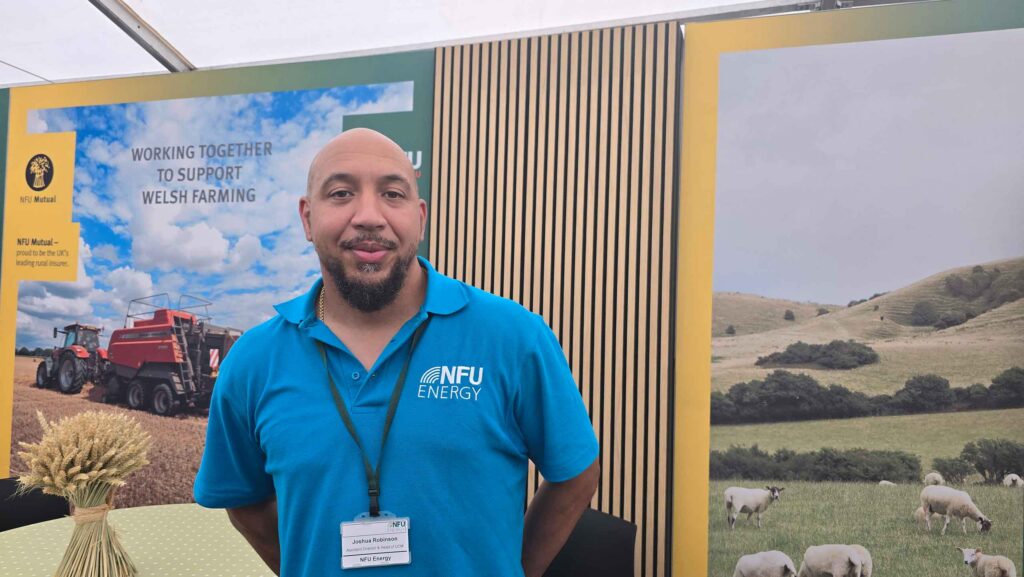 NFU Energy's Joshua Robinson © MAG/Anne Dunn
 Farmers should focus on meeting their own energy needs first before looking to export renewable electricity to the National Grid, says NFU Energy.
Joshua Robinson, head of contract sales at NFU Energy, believes renewable technologies can strengthen farm businesses, but only if self-sufficiency comes first.
See also: Clean energy 2030 – a government at loggerheads with farmers?
“If you have a little bit of export capacity, anything extra to give back to the grid is always a good place to be as an extra revenue stream, but the basics should be self-sufficiency,” he told Farmers Weekly at an NFU Cymru event at the Royal Welsh Show on Tuesday (21 July).
Maximising value
His comments come as many farmers consider investing in solar panels, battery storage and other renewable technologies, while grid capacity remains a major constraint across parts of the UK.
“In certain areas, the infrastructure just won’t help,” he said.
“It’s a chicken and egg situation. You can’t give it to the grid because the grid doesn’t need it, but the grid will need it when somebody else that’s not using it gives up their capacity.”
Mr Robinson said farms should instead maximise the value of the electricity they generate themselves before looking at exports.
“If you’re using energy, use the energy as much as you can yourself, because once you start selling it back to the grid, it’s never worth the same as if you were using it yourself to begin with.”
Batteries, he added, will become increasingly important because they allow businesses to store electricity until it is needed or when demand from the grid is highest.
Understanding the grid
He also urged farmers not to rush into renewable projects without understanding their energy use, future requirements and the costs associated with grid connections.
“A lot of agricultural users use energy at unconventional hours,” he said.
“They have a big say on the future of energy. They need to have their own accurate data. They need to have smart meters. They need to know what’s on the horizon rather than jump into a project too early.”
Looking ahead, Mr Robinson believes understanding how the energy market works will become just as important as reducing electricity consumption.
“The farms that succeed over the next 10 years are not going to be the ones that just say we need to cut our energy use.
“It’s going to be the ones that understand the grid the best. They understand what’s going on behind the scenes and they navigate efficiently, which might mean bringing solar in; bringing batteries in.”