Small-scale wind: How proposals could encourage farm projects
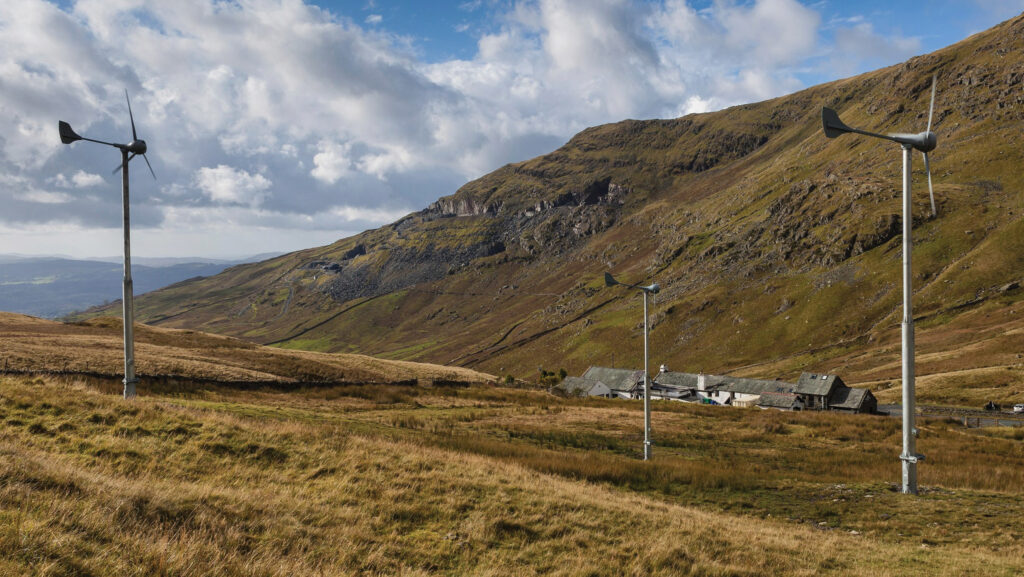 © Britwind
 New onshore wind development in England virtually ground to a halt after the Conservative government imposed strict planning restrictions in 2015, focusing instead on other renewable technologies, such as solar, heat pumps and large-scale offshore wind.
However, after a decade of stagnation, these restrictions were lifted when Labour came to power.
The government has also just consulted on potential changes to permitted development rights (PDR), that it hopes will further boost the small-scale wind sector.
See also: 10 ways to mitigate April’s rising electricity charges
What is proposed?
Currently, in England, any wind turbine in a “non-domestic setting” (for example farm, industry, public sector and so on) requires planning permission, regardless of height.
The PDR changes could allow eligible wind turbines in non-domestic settings to be built under permitted development and not require full planning permission.
Prior notification to the local planning authority could still be required before any development can begin, and projects will have to meet certain criteria to protect sensitive sites (such as conservation areas, historic features, National Parks, listed buildings and so on), aviation (civil and military), and nearby residents.
The size of turbines proposed under PDRs is also limited to a maximum tip height of 30m and a rotor swept area smaller than or equal to 200m2, which would allow for a capacity of up to approximately 50kW.
The government says a turbine of this size could make a significant contribution to the energy needs of a business, potentially helping to reduce energy bills, electrify and decarbonise operations, and improve energy resilience.
It estimates that at a “load factor” of 20% (ratio of electricity actually generated compared with the theoretical maximum output), a 50kW turbine would generate 88,000 kWh a year, which is enough to supply a medium-sized farming enterprise using 44,000-88,000 kWh/year.
Think carefully
Jamie Baxter, associate partner in the energy team at Carter Jonas, says the proposed changes are a welcome step in the right direction for small-scale wind in England, especially as a full planning application for a new turbine can add up to £30,000 to project costs if the full set of surveys (ecology, noise, highways) and community consultation is required.
However, he advises anyone considering a turbine to do what is right for their situation, not just what is possible under any new PDR rules, if and when they come into effect.
The consultation closed on 10 June and a government response is due this autumn.
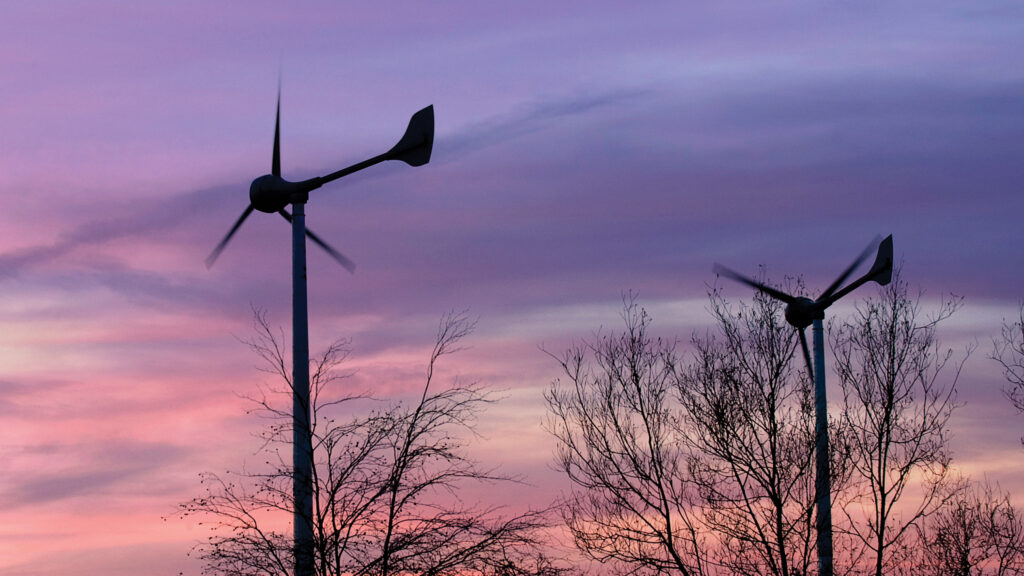
© Britwind
“The 30m tip height limit seems to be based on a relatively old definition of ‘small wind turbine’, and while there are turbines available that can meet that, the market has moved on.
“If you’re installing a turbine, it must be the right size for your site and power requirements,” says Jamie.
Accurately assessing on-site energy demand (for example by reviewing half-hourly meter data) is crucial when sizing up any renewable energy project, as the greatest returns are from reducing reliance on bought-in electricity, he adds.
“The more electricity generation you can use on-site, the quicker the payback.”
The importance of windspeed
When considering the suitability of potential sites on your farm, consistently high windspeed is crucial, says Eirinn Rusbridge, senior engineer at consultancy NFU Energy.
“Power generation is proportional to the cube of the windspeed. Turbines also have a cut-in speed [typically 3 to 4 m/sec (7 to 9mph) for a 50kW turbine], below which they will not generate at all, meaning consistency in windspeed is essential.”
Online tools, such as Global Wind Atlas, or the Met Office Climate Data Portal, provide a useful starting point for checking mean annual windspeed in your area, although speeds can vary significantly due to local topography, so a site survey is often recommended and any reputable supplier will insist upon it.
Indeed, local obstacles are a major consideration as they reduce wind speed and create turbulence, which further reduces output, says Eirinn.
“Effects of turbulence should be considered across the whole swept area of the turbine rotor, not just at the hub height.
“A common screening rule is to avoid placing a rotor within an area that is less than twice the nearest obstacle height vertically, and 20-times the obstacle height horizontally, downwind of it.”
For a 50kW turbine, with a typical blade length of 10m (20m rotor diameter) and maximum tip height of 30m, that would mean the lowest point of the rotor is 10m off the ground.
“Therefore, the turbine would need to be situated at around 100m away from any 5m tall obstacle. Taller obstacles within the vicinity may require the rotor diameter to be shorter to avoid turbulence, i.e, reduce the capacity of the turbine.”
Grid connection is another important consideration that has challenged many new energy projects for years and remains a limiting factor to new connections in many areas.
“This is not unique to wind, but grid constraints can add unsustainable costs to a project, even when projected export is near-zero,” says Eirinn.
Costs vs returns
Capital costs in the small-scale wind sector have not benefited from the same economies of scale as technologies such as solar, and Eirinn says they must come down to make systems more viable.
“Currently, very good wind resource is needed to obtain a reasonable return on investment.”
Costs can vary widely, but Jamie Baxter says a new 50kW turbine is likely to come in at £200,000-400,000, with groundworks adding £50,000-100,000, and grid connection another £5,000-30,000, although this is dependent on local grid constraints and existing connection.
Many equipment suppliers are based outside England due to the lack of activity in this market, and as always, farmers should do their homework before choosing a company to work with.
“Ideally look for one that has relevant International Organization for Standardization (ISO) or Microgeneration Certification Scheme accreditation, but also ask for recent case studies, or to be put in touch with existing clients.”
Jamie says there is a strong market for refurbished turbines, often from Scandinavia or elsewhere in Europe, which can help reduce costs.
“Prices will vary depending on the cost of the refurb, transport, and so on, but should be nearer £100,000 [for an equivalent 50kW turbine].”
But, if buying second-hand, consider the availability of spares, and the tower design, which must be specifically designed for the turbine being installed.
“New turbines typically come with a two- to five-year warranty and are expected to operate for 20 years with the correct maintenance. Refurbished turbines usually have an expected lifetime of nearer 15 years and a two-year warranty.”
Payback is hugely dependent on wind speed at the site and amount of generated power used on-farm, but Eirinn says in areas with consistently high wind speeds and no obstructions, even smaller turbines can perform very well, generating more than 3,000kWh/year per kW installed capacity.
“Current electricity contracts are around 25p/kWh, whereas the best rates for exported power are between 10-15p/kWh.
“This means that using power directly is around twice as valuable compared with exporting it to the grid.”
Wind generation complements solar power very well, by providing a more reliable year-round generation profile, however capacities should be carefully chosen so as not to export excessive amounts of electricity, he adds.
“The economics of battery systems are trending positively, which can mitigate the unreliability of wind power, but careful consideration is still needed before investing in batteries; half-hourly electricity demand data is essential.”
Norfolk farm boosts income and offsets carbon
Norfolk farmer David Means installed three 5kW Britwind H5 (previously known as the Evance R9000) turbines in the winter of 2012-13 in an effort to generate extra income and improve the carbon footprint of his 180ha arable business, growing cereals, potatoes and renting out land for onions.
All three turbines were installed 30m apart, close to the farm’s reservoir, as this was one of the few locations with a suitable three-phase electricity supply, and potential on-site demand from the irrigation pumps.
Average wind speed at the site is 5.1m/s (at 10m high), with very few obstructions.
“Over the years, the turbines have performed well, generating around 9,000kWh each on average, although it does vary season-by-season.
“We’re not actually using much of the electricity on-site though, as in reality, we don’t usually irrigate when it’s windy, although the turbines do often cover the electricity needed to run the 3kW pump for winter filling.
“I did consider routing power to our potato store, but the cost was prohibitively expensive.”
Despite this, David says the turbines generate valuable income from the guaranteed generation payments received via the Feed-in Tariff (FiT) scheme, which are currently worth 47p/kWh, but no longer available to new installations.
Income, including the additional FiT export tariff totals about £11,000 a year for all three turbines.
Regular servicing is done by Britwind every 18 months, costing about £1,200.
Overall, the total “all-in” installation cost of £30,000 per turbine was paid back in about seven years.
“We had initially anticipated a five-year payback, but groundworks had to go deeper than expected, which added extra cost,” he notes.
David says the turbines are relatively small (12m to the hub), and about 300-400m from the nearest residential property, so impact on nearby residents is minimal, although he did have to address a couple of concerns from nearby residents during the planning process.
“People were OK once we explained our plans and what we were trying to achieve, plus there are already several wind turbines in the vicinity.”
One additional benefit from having the on-site generation is to improve the farm’s carbon footprint, something David believes is becoming increasingly important across the industry.
“We’ve just done a carbon footprint survey for Leaf, and even our relatively small amount of electricity generation still makes a worthwhile difference.
“Artificial fertiliser is our biggest polluter, so if we can offset some of that with green energy, it can only be a good thing.”
Regional differences
The proposed PDR changes will only apply to England. In Scotland and Wales, the rules remain similar to those currently operating in England, whereby permitted development may apply to some small stand-alone wind turbines, but only where they meet a list of strict criteria, including limits on total height (15m maximum to blade tip in Scotland, 11.1m in Wales), and distance to neighbouring properties.
MCS accreditation
The Microgeneration Certification Scheme (MCS) is a UK accreditation scheme set up in 2007 to ensure that renewable energy generation equipment meets certain technical standards, and is reliable, efficient, correctly installed, and suitable for use in different settings. MCS standards align with international IEC 61400 standards for small wind turbines.