How diversification success brings its own challenges
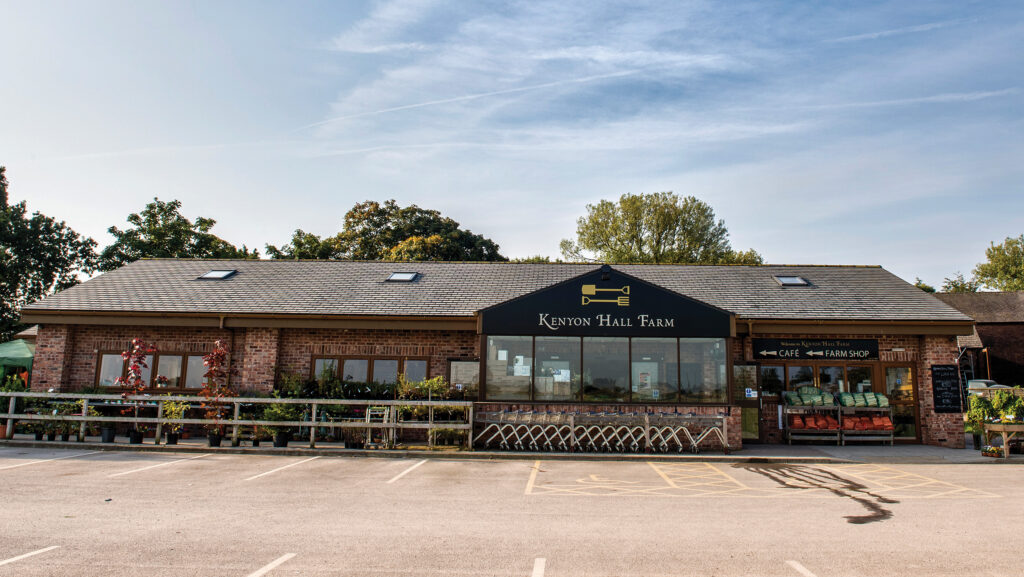 Kenyon Hall cafe and farm shop © Kenyon Hall
Kenyon Hall Farm near Warrington in Cheshire is a successful and long-established diversified farm run by two generations of the Bulmer family.
It faces challenges familiar to many similar ventures, in that everything is continuously running on hot, dealing with daily, weekly and seasonal demands and seemingly little or no time to consider how to relieve that pressure and what the future looks like.
See also: Tax and legal considerations for farm diversifications
The alternative enterprises started with two acres of pick-your-own strawberries introduced by Tod Bulmer and his wife Barbara when they joined Tod’s mother in the business in 1978.
The range was soon extended, and the season lengthened with the addition of other crops. Plants followed, grown on site, and a plant centre, then a farm shop and a café in 2011.
Easter, Halloween, Christmas and other seasonal events have been added and the business now hosts about 500,000 visitors and customers a year to its various enterprises.
The 500-acre farm also hosts educational visits.
Tod and Barbara’s youngest son, James, returned in 2016 to manage the farm shop, followed in 2020 by his brother, Simon, who manages the horticultural side of the business.
Both had established careers outside the family business and are now in partnership with their parents.
“We were never put under any pressure to join the business, but it was always made clear that we would be welcome if we chose to come back,” says James.
“Our parents were in their mid-60s when I came back and they have done a phenomenal job, but they needed help.”
Running a busy, public-facing business brings constant pressure for the family. With several different enterprises, seven-day opening, 50 staff to manage and growing customer expectations, the demands can take their toll on family life.
“Customer expectations just keep getting bigger and bigger,” says James.
“From the outside, the business looks very successful – and it is.
“We have fantastic staff, but none of the four of us has any formal training in running a business of this size and complexity.
“We’re all working seven days a week, and there’s no sign of the pressure letting up.”
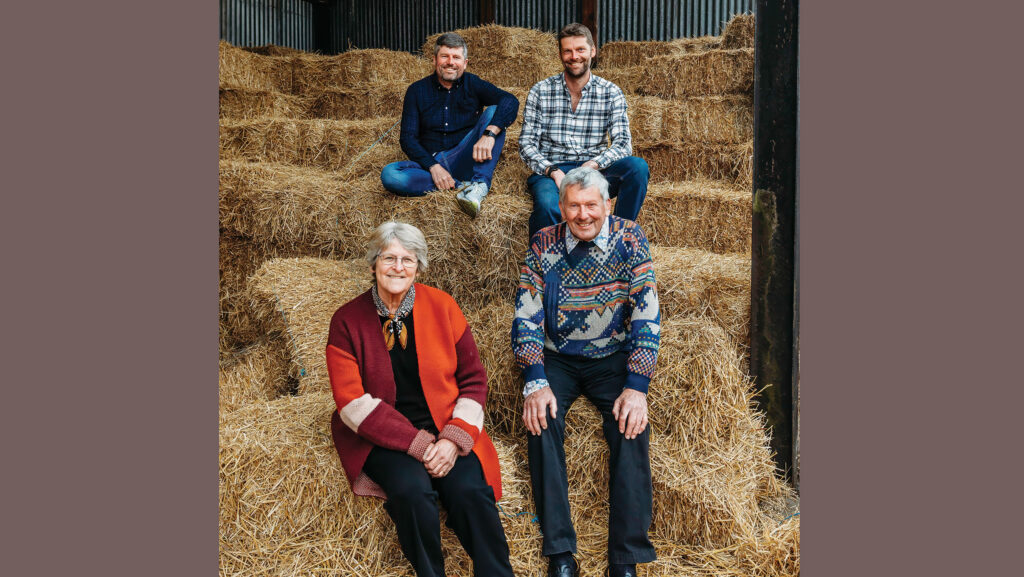
Bulmer family © Michelle Jane
Course helped
Feeling that pressure, James went on a government-sponsored “Help to Grow” management course.
This brings managers from different types of business together and helped him think about what to do, and also to consider that as well as making money, an important test is whether a business could survive changes, including its owners stepping back from it.
The outcome was the recruitment of four department managers, a review of what the owners should and shouldn’t be involved in (which can be difficult to stick to) and a download of information from Tod and Barbara that helped form a plan for the team to work from.
“Dad has so much in his head, he’s like an encyclopaedia,” says James.
It also helped draw clear lines on who is responsible for what, which can be tricky to manage in a family business with a long history.
James’ background in IT has played a key role in the farm’s growth, helping to introduce technology that streamlines operations across the business.
This includes a bespoke online ticketing system for their seasonal events throughout the year, with thousands of tickets often selling out within seconds of release.
His technical expertise has also helped modernise the wider business, introducing more efficient systems and processes across the farm shop and café.
Help to Grow: Management
The course James Bulmer attended on is available in many locations across the UK, running over 12 weeks in once-a-week sessions online and face-to-face.
It is aimed at managers and owners in businesses employing up to 250 people and includes one-to-one mentoring.
It costs £750, with a maximum of 25 participants from a wide range of business types in each course.
More information is available from the Small Business Charter
Business mentor
The course also helped James support the staff and included access to a business coach, which he found very helpful and who he continues to use as a sounding board to help develop ideas about the business.
Questions remain about its future structure, retirement and succession management.
“There are no easy answers – if there were, we would have thought of them by now! We need to think of a more manageable solution to relieve the pressure,” says James.
“Everything is so inter-related, you can’t just cut out one part of the diversified business.”
One suggestion from the coach was to appoint a managing director, with a family board sitting above that role.
“Appointing a managing director sounds like an obvious solution on paper, but the reality is more complicated.
“We’re such a complex business, that finding someone with the right experience and skills would be hard.
“Where do we find that person, and perhaps most importantly, as a family business would we genuinely be able to step back and give them the freedom they would need to do the job properly?”
“At least we have started the talks, but we’re a long way from finding the solution, it’s a tough nut to crack.
“We need guidance, and so many diversified farms must go through this.
“There’s plenty of advice on diversifying in terms of what to add… but almost none about what the family becomes once you’ve added it.”
Diversification: What to consider
Success can create a new set of challenges for rural businesses – for example, when a diversification outgrows the people, systems or space it started with, says Sally Ormiston, a director at adviser Rural Solutions.
“When the business is busy and demand is strong, the instinct is often to get bigger: more space, more staff and more products.
“But growth doesn’t always mean doing more. Sometimes the better answer is to do things differently, whether that means focusing on your most profitable customers, changing your pricing, outsourcing activities or investing in different skills.
“Taking proper time away from the ‘day job’ to consider what the business is doing, who it is serving, how it is operating, who is doing what and how space is being used is really important in identifying where there are inefficiencies, things that can be done differently or perhaps stopped altogether, and what changes need to be made to enable the business to continue to grow but to do so aligned to the capacity of the place and people involved.”
When a relatively simple diversification becomes a substantial business in its own right – often while the owners are still running the farm alongside it – the key is knowing when to step back and ask whether the people, premises and way the business operates are still right for where it has got to, advises Sally.
“Bringing in the right people, delegating responsibility and making time to work on the business rather than always in it can be an important next step.”
She also points out that many original buildings housing diversification enterprises were never designed to accommodate the scale that eventually develops, so if parking, storage, customer space or day-to-day operations are becoming constrained, it’s worth taking a fresh look at the site.
“Planning policy increasingly recognises the importance of supporting a prosperous rural economy, which can create opportunities to further develop the premises or move to new ones to better enable the growth of the business.
“It can also create operational improvements and efficiencies or enhance the customer experience.”
Delegation challenge
Delegation can be hard when a business grows, says Tom Stuckey, a partner with accountant and adviser Westcotts.
“When the owners have a hand in all decisions, when it’s your business and your baby, it’s very hard to delegate responsibility to other people.
“Boundaries need to be set so that each person has an area of responsibility and that this is not undermined, especially in front of staff, which can be demoralising.”
It’s important also that the owners get a proper wage from the business and are not simply representing what is known as “sweat equity”, says Tom.
One solution in very limited circumstances can be to carve out part of the business under a different structure, or even to sell an element of the business, but the tax implications need to be checked out first.
Individual income streams and the time they are taking should be examined, says Tom.
“Often the bit someone enjoys the most is the one that needs most scrutiny – organic growth can be inefficient growth.
“It’s also easy to think that you haven’t got time to train someone else to do part of your role, but a day spent on this can deliver a huge saving in time.
“It’s important, too, when making changes in responsibility, to create business process documents or standard operating procedures that can be passed from one person to the next to show how a process or action is completed.”
Full stretch risk
Businesses and people running at full stretch can risk big issues being put to one side because of the day-to-day demands of the business, warns Robin Hobson, chairman of consultant Laurence Gould.
“Some diversified businesses become very valuable over time, and as well as considering what the management structure and responsibilities should be, many now need to think about inheritance tax planning.”
Has your family business found a solution to the challenges of successful diversification that might help others? Email suzie.horne@markallengroup.com