How glamping and camping markets are changing
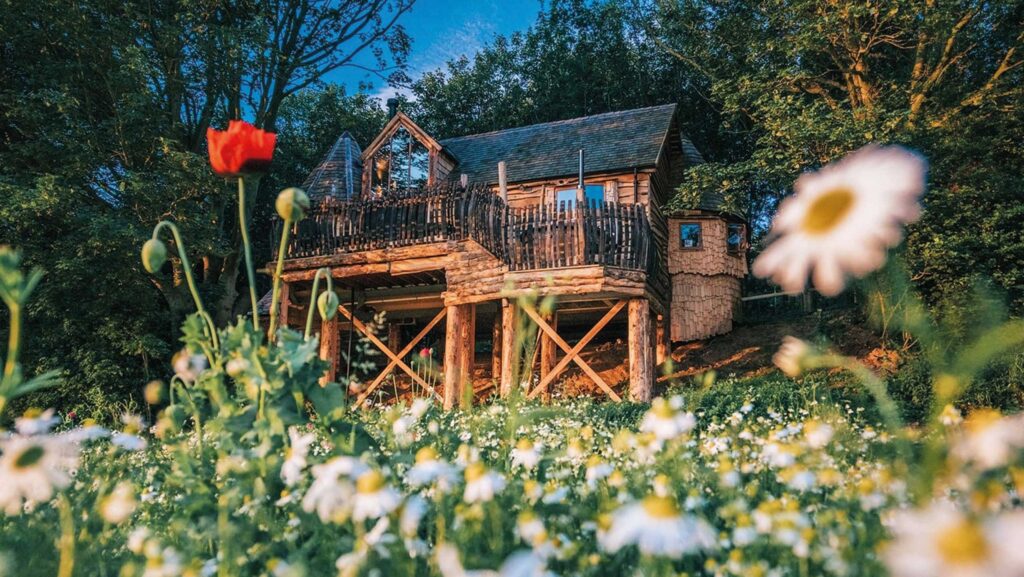 Rufus’ Roost, a luxury treehouse, sleeps up to six © Barney Smith
Over the past 15 years, Barney Smith has gradually diversified part of his family’s farm at Baxby Manor, near York, into camping, glamping and, most recently, wellness experiences.
It has been interesting to see how demand has changed in recent years, says Barney.
“The domestic tourism market now is fundamentally different from the one we had before Covid.
See also: What’s hot and what’s not in the farm diversification market
Before Covid, our summer school holidays would generally run at around 90% occupancy for traditional camping and feel almost completely back-to-back.
“Since roughly 2022, that figure for camping has fallen much closer to 60%.
“It’s important to distinguish that from our glamping accommodation, which has held up much better and may even have seen a slight increase in demand. It isn’t a blanket decline across the whole business.
“People often ask me whether camping and glamping are profitable.
“They certainly can be, but you need to look beyond the headline nightly rates and consider the initial investment, ongoing maintenance costs and, crucially, occupancy.
“Camping weekends can still perform extremely well. The much bigger challenge is filling midweek camping pitches, attracting longer summer stays and generating bookings during quieter periods.
“I think the market was already becoming saturated before Covid. More campsites opened during and after the pandemic, and I suspect some of those will struggle to survive.”
At the same time, consumers are under pressure, he says.
“People don’t necessarily have the spare money, or they are more cautious about spending that extra £100 or £200.
“In the past they might have had their main holiday and then added a weekend’s camping.
“We see less of that now, and even a weekend isn’t cheap.
“The lowest-priced two-night camping weekend here for two adults and two children is about £100, before you spend on food, visits or activities.”
Diverse offering
In response, Baxby Manor has continued to broaden its offering.
Alongside 32 tent pitches and six campervan pitches, there are three timber Kabinas sleeping three to five people, each with a hot tub and air-source heating and cooling; five Hoglet Houses sleeping up to four; family glamping pods for two adults and two children; and double EcoPods sleeping two.
Rufus’ Roost, a luxury treehouse sleeping up to six, has its own hot tub, pizza oven and secret den accessed by a slide. The site also has a pizza shack.
Wellness is a more recent area of diversification. Space in a converted barn is used for yoga, reiki and readings, while the wider site offers apitherapy (bee-related relaxation experiences), a wood-fired sauna and a cold plunge.
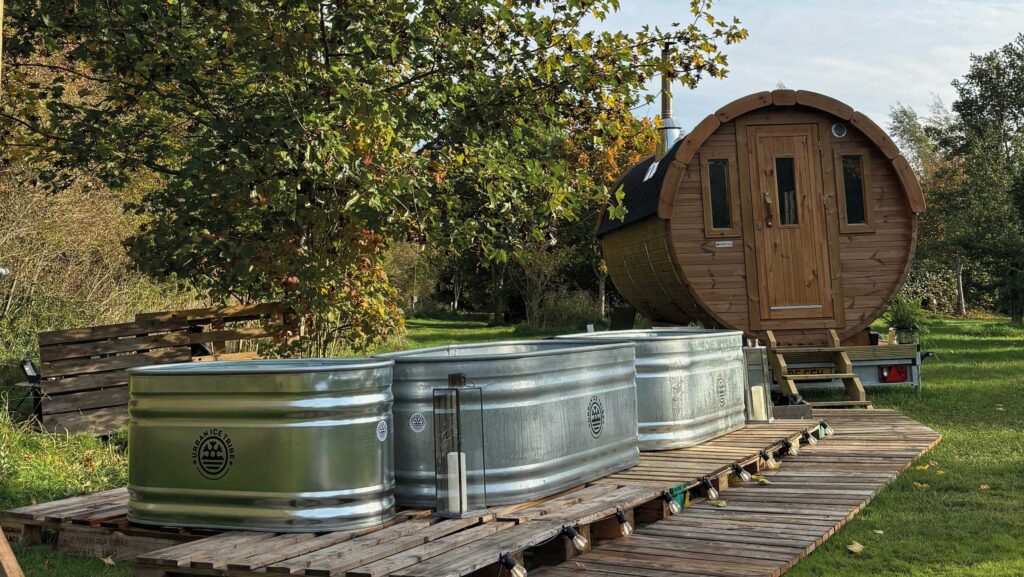
Ice bath and sauna buidling © Barney Smith
“We’re in a lovely part of the world, which attracts people. There’s walking, cycling, sightseeing and lots to see and do, but increasingly people want something extra – an experience.
“You’ve got to keep dangling a carrot to keep people interested, and it doesn’t always have to involve a massive outlay.
“We’ve started offering a ‘blind date with a book’: a wrapped book, so you don’t know which one you’re getting.
“It’s just a little extra, and it doesn’t cost a lot. But you’ve got to keep adding to the offering – it’s exhausting.”
The nearby village of Husthwaite’s designation as a dark-skies community provides a further attraction to promote to guests interested in nature and the night sky.
Maintenance costs
Alongside a general rise in running costs, more accommodation structures have meant significantly greater maintenance requirements.
Barney carried out much of the maintenance himself until a couple of years ago, but the growing workload now requires a self-employed maintenance contractor for about three days a week, at a cost of roughly £2,000 a month.
The installation of 50kW of solar generation capacity and around 90kWh of battery storage is helping the business reduce reliance on grid electricity and manage energy costs.
Baxby Manor diversification background
At 45ha, Baxby Manor is relatively small in terms of agricultural viability.
Barney’s parents first diversified in the 1980s, growing tomatoes in polytunnels and running bed-and-breakfast accommodation alongside their other enterprises, which at different times included arable farming, pigs, sheep, geese and Belgian Blue cattle.
Away from the camping and glamping areas, some land is managed under Mid Tier Countryside Stewardship options, while other fields are used for grazing and hay. There is also woodland.
Barney’s father, David, is an aviation enthusiast who became a flying instructor in the late 1980s.
He went on to run a microlight flying school and air sports club on 12ha of the farm, retiring from instructing about three years ago at the age of 75.
After four years travelling and working abroad in several countries, Barney returned to the farm in 2004.
He later wanted to start a new venture, establishing the campsite on a 2ha field and opening it in 2012 with a sustainable, eco-friendly focus.
With the help of a supportive planning officer, securing planning permission for the change of use was relatively straightforward, he says.
Like many well-established sites, Baxby Manor has a high level of repeat business, estimated at 50-60%, with much of its new custom coming through word of mouth.
Seasonality is changing
While summer camping occupancy has become more challenging, the expanded glamping offer has enabled Baxby Manor to extend its season.
This is the third year that its glamping accommodation has been available year-round.
“Previously we would get to the end of the October half-term and that was it – we shut down for winter.
“This October, the three Kabinas are running at around 80% occupancy, which is phenomenal for that time of year.
“October bookings generally have been very strong. We have six campervan pitches, and one possible next step is to create more of those.
“Just because you invest in glamping doesn’t necessarily mean more people will come, but the year-round revenue has definitely made a difference, and winter bookings are looking promising.”
Experience-day vouchers success
This year, the business has taken a new approach by offering stays through Virgin Experience Days vouchers.
“I always resisted it because you have to give away a big chunk in commission. They initially wanted 25%, but I negotiated that down to 19%. It’s still a significant amount.
“However, it’s been phenomenal, and it’s one decision I don’t regret.
“I was very unsure about it, but it has made a huge difference, particularly to our winter bookings.
“The vouchers have helped fill many of our weekends between now and the end of March.
“We probably get half a dozen email enquiries a week, if not more, just from Virgin voucher customers.”
Personal journey
Behind the development of Baxby Manor has been a difficult personal journey.
In 2009, aged 28, Barney became critically ill with ulcerative colitis and underwent life-saving surgery to remove his colon.
In December 2016, his wife Holly died by suicide, leaving him raising their two young sons while continuing to run and develop the business.
Camping and glamping market advice
Location and competition are key considerations in setting up a camping or glamping enterprise, says Stephen Richards, head of rural leisure at land agent and adviser Carter Jonas.
“If you’re in or near a National Park or the coast, that helps,” he says.
“But you don’t have to be far from an urban centre to make it work well. We are advising a lot of farms and estates on glamping and camping.”
A good view counts for a lot, and there is a real demand from many customers for a “back to nature” approach, he says.
“But with so much competition in these markets, you have to try and add more than the standard offering – there is a flight to quality.
“It can be profitable, but you have to think carefully about set up costs – for example, power, sewerage, roads, parking, and other infrastructure. Waste has to be dealt with and business rates are another consideration.”
Being able to operate year-round can improve viability, as long as heating, insulation and access have been carefully considered.
“If there are other diversifications on the farm or estate then there is the opportunity to cross-sell services.
“For example, fishing and glamping go together well – horse riding, clay shooting or wild swimming might be other options.”
There is also interest from established operators in leasing farmland for new set ups, or in taking on existing sites.
These would be looking for a lease of at least 10 years to justify their investment.