

EU-Mercosur deal signed amid farmer outcry
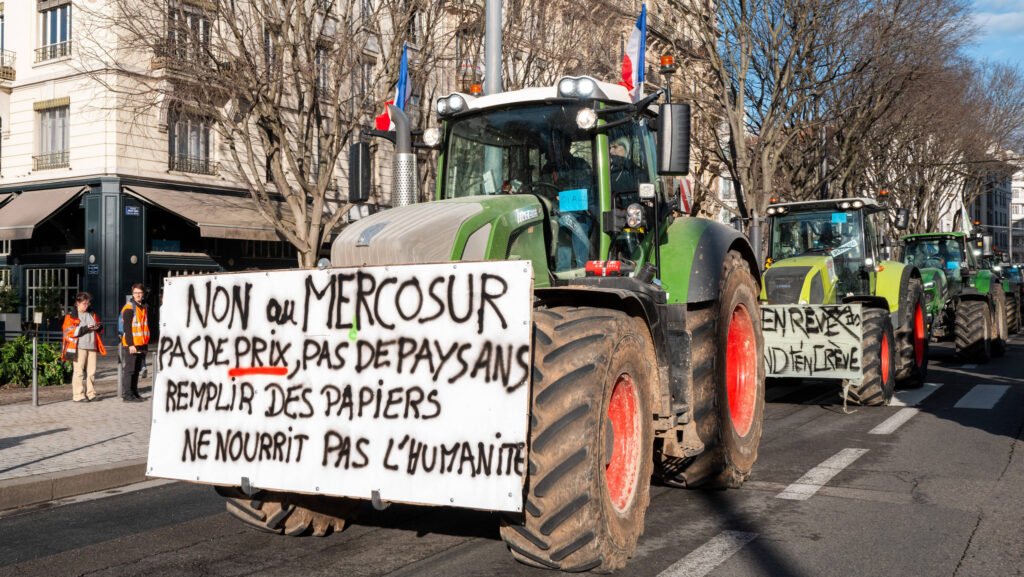 © KONAD K SIPA/Shutterstock
 After more than two decades of negotiations, the EU has formally signed a trade agreement with the Mercosur bloc of Brazil, Argentina, Uruguay and Paraguay, creating one of the world’s largest free-trade zones.
The agreement, signed on 17 January, was marked by a ceremony in Asunción, Paraguay, attended by EU president Ursula von der Leyen, European Council president António Costa, and Mercosur leaders from Argentina, Uruguay, and host nation Paraguay.
However, the European Parliament must still approve the agreement, and Mercosur countries must ratify it, before it can enter into force.
See also: French farmers stage new Paris protest over trade deal
EU leaders have presented the deal as a major economic and geopolitical win, but it has triggered an angry backlash across the EU farming sector over concerns farmers will be undercut by cheap food imports produced to lower standards.
The deal opens the EU market to increased imports of agricultural products such as beef, poultry, sugar and ethanol under tariff-rate quotas, alongside safeguards designed to prevent serious market disruption.
While the UK is not part of the deal, the British Agricultural Bureau – the Brussels-based office representing major UK farming unions NFU, NFU Scotland, Ulster Farmers’ Union and NFU Cymru – believes it could still have significant consequences for British agriculture.
Increased competition in the EU risks displacing products onto the UK market, particularly in sensitive sectors, adding pressure to farm businesses already grappling with high costs and tight margins.
NFU president Tom Bradshaw has also stressed the risks, urging the UK government to assess the trade deal’s cumulative impact and protect British farmers with core import standards and a full review of risks to agriculture and food security.
Strasbourg protest
Tomorrow, thousands of farmers are expected to gather in Strasbourg, with about 1,000 tractors converging on the European Parliament during its plenary session.
The protest is being organised by the FNSEA (France’s largest farming union) and Jeune Agriculteurs (Young Farmers), and is being backed by EU farmer and co-operative group Copa-Cogeca. Organisers say it reflects a “continuing stalemate in EU agricultural policy”.
It follows the mobilisation of 10,000 farmers in Brussels last month and highlights anger over trade policy, CAP reform and regulatory burdens.
Irish Farmers’ Association president Francie Gorman has urged farmers to intensify political pressure.
“If we are to defeat the Mercosur deal in the EU Parliament, we will need farmers in all 27 member states to lobby their MEPs,” he said.