Farm leaders press government over rising costs
 © Tim Scrivener
 Farm leaders have warned that UK agriculture is being left dangerously exposed as input costs surge with no sector-specific support package from Westminster, while European competitors move to shield their farmers.
Following fresh talks between ministers and industry bodies including the NFU, the Food and Drink Federation and British Retail Consortium, frustration is growing that the government has yet to match interventions seen in countries such as the Republic of Ireland, France and Germany.
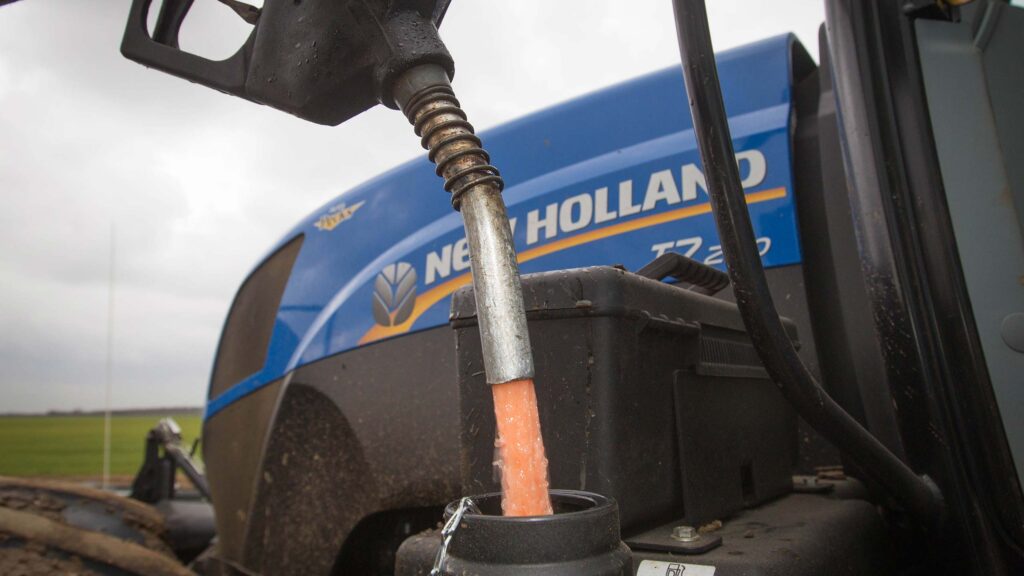
Fuel, fertiliser and energy costs have risen sharply in the wake of the Middle East conflict, placing immediate strain on farm businesses and forcing difficult decisions on cropping, stocking and input use.
See also: Opinion: Food security should be more than just a soundbite
Speaking on his weekly vlog on 17 April, NFU president Tom Bradshaw said: “The biggest challenge that continues to face most farmers at the moment is the inflationary pressure that we are seeing on the back of the Iran crisis and the impacts and availability of fertiliser, fuel and general energy costs.
“This week has been the F4 group meeting to make sure that the government and [farming minister] Angela Eagle continue to hear the concerns of industry and make sure that they genuinely understand how serious this could become.”
The NFU is pushing for practical interventions, including greater transparency in fertiliser pricing and safeguards on diesel supplies for British farmers.
The union is also urging the government to delay the introduction of the carbon border adjustment mechanism (Cbam) – a proposed carbon levy on imported goods such as fertiliser, designed to reflect the carbon emissions produced during their manufacture.
The UK is currently scheduled to implement Cbam from 1 January 2027.
UFU letter
Meanwhile, the Ulster Farmers’ Union (UFU) has written to prime minister Sir Keir Starmer calling for five urgent measures.
These include:
- Enhanced red diesel rebates
- Direct fertiliser support
- Extended energy release schemes for horticulture and intensive livestock sectors
- Safeguards to prioritise agriculture in any fuel shortages.
The letter has received cross-party support from senior figures in Northern Ireland, including first minister Michelle O’Neill, MP Gavin Robinson and justice minister Naomi Long.
UFU president William Irvine said: “Other European countries have already acted to support their agricultural sectors.
“In contrast, there has been no agriculture-sector specific response from the UK government, and that risks placing our producers at an even further competitive disadvantage.”
Despite these warnings, ministers have so far stopped short of announcing targeted support, saying instead they are monitoring the situation.
Dame Angela said: “We are taking the potential impacts of the Middle East conflict on our food and farming sectors seriously and working closely with industry.
“While there is no suggestion consumers will see any impacts to supplies, we will continue to work hand-in-hand with farmers… to protect the UK’s food security, including if and when further government action is needed.”
Transport costs surge
The Cold Chain Federation has warned that transport refrigeration costs for food and drink will increase by about 5% for domestic freight and 15% for imported food movements.
The Food and Drink Federation expects food inflation to reach at least 9% by December.
Karen Betts, chief executive of the Food and Drink Federation, said: “Manufacturers will work hard to protect consumers from price rises, but even under an optimistic scenario, our forecast is that food inflation will reach at least 9% by December.”